
UPI Transaction Charges Explained: What a Fee on Digital Payments Could Mean for India
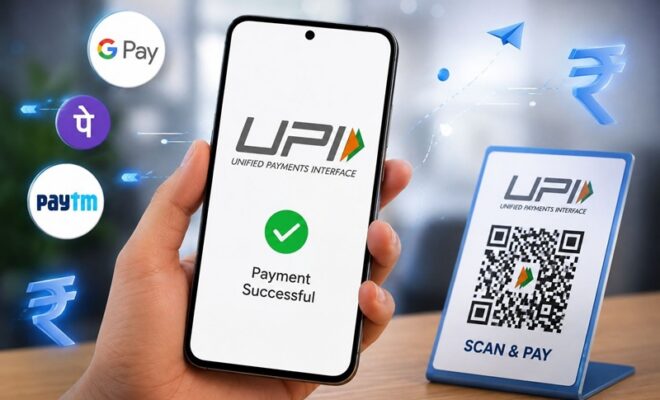
For millions of Indians, using the QR code and doing the payment in a few seconds have become as easy as making payments using cash money. This is exactly why the recent discussions over the charges for UPI payments have generated so much unease among people.
However, the problem is that there is a difference between what has happened and what Indians think that has happened.
The Lok Sabha has recently passed a bill which allows the government to authorize banks and other payment service providers to charge some fees for certain electronic transactions, one of which is UPI. But that does not mean that the fees for all the UPI payments are automatically levied now. The pricing process, if implemented, will be notified.
The thing is that the discussion is not only about whether Indians have to pay ₹1, ₹2 or any percentage on each of their transactions. The issue is also about who will actually cover the huge costs of the Indian digital-payment boom.
How UPI Became Free in the First Place
A key reason for UPI’s popularity was a strikingly simple concept: digital payments could be faster and easier than cash without the inclusion of any kind of transaction charge.
The concept of zero MDR was crucial in achieving this concept. MDR stands for Merchant Discount Rate, and this basically means the fee that is incurred on the processing of any digital payment, and which is usually paid by the merchant side of the ecosystem and not automatically subtracted from the bank account of the customer.
The government exempted MDR for any prescribed UPI and RuPay debit card transaction from January 2020. The government then incentivized the ecosystem in order to help cover the banks and payment providers that participate in the process. An answer in the parliament in 2025 said that around ₹8,730 crore was offered via the incentive program over four fiscal years.
The outcome was a very strong one: merchants could use a QR code without the need for any transaction charge, and customers could make any payments without having to think about the costs involved.
Why Is the Government Reconsidering the Zero-Fee Model?
The problem is the scale. UPI today handles a huge volume of transactions every month. Even those payments which appear to be free require a technology ecosystem which consists of banks, payment platforms, infrastructure firms, fraud detection, cloud computing, cybersecurity activities, customer service, and settlement mechanisms operating invisibly behind the scenes.
What the user sees is a QR code and a confirmation message. What the financial system sees is a costly technology ecosystem which needs to run perpetually.
It creates a problem of sustainability.
If the system continues to expand while keeping transactions revenue capped, then who will pay for the future generations of infrastructure? The financial sector can cover the costs at some point, but it gets increasingly difficult to finance a growing public digital payment ecosystem.
Sanjay Malhotra, RBI Governor, has pointed out the economic problem of who will have to cover the cost of the payments system in the economy.
What Exactly Is MDR?
MDR is frequently considered as a straightforward “UPI tax”.
MDR is neither a tax nor a mandatory charge from consumers.
MDR is a transaction processing fee that is related to the merchant’s transaction. In case of implementation of MDR, the merchant ecosystem may pay a relatively small portion of the transaction to the parties that process it.
The fact is important because such a policy might technically imply charging MDR from merchants without putting “UPI fee” in the customer’s statement at all.
All existing policies currently under discussion do not consider MDR for all merchants but seek to limit possible fees. Reuters reports on one of the existing proposals that implies the introduction of MDR about 0.3% to 0.5% for transactions exceeding ₹2,000 per merchant with the turnover higher than certain value.
Why Large Transactions Are at the Centre of the Debate
It becomes all the more interesting when we take both the transaction size and transaction volume into account.
Most regular transactions through UPI are low-value transactions. Transferring money, buying vegetables, paying someone from a local shop, settling a bill at a restaurant is quite different from paying ₹50,000 worth of laptop through an online transaction.
According to the news reports of the ongoing debate on the new MDR structure, a possible model being discussed would consider higher value merchant transactions and bigger companies, while keeping small merchants out of it. The model reported by Reuters considers only transactions of above ₹2,000 and above a particular level of turnover.
This is done keeping in mind that UPI be retained for its mass market nature and generate revenue from those transactions in which merchants can afford some processing fee.
Will Ordinary Users Have to Pay?
This is not the case – and, at present, there are no mandatory fees on consumers using UPI services.
The Payments Council of India has, in fact, assured that UPI transactions will continue to remain free for both consumers and small businesses.
This is a vital point since UPI’s primary selling point lies in its universal nature.
The moment consumers start calculating their transaction costs before paying for goods or services, a key feature of UPI would get compromised.
It would then become relevant to consider the possibility of charging merchant fees only.
The Hidden Risk: Merchants Could Pass the Cost On
This is when things get tricky. While a future MDR might be officially charged to merchants, they may find ways of covering their costs through price mark-ups.
A large merchant handling many high-value UPI payments might conceivably accept a fee as a cost of doing business. A different merchant might charge higher prices, apply special conditions for payments or direct customers towards other payment options.
Not necessarily all merchants will do that. Competition might prevent companies from transferring all costs to consumers.
But it means that policymakers cannot decide on charges for UPI payments solely on whether consumers will notice a fee when paying. The broader question is whether the cost will eventually end up in product prices, merchant margins or somewhere else in the economy.
Could Charges Hurt UPI Adoption?
This may well be the biggest issue with policy in mind.
The success of UPI lies in the fact that it was frictionless. It is not necessary to carry any cash, memorize a PIN code for each card transaction, or wonder whether a specific merchant network will be accepted or not.
An apparent or even a non-apparent cost will have an impact on that benefit.
The small merchant becomes very important here as UPI has been very deeply ingrained into the Indian neighborhood economy system. The payment via QR system becomes simple both to understand and accept.
The Economic Times reported that a zero-cost model may harm the most successful policy innovation of India if the pricing scheme would make the merchants unwilling.
This is why the future pricing system must be carefully balanced.
The Counterargument: UPI Also Needs a Sustainable Business Model
But there is another angle to the debate as well.
UPI cannot remain technologically stagnant. With increasing volume of transactions, India requires enhanced capabilities for fraud detection, cyber security, servers, dispute resolution and payment infrastructure.
There are also commercial reasons why banks and payment companies will require incentives to invest in the ecosystem.
In the absence of any sustainable revenue stream, the government will have to keep funding the infrastructure through public money or any other means.
And here is the legitimate policy question: should the taxpayers keep paying for the infrastructure for transactions conducted by some of the largest digital commerce companies in the world?
Well-designed merchant-side MDR can provide one possible solution.
The Real Challenge Is Getting the Balance Right
India need not necessarily pick a choice between “free UPI forever” and “charge everyone.” There is significant scope for policy in the middle of both extremes.
Such a system can safeguard small businesspeople and low-value transfers, while charging large businesses for high-value transactions. At the same time, such a system can provide accountability in how money flows and help divert any extra money to cybersecurity and innovation.
This will make it easier to justify the charge than any general consumer charge.
The problem for the government is to see that the process of monetisation does not sabotage the very network effect that has made UPI successful.
What This Means for India’s Digital Future
UPI fee debate transcends the UPI issue. Over time, India has created an open and digital public infrastructure where transactions are meant to be easy, seamless, and low-cost. UPI worked because consumers did not need to be bothered by its economics.
Today, the ecosystem has grown to the extent that sustainability cannot be overlooked. It is not a question of whether “should UPI be free” any more?
It is about who will pay for the next ten years of India’s digital payment infrastructure, while making sure the cost does not exclude the very entities that have made UPI work? That is the policy question.
Conclusion
The issue of charges on UPI transactions does not mean a direct need for people to start paying for all their QR code payments immediately.
What has happened is that the legal environment has been altered in such a way that charges in the future may become possible, though the details of how it would happen are yet to be decided.
The main difference for now is between a legal framework that allows for charging and the actual charge itself.
The next challenge facing India will be to find a solution to ensure affordable digital payments while providing financial sustainability to the entire ecosystem working on behalf of UPI.
In case India is able to solve this problem, UPI can stay both cheap and profitable.
Top Stories You Can’t Afford to Miss Today
When Will Tata Curvv EV Launch?
Explore the confirmed launch date, expected price, battery options, driving range, and upgraded features of the Tata Curvv EV.
Why Is Income Tax Portal Slow?
Check how to clear your browser cache, verify your e-filing status, and avoid penalties under Section 234F before the deadline.
How Are India-Japan Supply Chains Evolving?
Discover how India and Japan are strengthening Indo-Pacific supply chains through new bio-gas and semiconductor partnerships.
How Can Patients Book Instantly?
Explore how AIIMS Delhi’s new WhatsApp and ABHA Health ID system makes OPD appointment booking faster and easier.
Why Did Washington Change Strategy?
Discover why the latest U.S. terror designation targets financial networks and what it could mean for future counterterrorism efforts.