UPI Merchant MDR Revision Explained: How New Transaction Fee Rules Could Impact Large Retailers
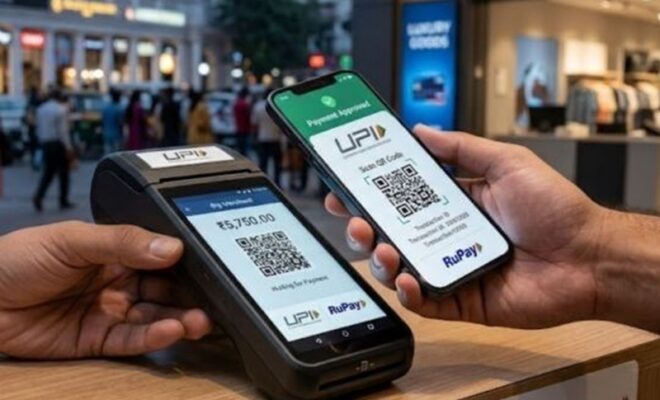
This could be among the biggest policy changes in India’s digital payments ecosystem since the introduction of zero MDR. The government is planning to make amendments in the Payment and Settlement Systems Act in order to facilitate the introduction of MDR on certain merchant transactions through UPI.
The new rule on MDR on UPI merchant transactions will not apply to every single transaction made through UPI. The current debate is about making an arrangement by which large merchants are levied a small transaction fee, but small businesses and person-to-person transactions remain exempt from the rule.
What Is Merchant Discount Rate (MDR)?
The Merchant Discount Rate (MDR) is a charge imposed on businesses by banks and payment system providers for processing electronic payments.
Prior to the introduction of the zero-MDR policy in 2020, merchants making digital payments using cards and specific payment systems charged a small fee on each transaction made. Later on, the government abolished MDR for UPI and RuPay debit card transactions in order to promote the adoption of digital payments nationwide.
With the number of transactions taking place via UPI increasing in billions each month, banks and payment providers have found it increasingly difficult to sustain their payment infrastructure.
What Has Changed Now?
It is important to understand that while the latest proposal does not levy any immediate fees, it establishes the regulatory system in order to empower the government to reinstate the MDR system for selective UPI merchant transactions at a later date.
According to reports, it seems like there are plans to charge MDRs only on high value merchant transactions and merchants that exceed an annual turnover level.
Which Retailers Could Be Affected?
Present debates indicate that the proposed amendment in UPI Merchant MDR will mostly impact large businesses, not the local stores and other small businesses.
The first proposal being discussed is the imposition of MDR on merchant UPI payments exceeding ₹2,000 in businesses whose turnover exceeds about ₹1.5 crore per annum. The MDR rates may vary from 0.3% to 0.5%, but an official announcement has not yet been made by the government.
Large hypermarkets, supermarket chains, electronics store, department stores, and organised retail stores are therefore most likely to be covered under this proposal if it is implemented.
Will Customers Have to Pay Extra?
As things stand now, there are no plans to levy customers for using the UPI for making payments.
The proposed MDR will apply to merchants who accept digital payments. However, since this will be just another operational cost for them, some retailers may end up bearing the burden, while others may include the cost as part of their price structure.
Peer-to-peer UPI transfers will continue to be free for individual users as per the proposal. Small merchants will also not be covered under the proposed MDR scheme.
Why Is the Government Considering This Move?
The goal of the government seems to be a balancing act between two considerations, namely keeping India’s leading digital payments platform while making sure that it stays financially sustainable.
Banks, financial technology firms, and other payment services providers have constantly stated that the need for cybersecurity measures, fraud protection, servers, compliance, and network maintenance in order to handle millions of free transactions each month is a constant requirement for further investment.
The proposed change in the UPI Merchant MDR is seen as a potential solution for covering the cost of these operations.
What Could This Mean for the Digital Payments Industry?
The implementation of the proposal would drastically alter the economics of the Indian digital payments ecosystem.
Banks and other payment service providers would earn an additional revenue that could be invested into the development of their infrastructure and fraud protection services.
According to industry experts, even a small MDR rate charged from large merchants would produce considerable yearly revenues without impacting most users of UPI services.
Could This Slow Down UPI Adoption?
A number of professionals believe that the effect on consumer adoption may be minimal due to the fact that individual users may not be directly charged.
As the proposal is largely aimed at large commercial retailers, regular users may go on using UPI as usual. However, a few large retailers may re-examine their pricing and payment strategies based on the final MDR framework.
Everything depends upon how the rules and exemptions are laid out by the government.
What Happens Next?
It should be noted that the above-mentioned amendment to the UPI Merchant MDR has not yet become the operational regulation.
The amendments serve as the legal base for MDR introduction in the future. The government still needs to formulate the criteria for eligibility and the amounts of turnover, transaction amounts, and fees.
Until then, UPI operations take place in accordance with the previous regulation.
Top Stories You Can’t Afford to Miss Today
When Will Tata Curvv EV Launch?
Explore the confirmed launch date, expected price, battery options, driving range, and upgraded features of the Tata Curvv EV.
Why Is Income Tax Portal Slow?
Check how to clear your browser cache, verify your e-filing status, and avoid penalties under Section 234F before the deadline.
How Are India-Japan Supply Chains Evolving?
Discover how India and Japan are strengthening Indo-Pacific supply chains through new bio-gas and semiconductor partnerships.
How Can Patients Book Instantly?
Explore how AIIMS Delhi’s new WhatsApp and ABHA Health ID system makes OPD appointment booking faster and easier.
Why Did Washington Change Strategy?
Discover why the latest U.S. terror designation targets financial networks and what it could mean for future counterterrorism efforts.
Conclusion
As can be seen from the above, the amendment to the UPI Merchant MDR is a significant step towards making India’s digital payment policy sustainable. Instead of banning all UPI payments and making them paid, the current discussion aims at making them financially sustainable by imposing charges only on larger merchants.
For most users and small merchants, there will hardly be any changes. For large retailers, who make a lot of UPI transactions, changes will be significant in case the amendments get approval.
The UPI revolution in India will probably remain “free” for its users but large retailers will soon have to pay for their use.