
Stop the Digital Arrest Scam: Why India Needs Stronger Cybercrime Awareness
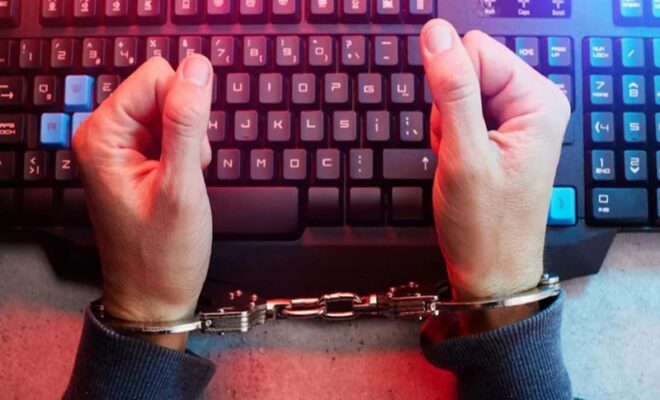
The digital economy of India has changed the methods by which people conduct banking, shopping, investment, and communication activities. All of these transactions are possible with the use of a smartphone in a matter of minutes. Nevertheless, digitalization provides more opportunities for criminals who use digital platforms to commit fraud and other criminal activities. One of the most disturbing frauds of modern times is the so-called ‘digital arrest‘ scam a complex cybercrime that uses fear, misinformation, and lack of awareness among people.
Contrary to the traditional scams that use fake lottery wins or phishing emails, the ‘digital arrest’ scams are psychological operations. Victims believe that they are under investigations for some serious crimes such as money laundering, narcotics trafficking, or identity theft. They receive threatening messages from people who pretend to be law enforcement officers, CBI agents, ED agents, RBI officials, or even members of the Supreme Court through video conferencing, faked documents, and spoofed numbers. As a consequence, many of the victims transfer all of their funds, believing that they comply with the investigation.
Therefore, an interesting question arises in connection with these scams. Is India sufficiently preparing its citizens for cybercrimes?
Understanding the Digital Arrest Scam
The concept of “digital arrest” has no legal basis in India. There is no provision that allows the authorities to arrest anyone by placing them under “digital arrest” via a telephone or video call.
Nonetheless, scammers have managed to create an impression of legitimacy in the eyes of their potential victims.
Usually, the victim gets a call stating that their Aadhar number, bank account, SIM card, or any courier is associated with some sort of criminal activity. This call is further transferred to another person referred to as “officer” who turns up on video screen in what seems like a police station or government office. Victims are intimidated with arrest if they fail to co-operate.
Victims are instructed not to disconnect calls and not to inform their family members which leaves them psychologically isolated. Most of the times, fraudsters ask victims to transfer money into certain “safe” or “investigation” accounts. After transferring money, it all disappears.
What is surprising about this scam is how effective it is at integrating technology with social engineering. Instead of hacking into the banking system, criminals manipulate emotions of humans.
Why Awareness Remains India’s Biggest Weakness
There have been considerable strides in the adoption of digital payment methods in India, with UPI completing billions of transactions monthly. However, the rate of growth of digital literacy has not kept pace.
Many citizens, especially senior citizens, first-time internet users, and those from small-town areas, are not aware of how policing works in reality. They might believe that any piece of documentation or uniform would automatically confirm the legitimacy of the person.
The scammers employ technology in a highly sophisticated manner. AI voice cloning, spoofed phone numbers, police uniforms, forged warrants, and government logos are employed. Educated professionals are also victims due to the emotional trickery involved in the scam.
In modern times, cybersecurity is not only about having anti-virus programs in computers; it is also about awareness among people.
Why Public Education Must Become a National Priority
Cybercrime awareness cannot remain limited to occasional social media advisories or press releases. It needs to become part of everyday public education.
Just as road safety campaigns changed public behaviour over time, India requires sustained awareness campaigns explaining how digital fraud operates.
Schools and colleges should include basic cyber hygiene in their curriculum. Banks should regularly educate customers through SMS alerts, branch displays, and mobile banking apps. Television, radio, and regional-language campaigns should explain that no police officer, court, or government agency asks citizens to transfer money during an investigation.
The goal should be prevention rather than damage control.
Banks and Technology Companies Have a Role Too
Financial institutions tend to be the final barrier before any form of fraud can be committed.
Banking institutions can improve fraud monitoring in real-time by focusing on any unusually high transfers that happen when a client shifts his or her entire savings to an unknown account. Verification checks for suspicious transfers could save them from losing huge sums of money.
Technology companies should improve spam call detection, verify calls, and utilize AI to detect fraud cases. With the evolution of deepfakes and voice cloning by fraudsters, technology providers need to find ways to match them.
The protection of individuals will require efforts from regulatory bodies, telecom operators, banks, fintech companies, and cybersecurity agencies.
Law Enforcement Should Keep Improving Their Capabilities
There have been some measures undertaken by India in the form of I4C, the National Cyber Crime Reporting Portal, and cyber crime helpline (1930). All these measures have been useful in helping victims of frauds report faster.
However, digital arrest scams have become more organized. They involve organized criminal groups that act across countries, hence requiring better cyber forensics, coordination between states, and international cooperation.
What Every Citizen Should Remember
Awareness is the greatest protection against digital arrest scams.
No legitimate law enforcement agency would make an arrest through a video call. No government department would require any citizen to transfer money into a “safe account.” Investigations happen through legitimate and documented means, not through threats over messages or calls.
Every time this happens, one must hang up at once, verify the claim, alert family members, and contact the cybercrime helpline or National Cyber Crime Reporting Portal.
It can take a few minutes, but it can save the person from losing a life’s worth of savings.
Top Stories You Can’t Afford to Miss Today
When Will Tata Curvv EV Launch?
Explore the confirmed launch date, expected price, battery options, driving range, and upgraded features of the Tata Curvv EV.
Why Is Income Tax Portal Slow?
Check how to clear your browser cache, verify your e-filing status, and avoid penalties under Section 234F before the deadline.
How Are India-Japan Supply Chains Evolving?
Discover how India and Japan are strengthening Indo-Pacific supply chains through new bio-gas and semiconductor partnerships.
How Can Patients Book Instantly?
Explore how AIIMS Delhi’s new WhatsApp and ABHA Health ID system makes OPD appointment booking faster and easier.
Why Did Washington Change Strategy?
Discover why the latest U.S. terror designation targets financial networks and what it could mean for future counterterrorism efforts.
Conclusion
India’s digital future is dependent not just on innovation, but trust as well. With more digitization in financial services comes even more elaborate schemes by cyber criminals to capitalize on fear and misinformation.
The battle against digital arrest scams cannot be won solely through policing or technology. It will also have to include digitally literate citizens that know the tricks and how to defend themselves.
Cybersecurity starts with awareness. Every literate citizen makes India safer from scams.