
Indo-Pacific Supply Chains: India & Japan Operationalize Bio-Gas and Semiconductor Partnership Framework
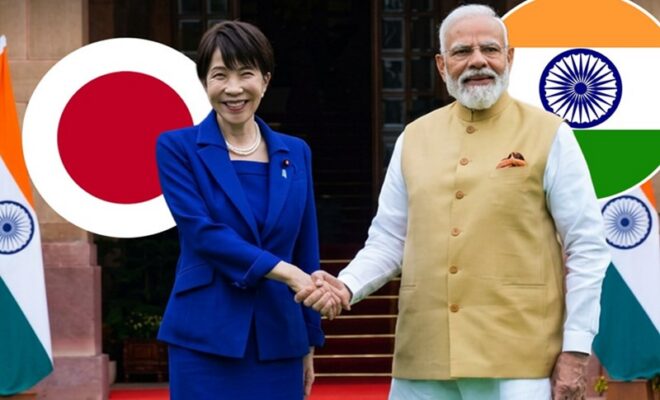
India and Japan have made yet another important move to foster cooperation economically and technologically by launching a new partnership framework in the area of bio-gas development and semiconductor supply chains. It is an expression of common ambitions of both nations to create more resilient Indo-Pacific supply chains, diversify from single country manufacturing centers and cooperate further in technologies and renewable energy sources.
The partnership was launched in light of the need for access to strategic sectors, including semiconductor technology, renewable energy and manufacturing in Indo-Pacific countries.
Why the India-Japan Partnership Matters
While the India-Japan semiconductor partnership may seem like a simple bilateral initiative, it is actually a key component in an overall plan of developing reliable and diverse supply chains in the Indo-Pacific region.
In recent years, disruptions resulting from the pandemic situation, geopolitical disputes, and increased competition in manufacturing technologies have highlighted the weakness in global supply chains. Nations that relied on a small number of manufacturing centers found themselves short of essential components, most notably semiconductors.
India and Japan are now collaborating to counter these risks through investment, technology cooperation, and research initiatives.
The inclusion of bio-gas alongside semiconductor manufacturing also highlights the partnership’s focus on balancing industrial growth with sustainable energy development.
What Does the Semiconductor Partnership Include?
Modern electronics is based on the use of semiconductors that underpin smartphones, cars, medicine, and even artificial intelligence.
By virtue of the new cooperation model, India and Japan are going to develop closer ties in terms of semiconductor fabrication, design, research, capacity building, and supply chain resilience.
While Japan provides the experience of years of working in the semiconductor materials, equipment, and precision manufacturing, India will contribute the developing environment for electronics and engineering.
The new model of cooperation is likely to promote more joint efforts by private sector and state bodies of both nations.
Why Bio-Gas Is Part of the Agreement
However, while the spotlight is focused on semiconductors, bio-gas is one other very important pillar of the tie-up.
The process of bio-gas involves generating clean energy from agricultural waste, animal waste, and other organic materials. This is because India is a nation which produces huge amounts of biomass due to its agriculture.
Japan, on its part, has great experience in the fields of waste management, clean energy technologies, and circular economy. In this collaboration, both nations are hoping to promote bio-gas and advance other related areas.
Strengthening Indo-Pacific Supply Chains
This is part of an emerging trend wherein Indo-Pacific countries are moving towards forming diverse and sustainable networks of supplies.
It is about avoiding a heavy dependence on any one country for essential technology and industrial supplies, rather promoting collaborations within the region where manufacturing capacities are distributed across reliable economies.
In case of India, this collaboration helps it realize its dream of becoming a manufacturing powerhouse through its “Make in India” program.
In case of Japan, collaborating with India will provide it with the option of manufacturing diversification and economic sustainability.
Economic Benefits for India
Some of the possible advantages of the India-Japan collaboration on semiconductors include:
Increased investment from Japan can help in promoting domestic manufacture of semiconductors, facilitate technology transfer, provide skilled employment, and promote India’s electronic industry.
The collaboration in the field of bio-gas can further help in rural development, provide additional incomes to the farmers by making use of agricultural wastes, and facilitate clean energy generation.
Overall, both initiatives help India in becoming a more diversified and innovative country.
Why This Partnership Is Geopolitically Significant
There is also strategic significance that transcends the economic aspect.
A number of nations have begun reviewing their critical technology supply chains amidst increasing geopolitical rivalry and worries about concentration in manufacturing.
India and Japan can reinforce their strategic partnership through collaboration in semiconductors and clean energy.
This strategic partnership aligns with broader efforts made by nations that share similar views in ensuring economic networks that are secure, resilient, and transparent while maintaining regional stability.
Challenges Ahead
Though there are huge possibilities presented by the partnership, there are also challenges towards making it successful.
Manufacturing semiconductors requires huge investments and collaboration both at the government and industrial levels.
In the same way, bio-gas production needs effective waste collection systems and continuous innovation.
The success of this partnership is going to be based more on implementation than promises.
Keep Reading: Stories That Matter Most to You
1. NATO’s Ankara Summit: Warning Signals India Cannot Afford to Ignore
Explore how the NATO Ankara Summit could reshape India’s strategic and security priorities
2. EPFO VISHWAS 2026 Scheme Explained: One-Time Settlement for Pending PF Dues
Discover who qualifies for the EPFO VISHWAS 2026 Scheme and how pending PF dues can be settle
3. Kashmir Valley Tourism Rebounds: Gulmarg and Pahalgam Witness Record Summer Footfall
Check why Gulmarg and Pahalgam are attracting record numbers of summer visitors this year.
4. Beyond Dharmendra Pradhan’s Resignation: India’s Deeper Youth Unemployment Crisis
Explore the deeper causes behind India’s growing youth unemployment beyond the latest political developments.
5. Income Tax Return (ITR) Filing Deadline 2026: Key Changes in the New Tax Regime You Must Know
Discover the latest ITR filing deadline and important tax regime changes every taxpayer should know.
Conclusion
The operationalization of the India Japan semiconductor partnership and bio-gas framework marks another milestone in the growing strategic relationship between the two countries.
By combining advanced manufacturing with clean-energy cooperation, India and Japan are working to build stronger, more resilient Indo-Pacific supply chains capable of supporting future economic growth and technological innovation.
India and Japan are not just strengthening bilateral ties—they are jointly building the foundations of a more resilient Indo-Pacific economy through collaboration in semiconductors, clean energy, and advanced manufacturing.