TRAI Proposes New 5G Quality Standards: What Changes for Users in Tier-2 and Tier-3 Cities?
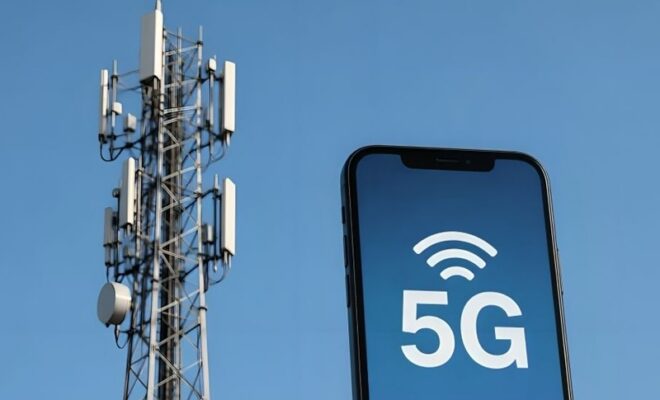
A proposal regarding quality of service guidelines has been made by the Telecom Regulatory Authority of India (TRAI) for the implementation of 5G network slicing, which refers to the technique wherein telecom companies can divide the existing 5G network into different virtual networks tailored to serve various kinds of services. This comes at a time when the Indian 5G ecosystem is moving on from providing mere high-speed internet service to offering tailor-made services.
However, for consumers, especially those residing in Tier-2 and Tier-3 cities that are undergoing rapid digitalisation, it might have an impact eventually on how 5G services are being provided to them. It is important to make note of the fact that the recent TRAI proposal is not a separate set of guidelines only for 5G of Tier-2 and Tier-3 cities.
What Is 5G Network Slicing?
“Network slicing” is among the more advanced technologies of 5G. Rather than operating the whole mobile network as one common pool, operators will be able to develop a number of “slices,” each tailored to specific needs.
For instance, one of these slices would be built for fast consumer Internet connections, while another slice would provide either very-low-latency or reliable connections. Such approach could be used for many applications in future, including enterprise applications and connected devices.
The problem is how to make sure that prioritizing some services with the help of custom network resources will not lead to poor performance of mobile consumers’ services. This is exactly the problem that is supposed to be solved by TRAI’s QoS framework.
Why TRAI Is Introducing New Quality Rules
With increasing complexities of 5G networks, traditional Quality of Service metrics may prove inadequate to gauge the performance of various virtual network slices.
The recently proposed TRAI guidelines are designed to ensure that there are no unwarranted drops in QoS on account of dynamic management of resources for various network slices. The regulator will accordingly be considering QoS metrics and compliance standards that could be applicable with the use of network slicing.
This is all the more pertinent with telecom operators considering offering differentiated 5G services, wherein resource allocations would depend on the type of services or customer segment.
What Could Change for 5G Users?
However, the experience for an average user of the smartphone may not be drastically different for the moment, since the proposals are merely proposals at the moment, and not something which is already implemented.
In the longer run, users may find that there are more distinct 4G and 5G packages, as well as varying pricing mechanisms. The recent proposals even take into account the possibility of telecom operators charging for different prices for 4G, 5G and other services.
This implies that in the future, the 5G market would be much more focused on the choice of connectivity and service quality provided by a specific plan.
What Does This Mean for Tier-2 and Tier-3 Cities?
The importance of Tier-2 and Tier-3 cities is growing within India’s digital economy because there is more smartphone adoption, digital payments, online learning, gaming, streaming, and eCommerce going on there.
In case users of these cities get better monitoring of the quality-of-service, then in the future, there can be more accountability on the part of mobile networks when they do not provide expected performance. The TRAI organization performs independent drive tests in cities and along the transport routes to evaluate coverage, call drop rate, call set-up rate and download/upload throughput.
But the new proposal on network slicing should not be seen as an assurance of a certain minimum 5G speed in every Tier-2 and Tier-3 city. Performance will still depend on many aspects.
Could 5G Plans Become More Expensive?
In theory, maybe, but not necessarily since it doesn’t automatically follow from the proposal that all users of 5G will have to start paying more.
With network slicing, providers can offer a range of products with varying performance metrics. The TRAI proposal also allows for variable pricing of various generations of network services.
It may eventually lead to the introduction of premium packages providing certain performance metrics while normal users continue using the traditional mobile connection.
The main issue would be to see whether consumers get informed about what they pay for and whether their promised service quality is provided.
Why Quality of Service Matters More as 5G Expands
5G network is now being utilized for purposes beyond increasing speeds of mobile downloads. Companies, smart gadgets, cloud solutions, and manufacturing industries are among those which can depend on the stable network performance.
It becomes necessary to provide good quality of service rather than just advertising very fast theoretical speed.
TRAI’s current approach towards telecommunications quality is based on technology-independent quality requirements, reporting procedures, and consumer transparency.
The concept of network slicing expands the above approach by adding the issue of network quality maintenance in case of its division into virtual services.
What Should Users Watch For Next?
This proposal is also part of the regulatory consultation process; hence, consumers must not presume that all the rules set out in the proposal shall remain in the final ruling.
The key points that users need to look out for include the final quality standards, the method by which performance shall be reported, the introduction of differentiated 4G and 5G pricing schemes, and the protections for ordinary users.
TRAI has also made improvements in its TRAI MyCall app, through which consumers can give instant feedback on the voice call experience. This consumer-based feedback can prove helpful in finding areas where network performance needs improvement.
Conclusion
This new proposal by TRAI reveals the fact that India’s telecom regulatory environment is evolving towards a more advanced era. In this case, it is not merely about 5G expansion but about how to ensure that the ever-evolving network technologies will not impact the user experience.
As far as Tier-2 and Tier-3 cities are concerned, it should be noted that there are reasons to pay attention to this evolution as these markets have become pivotal to India’s further digital advancement. However, the current proposal can hardly be regarded as a unique 5G quality criterion for such cities. It is an advanced approach to 5G network slicing and quality of service.
The next generation of 5G might be all about the type of experience you are getting rather than just the speed of connection of your phone.
Top Stories You Can’t Afford to Miss Today
When Will Tata Curvv EV Launch?
Explore the confirmed launch date, expected price, battery options, driving range, and upgraded features of the Tata Curvv EV.
Why Is Income Tax Portal Slow?
Check how to clear your browser cache, verify your e-filing status, and avoid penalties under Section 234F before the deadline.
How Are India-Japan Supply Chains Evolving?
Discover how India and Japan are strengthening Indo-Pacific supply chains through new bio-gas and semiconductor partnerships.
How Can Patients Book Instantly?
Explore how AIIMS Delhi’s new WhatsApp and ABHA Health ID system makes OPD appointment booking faster and easier.
Why Did Washington Change Strategy?
Discover why the latest U.S. terror designation targets financial networks and what it could mean for future counterterrorism efforts.