Russia’s Rosatom Offers Nuclear Power Plant Units to India for 100 GW Target
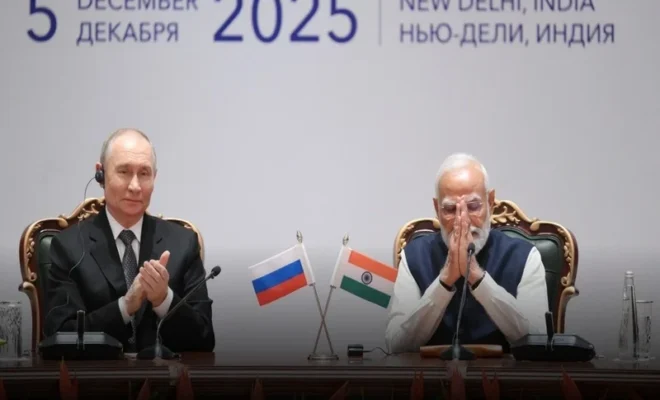
The plan by India to increase nuclear power plant capacity to 100 gigawatts by 2047 got an extra boost recently when Rosatom, a Russian state owned nuclear company, offered the country various types of reactor systems in order to help India implement its energy policy for the next decades to come.
Rosatom has given India a choice between big capacity nuclear plants and SMR units, allowing the country some flexibility in generating electricity using reliable and carbon friendly power source. This step is taken amid India’s effort to lessen its dependence on fossil fuels while providing for the needs of a developing economy.
The most important thing about this step is the fact that Rosatom is already a well known nuclear partner of India since it has a nuclear plant in Kudankulam, Tamil Nadu.
What Has Rosatom Offered India?
Rosatom has proposed various nuclear energy options to India from large-sized power plants to small modular reactors. Some of the technologies that have been offered include VVER-1200, which is Russian designed pressurized water reactor that produces 1,200 MW of power per unit.
This proposal is timely in view of the fact that India requires many technologies to meet its massive nuclear energy expansion plan. This will not depend upon one reactor technology, but other options will include indigenous reactors and large reactors along with SMR technology.
Why India Wants 100 GW of Nuclear Power
India’s present nuclear capacity is estimated at 8.8 GW, indicating that India needs to scale up its capacity significantly to achieve the goal of 100 GW by 2047.
India’s “Viksit Bharat” Nuclear Energy Mission is intended to make the contribution of nuclear power to India’s energy mix even greater than it already is. Achieving the goal is not merely about producing more energy; it is also associated with energy security, carbon footprint reduction, and the provision of reliable baseload power amid increasing electricity consumption.
While renewables can produce energy intermittently, depending on weather conditions, the production of nuclear power is uninterrupted. Therefore, in view of the increasing share of renewable energy in India’s energy portfolio, nuclear power becomes increasingly important for India.
Why Rosatom’s Offer Matters
Rosatom is far from a newcomer in the Indian nuclear market. The existing interaction between Rosatom and India would be represented by the Kudankulam initiative, which involves the construction of reactors designed by Russia in Tamil Nadu.
This would be of considerable value to future cooperation as India and Russia already have experience working in the nuclear industry with each other. Rosatom is currently being regarded as the only foreign company that is involved in the process of building reactors in India.
Thus, the recent offer carries more meaning than just a business proposition as it may contribute to strengthening one of the oldest international partnerships of India in the field of nuclear power generation.
The Role of VVER-1200 Reactors
The VVER-1200 is particularly relevant because it belongs to the large-reactor category that India could use at new greenfield nuclear sites.
India’s official nuclear roadmap envisages a combination of domestically developed 700 MW Pressurised Heavy Water Reactors and large imported advanced reactors. The government has also identified SMRs for applications such as repurposing retiring fossil-fuel plants, industrial captive power and certain off-grid requirements.
This means Russian VVER-1200 technology could potentially complement India’s domestic reactor programme rather than replace it.
Why Small Modular Reactors Are Also Important
Another key component of the Rosatom offer is SMRs.
SMRs are relatively smaller nuclear reactors with individual generation capacity smaller than that of regular large reactors. The reduced capacity might prove useful in industries, varying grid needs, and in situations where construction of large nuclear power plants is not feasible.
The Indian government has been designing their own indigenous SMR technologies, namely, a 200 MWe Bharat Small Modular Reactor and a 55 MWe SMR, according to Department of Atomic Energy. They also have a target to deploy five indigenous SMRs by 2033.
Thus, the Rosatom offer introduces yet another international technology to the field which India seeks to develop quickly.
India’s Nuclear Expansion Is Not Just About Russia
While the most recent offer from Rosatom is important, Russia is just one of many countries involved in the nuclear growth of India.
India’s nuclear industry has been opened up to more private sector involvement due to the SHANTI Act, while the official plan for India is to use indigenous technologies along with imported advanced reactors and SMRs.
Foreign firms like Russia’s Rosatom and France’s EDF have expressed an interest in the expanding Indian nuclear sector.
The goal is to combine technology, financing, manufacturing capacity and indigenous know-how to increase nuclear power production greatly.
The Big Challenge: Turning Offers Into Operating Plants
The major concern now is not India’s access to nuclear technologies. The concern is how fast the technologies can be translated into projects to hit the 2047 deadline.
A massive investment of funds, availability of manpower, manufacturing facilities, fuel procurement, approvals and infrastructure will be needed for the expansion of India’s nuclear power. Recently, estimates from the industry have put the cost of expanding nuclear power capacity to 100 GW at approximately $210 billion.
There are also questions regarding imported reactor projects. The draft regulations that have been considered recently have led to concerns about approval periods and foreign reactor technologies certifications.
In this context, Russia’s proposal is an important step, but only a first step towards a bigger journey.
Why Nuclear Power Is Becoming More Important for India
India’s needs for electricity are increasing as India builds up its industries, digital infrastructure, transportation networks and other energy-intensive sectors.
Simultaneously, New Delhi has adopted very bold goals of renewable energy generation and reaching net zero. The role of nuclear energy can be seen in the production of reliable electricity which would support the electricity from renewables.
Thus, the Indian government regards nuclear energy as an essential component of its energy security policy in the long term and not merely another source of electricity.
What Comes Next?
Now the most recent proposal by Rosatom will have to develop into negotiations over technology choice, location of the project, financing, localisation, production and regulatory issues.
India is already considering broader cooperation with Russia on both large-scale and small modular reactors, including localisation of production of equipment in India. Documents of the government indicate that cooperation with Russia on SMRs beyond Kudankulam was also discussed.
If the above-mentioned negotiations will evolve into projects, Russia may become an important player in India’s effort to multiply nuclear energy production in the coming two decades.
Conclusion
The Rosatom proposal comes at a critical time for India’s nuclear plans. With the aim to achieve 100 GW of nuclear capacity by 2047, India requires both indigenous technology as well as international knowhow, investments and faster implementation of projects.
The Russia offer of VVER-1200 reactors and SMRs is yet another set of options available to India in addition to the long-standing Kudankulam agreement.
What will prove challenging would be turning the proposals into reactors that are necessary at the pace that India needs to build up 100 GW capacity by 2047.
Nuclear energy is supposed to become a major player in India’s energy security strategy from a minor component of its power generation capacity, and this Rosatom reactor proposal might turn out to be a significant element of that plan.
BRICS 2026: Shaping Global Finance, Diplomacy & Justice
- Why Is India Taking A Pragmatic Approach?
Check out why India’s BRICS chairship focuses on practical cooperation rather than an anti-Western bloc. - How Is BRICS Facing Global Changes?
Find out how Jaishankar is urging economic resilience amid a shifting global order. - Why Are Russia-Iran Talks Crucial?
Uncover how Modi’s discussions could influence oil prices and global supply chains. - Could BRICS Reshape Global Financial Systems?
Explore how expansion and local-currency trade could transform international finance. - Why Does The BRICS Justice Meet Matter?
Reveal why the 2026 Chief Justices’ Forum in New Delhi holds global significance.