BRICS Expansion and Local-Currency Trade: What the New Strategy Means for Global Finance
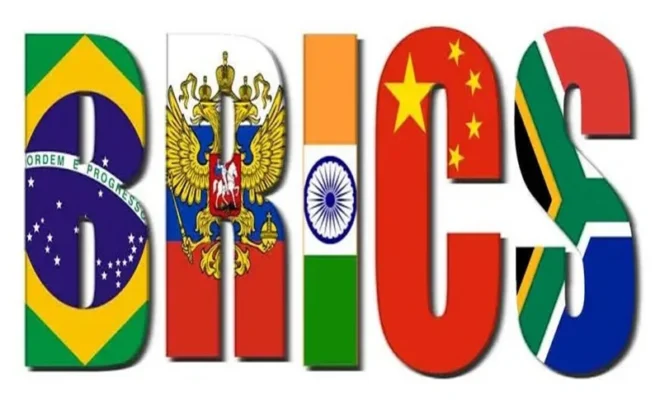
However, BRICS is becoming a more complex economic entity, which pays more and more attention to the usage of local currencies for international trade purposes.
This group of nations, which initially consisted of Brazil, Russia, India, China and South Africa, now includes other major emerging economies. The growth of the organization and its economic power have brought the issue of reduced dependency on the conventional system of finance controlled by the West.
Local currency trade becomes the core of the discussion. Instead of the US dollar usage for all cross-border transactions, the BRICS nations consider the possibility of using their local currency in international business.
The proposed approach is not supposed to be a threat to the supremacy of the USD in the global economy; it becomes the way of diversification in the international commerce sphere.
What Is the New BRICS Strategy?
The evolving BRICS approach basically entails expanding economic cooperation, but providing countries with more freedom in how they engage in international business.
With the expansion of the group, BRICS countries become more influential in terms of the proportion of the world’s people, resources, energy generation and emerging markets. As such, BRICS becomes a more influential player in the discussion on international finance.
One of the key aspects of international finance is the infrastructure for payments and settlements. The BRICS countries have looked at the possibility of making transactions across borders easier through the use of national currencies or some other payment methods. It is not about creating a BRICS currency right away, but making international business less dependent on a single currency or finance system.
Why Are BRICS Countries Pushing Local-Currency Trade?
Motivation differs from country to country; however, the key driver seems to be the minimization of transaction dependency on the US dollar.
If two countries conduct transactions in dollars, companies and banks will face certain extra currency conversion expenses and risks associated with volatility of the dollar exchange rate. The usage of local currencies could help to mitigate those expenses when it comes to bilateral transactions. There is also a geopolitical aspect.
A number of BRICS states have experienced sanctions or restrictions connected with the Western financial system. As a result, there was talk about the need to develop payment systems less exposed to foreign financial pressure.
Thus, for developing countries, local currency transactions may be seen as an economic and geopolitical tool.
Does This Mean BRICS Is Creating a New Currency?
Not necessarily. This is perhaps the most important distinction to make in the context of BRICS expansion and local-currency trading.
There have been a number of theories on the idea of BRICS common currency, but making local currency transactions possible is a separate thing altogether, much more realistic.
A Brazilian company might enter into a business deal with an Indian company using both countries’ national currencies through a financial instrument that would be decided upon beforehand. In the same way, other BRICS nations may enter into bilateral agreements to cut out the necessity for every transaction to take place in dollars.
A common currency will need a much higher degree of economic and monetary integration.
How BRICS Expansion Changes the Equation
BRICS’ enlargement means that it has a significantly wider economic reach.
It means bringing more natural resources, consumer markets, trade routes, investments, and financial systems into the group.
And it is essential since the efficiency of local currency clearing is partly based on the amount and variety of trade operations conducted between participating economies.
If there are more countries using each other’s currencies for trading, it can mean that there will be fewer occasions for the need to convert dollars.
However, that does not mean that the dollar suddenly loses its international function.
The US dollar has a deep root in global trade and finance.
What Does This Mean for the US Dollar?
The most fundamental question about BRICS strategy is whether this will speed up de-dollarization.
It is not quite clear what answer should be here, but there can be gradual de-dollarization in certain types of bilateral trade due to increased use of local currencies. But the replacement of the dollar in international finance requires a lot more than political consensus.
The dollar benefits from the depth of financial markets, international usage, developed infrastructure and financial relations that have been built for decades.
Thus, the growth of BRICS is rather an effort to build a multipolar financial system than an attack on the dollar.
Importance of India in Terms of Local Currency Usage
India plays a special role in this regard due to its increasing trade relations with large emerging countries.
India has tried to introduce systems of international trading in rupees, while retaining close connections with dollarized global finance system.
This makes an interesting intermediate situation. India can promote increased use of national currency when it is commercially reasonable without giving up international financial system.
In the case of BRICS, the importance of India lies in its status as one of the largest economies and consumer market in the world.
China’s Role in the Strategy
The other element which is crucial in the formation of local currency transactions is China.
The renminbi is an essential part of China’s international trading and has been actively pushed for international settlements.
As China is one of the biggest countries in terms of international trading, the usage of their currency in bilateral trade may affect not only BRICS.
Nevertheless, the renminbi is not on the same level of importance as the US dollar in the global financial arena.
What Happens to Global Trade If Local Currencies Grow?
With greater participation in local currency trading, international business would begin to diversify in terms of currency usage.
Rather than all transactions being conducted in dollars, firms could engage in transactions using various currencies based on who their trading partners were.
While this may lead to greater fragmentation, it might also be a multipolar financial system.
For firms, however, a multipolar system comes with its own set of problems as well. Handling different currencies becomes more complicated, while exchange rate risk may become an added headache.
Whether local currency trading would prove successful, therefore, will not only depend on political decisions but also on efficiency of the system.
The Biggest Challenge: Trust and Liquidity
What will likely stand in the way of lowering dollar dependency may not be political reluctance. It might be the simple financial feasibility.
International currencies require extensive markets, trustworthiness of the system, predictable monetary policies, and adequate liquidity.
Companies have to be sure that they can accept, keep, exchange, and invest in the currency that they earn through their international business deals.
In the absence of such conditions, firms can continue to rely on the dollar despite the availability of alternatives.
This implies that if local currency trade becomes widespread, BRICS nations have to build a significant amount of financial infrastructure.
Can BRICS Change the Current Financial System?
It can play a role in the transition process but the change cannot take place quickly.
A more plausible option is the development of a multi-currency financial system in which the dollar continues to have a critical role, but competes with other currencies of particular regions and countries.
The expansion of the BRICS alliance can speed up this process by providing more chances to conduct transactions without involving any third party.
Explore India’s Growing Global Influence
Why Does The 2026 Forum Matter?
Check out why India’s Supreme Court-led BRICS forum is significant for global judicial cooperation.
What Does “Humanity First” Mean?
Uncover how India’s BRICS chairship puts humanity first amid sanctions and global tensions.
Why Is Doval In Beijing Now?
Find out why NSA Ajit Doval’s Beijing visit matters before the BRICS Summit.
What Drives BRICS Sports Cooperation?
Browse the key agenda, 11 participating nations, and goals of the BRICS Sports Ministers’ Meeting.
Why Reform Global Financial Architecture?
Dive into Jaishankar’s call for reforms to make global financial institutions more representative.
What Does It Mean for Ordinary People?
In terms of consumer effects, this may not be obvious right away.
International currency deals take place primarily at an institutional and corporate level. However, currency trends on the international market can have an effect on exchange rates, cost of imports, investments and prices of goods.
Those nations who depend highly on imports of energy supplies, technology and materials may see certain effects of currency and settlement changes.
Therefore, the diversified international monetary system may influence the whole set of economic processes, from trade deals prices to investments tactics.
Conclusion
The expansion of BRICS and local currency transactions is a broader attempt to reform the way of participation in international finance for BRICS countries.
This tactic is not about changing the US Dollar itself. It is about providing BRICS countries with new opportunities for international trade and decreasing their dependence on one currency system.
Will this approach work? That depends on a number of practical factors including liquidity, trust, payment system, currency stability and willingness of companies to use these instruments.
At the moment, the most significant move in this direction is not the appearance of BRICS currency.
It is the process of creating alternative to the current situation.