
Preventive Healthcare at Scale: Lessons from India’s Cervical Cancer Vaccination Drive
The Indian healthcare landscape has generally been seen in terms of the scale of hospitals, doctors, pharmaceuticals and digitization within the industry. However, one of the country’s most significant successes in the realm of public health may prove to have been made not in terms of treating disease, but rather in preventing it.
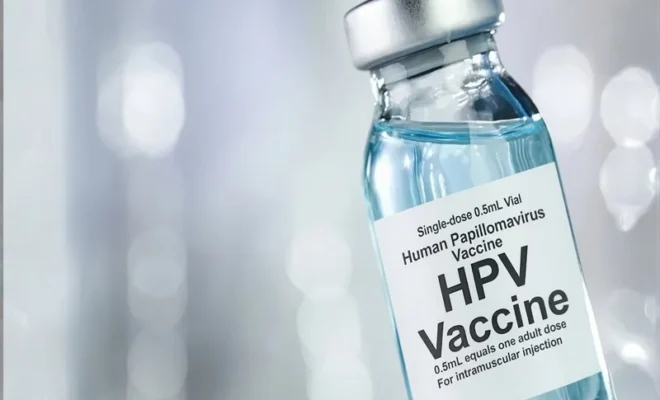
An illustration of just such an effort may well come in the form of cervical cancer and the role of HPV vaccination in addressing the problem. Cervical cancer remains one of the most significant issues in the public health landscape of India, but one of the most important risk factors associated with the disease – chronic infection with certain types of human papillomavirus (HPV) – is preventable.
The case of HPV vaccination in India thus amounts to far more than merely an inoculation program.
Why Cervical Cancer Is a Preventable Health Challenge
Cervical cancer does not appear suddenly. Infection by some of the high-risk strains of HPV leads to abnormalities in the cervical cells which can take years to develop. And it is this lengthy time period that makes prevention possible.
Prevention is significant in that it helps lower costs of illness, both financially and emotionally. A woman who does not suffer from cervical cancer will not need any form of treatment such as surgery, chemotherapy and radiotherapy or even follow-up for that matter. It would be much cheaper and easier on the patient’s family as well as the healthcare system.
This is the basic principle behind preventive medicine.
India’s Vaccination Drive Is a Population-Level Experiment
This significance is due to the fact that the vaccinations can help to reach a large number of people. By vaccinating the teenagers, one has a chance to stop HPV in its tracks before it affects anyone, which distinguishes the strategy from a treatment method for a woman.
The size of the country makes the experiment even more significant. A successful preventative program cannot solely rely on the people who are health conscious, rich enough to access the private healthcare services, and know how to take care of themselves.
What matters is that the program makes it possible for different groups of society to practice preventive measures.
The School Can Become a Public-Health Platform
One of the key lessons learned from vaccination drives is the importance of utilising institutions that the family trusts.
Schools could act as effective mediums for vaccination of adolescents. They could serve to connect governments with parents, organise vaccination drives and set up systems of follow-ups. More importantly, they would help turn preventive healthcare into an integral aspect of adolescence rather than something which families think of only when there is a health problem.
However, schools should not be solely relied upon for this program. Parents have to be provided with all the necessary information, healthcare workers have to be trained adequately, and the health authorities in the locality have to have systems of informed consent, record keeping, vaccine distribution and follow-ups in place.
This lesson is not limited to just HPV vaccination; it has much wider applicability.
Trust Is as Important as Supply
Vaccinations could exist yet fall short in living up to their potential if there is no trust in the communities where they operate.
There are several reasons why communications about HPV vaccine is an especially challenging task since it relates to a sexually transmitted disease and, at the same time, is mainly targeted at teenagers. Miscommunication may result in unjustified fear, lack of understanding or stigma.
The solution here is not necessarily increased publicity, but public health communications.
Parents must be educated about HPV, the need to vaccinate early, protection provided by the vaccine and also the fact that vaccination does not substitute cervical cancer screening in the future.
These people could help spread this information in an adequate way: doctors, nurses, teachers and community health care workers.
Vaccination Cannot Replace Screening
Possibly the single most crucial take-home message is that prevention requires several tiers.
Vaccination against HPV can significantly lower the likelihood of contracting cervical disease through HPV infection; however, vaccination cannot be seen as an alternative to screening since women may contract cervical cancer from HPV types not completely covered by a specific vaccine and may be under-represented in vaccination coverage.
Thus, a strategy for prevention must consist of all the above measures – vaccination and screening combined.
In the case of public health, it is here where the hard part comes since the detection of an anomaly only becomes helpful in cases where the woman has access to proper diagnostics and treatment.
This way, the process of prevention becomes successful only as a whole – from vaccination to diagnosis and treatment.
The Equity Question Cannot Be Ignored
Ultimately, India’s goal of preventive healthcare success will be measured by whom the system serves.
Urban populations that have better access to healthcare services might be able to seek out vaccinations and screenings on their own. The bigger question is whether girls and women from poor, underprivileged communities, and especially rural areas, will be left out.
Factors such as cost, distance, knowledge, social attitudes, and the presence of healthcare providers could play a role in participation.
A model that is really scalable, however, must incorporate equity into its DNA.
Public health programs must target populations whose access to private healthcare services is poorest.
The idea must be simple: a girl’s chances of being protected should not hinge on where she comes from and how much money her parents earn.
Prevention Requires Patience
Preventive medicine may be a difficult political issue because some of its best outcomes are hard to see.
A vaccination project could save many people from developing cancers in the future, but these cancers would not be registered in hospital data as “prevented diseases.” Their effectiveness would be seen in healthy lives, in families spared a terrible diagnosis, and in resources that could go somewhere else.
It requires sustained commitment.
The effects of vaccination against HPV will become visible only after a few years, not weeks. Governments should be prepared to finance, trust, produce, monitor, and screen for HPV beyond the initial buzz.
What India Can Learn for Other Diseases
The campaign against cervical cancer vaccination also provides some valuable lessons which go far beyond the area of HPV.
Non-communicable diseases have now started becoming common in addition to communicable diseases in India. Diseases such as diabetes, high blood pressure, heart disease and certain forms of cancer require an approach which focuses on early identification of the risk factor and not on treating the patient after the emergence of serious symptoms.
The same holds true: reaching out to people even before they become patients, utilizing community-based organizations, providing affordable and effective services, communicating effectively and linking up prevention with treatment.
From Campaign to Culture
The ultimate aim ought not to be making prevention of diseases a one-time program for the government. Prevention of diseases should be made part of the regular process of accessing healthcare.
In terms of cervical cancer, this would mean vaccinating an adolescent with the right HPV vaccine, a young woman who knows her health risks and an adult woman being screened and treated.
This would prove to be harder than conducting a vaccination drive but would be much more potent.
Conclusion
Vaccinations against cervical cancer in India have many lessons in how preventive healthcare works and how it needs to be done.
Science might deliver the solution, but the public health infrastructure decides whether it gets implemented on a large scale. Availability must go hand-in-hand with trust. Vaccination must link up with screening. National ambitions must match the local implementation. And accessibility must be the key factor.
Preventive healthcare’s greatest accomplishment might prove to be preventing the disease from ever happening.
India now has the chance to show that prevention is not just an ideal, but something achievable when done right on a large scale.
AI Meets Healthcare: Discover India’s Next Medical Revolution
- How Is Voice AI Transforming Healthcare?
Check out how voice AI pilots are improving healthcare and citizen services in Karnataka. - Where Will New ESIC Facilities Open?
Find out how seven new ESIC healthcare facilities could strengthen India’s medical infrastructure. - Why Is India Facing Worker Shortages?
Uncover how frontline healthcare worker shortages are challenging India amid rising COVID-19 cases. - Can AI Doctors Transform Indian Healthcare?
Explore how AI doctors could reshape medical care from emergency response to smarter treatment. - Can AI Reduce Doctor Burnout?
Reveal how artificial intelligence is helping ease workload pressures across India’s healthcare system.