
PM Surya Ghar Phase 2: Higher Subsidies for Urban Rooftop Solar Explained
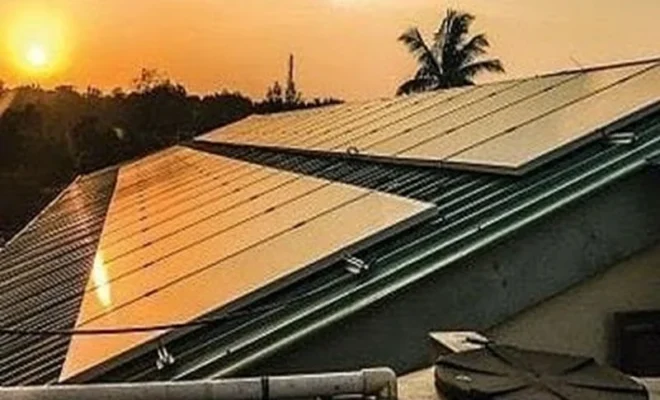
The Indian Government’s rooftop solar initiative is going through a different stage with the introduction of further steps under the scheme PM Surya Ghar: Muft Bijli Yojana to make solar rooftop systems more economical. The most recent step from the Government involves increasing financial support from the central government for the installation of the first 2 kW of rooftop solar system capacity.
The move is highly significant especially for middle-class and poor families in urban areas where costs associated with installation of the rooftop solar system may still be a major barrier. Up till July 22, 2026, the scheme has been able to help 48,02,717 houses with the installation of 39,72,447 rooftop solar systems.
What Is PM Surya Ghar?
Project Muft Bijli Yojana for PM Surya Ghar was introduced in February 2024 with an aim of enabling one crore residential houses to adopt rooftop solar power system by financial year 2026-27. The project is demand driven, and can be availed by residential customers with a connected grid power connection of their respective DISCOM.
The broader aim behind the project is to enable households to produce electricity on their own, save money on electricity bill and adopt renewable energy sources.
What Has Changed Under the Latest Update?
The key point here is the provision of increased subsidies for the first 2 kW of rooftop solar power generation capacity. This was announced by the Ministry of New & Renewable Energy in order to make it easier for middle class and weaker economic sections to install the solar panels.
But, the term ‘higher subsidy’ is required to be understood. According to the recent official government statement, there have been higher subsidies announced for the first two kW, but no higher universal subsidy rate has been announced in this release.
In the previous scheme known as PM Surya Ghar, the subsidy rate was fixed at ₹30,000 per kW for the first two kW and ₹18,000 per kW for an additional one kW making the total central subsidy to be ₹78,000 for 3 kW and above.
Thus, while applying, one should see what subsidy he/she gets according to the official national website.
How Much Subsidy Can a Household Get?
In the original PM Surya Ghar scheme structure, the primary central financial assistance was made with regard to the capacity of the system. While a 1 kW residential system could earn a ₹30,000 subsidy, a 2 kW system was eligible for a subsidy of ₹60,000 and above 3 kW, a maximum subsidy of ₹78,000.
It should be noted that as per the latest government notification, increased central financial assistance is being made available for the first 2 kW of the system. The exact figure applicable would be known after considering the scheme guidelines and implementation of the scheme through the national portal and DISCOM.
Thus, it becomes imperative for urban households to calculate their own subsidy based on their eligibility.
Don’t miss these solar subsidy updates and smart panel comparisons before applying online!
Can You Get 60% Cashback?
Check out the latest steps to apply online and receive the subsidy directly in your bank account.
Which Solar Panel Saves More?
Find out whether Aureus Solar or HDT Solar is the better choice for Indian homes in 2026.
Want 300 Units Free Electricity?
Uncover the PM Surya Ghar online application process and subsidy benefits available today.
Is Your Subsidy Already Approved?
Track down the easiest way to check your PM Surya Ghar subsidy status online in minutes.
Are You Applying the Right Way?
Why the First 2 kW Matters
It is especially important since small rooftop systems are quite pertinent to households consuming a moderate amount of electricity. A family which is using solar energy for daily operations, such as powering fans, lamps, refrigerators and so on, does not need a very large rooftop system.
Through increasing the amount of subsidy provided to the first part of the system, the government tries to lower the necessary expenses of those families which would otherwise be unable to purchase the rooftop system.
What About the New Low-Interest Loans?
Apart from the subsidy, there are other financial provisions offered by the new regulations. One of them is a collateral-free loan by nationalized banks at concession interest of repo rate plus 50 basis points.
According to the July 28, 2026, government statement, it was 5.75% per annum with up to 10-year tenor.
This provision can help those households that cannot afford the full cost of the system and have to pay it off in instalments. They would not have to consider the solar system as pure expenses but rather as something which will decrease their electricity bills.
Can Urban Households Apply?
Yes. Scheme PM Surya Ghar is not limited to rural families only. This scheme is for the residential consumers in India having a grid connected power supply from DISCOM.
Thus, an urban resident can apply online on the national portal if he fulfills the criteria of the scheme along with a good rooftop setup.
Availability of rooftop, DISCOM criteria, feasibility, etc. can affect the actual installation process.
What Does “300 Units of Free Electricity” Mean?
This scheme has often been stated to give away as many as 300 units of free electricity every month. But that doesn’t necessarily mean all the households get 300 units of free electricity every month in the form of cash or otherwise.
This idea is associated with the generation of electricity via the rooftop solar energy system installed and the consequent savings from electricity. The quantity of electricity that a system can generate would depend upon a number of factors like the capacity of the system itself.
It has been reported by the government that many households have reduced their electricity bills after installing this system, with over 18.93 lakh households having nil electricity bills in some months until July 22, 2026.
How Do You Apply for PM Surya Ghar?
Application process starts from the official PM Surya Ghar national website. Any residential consumer having an eligible electricity connection in the grid will be able to register themselves on the website, submit the needed information regarding electricity connection and make a rooftop solar application.
The website also helps in vendor selection. Once the installation is done, then the system has to be verified and commissioned by the respective DISCOM before applying for the financial assistance from the central government.
According to the previous guidelines of the government, subsidy is given after installation and verification of the system.
Why the Scheme Is Expanding So Quickly
The extent of usage of PM Surya Ghar has expanded greatly after its inception. As of July 2026, about 40 lakh roof top solar installations have been made with the benefit of over 48 lakh households.
The budget allocation of the scheme for the financial year 2026-27 has been enhanced to ₹22,000 crore. In June 2026, the Union Government announced that the program aims to make 75 lakh roof top solar installations in the houses of 75 lakh households by December 2026.
What Should Homeowners Check Before Installing Solar?
Subsidy alone cannot be the basis for installing solar rooftops. The homeowner must first know his/her daily power consumption and the right system capacity.
Additionally, the vendor should be verified from the website, the total cost of installation
must be known prior to signing the agreement, subsidy must be checked, and the requirements of the DISCOM for inspection and metering should be confirmed.
Moreover, the rooftop itself needs to be checked for enough exposure to sunlight and availability of space.
The Bigger Picture for Urban India
Recent PM Surya Ghar scheme numbers indicate that the government is making efforts to bring rooftop solar from being a niche investment to becoming a household energy source option.
Increased assistance with the first 2 kW, concessional loans, and utility-led aggregation scheme are supposed to tackle the problem of affordability, which is one of the main issues in the adoption of such a technology. The government notes that the ULA scheme will be especially useful for disadvantaged households and will contribute to the rapid installation of rooftops solar among those households which use between 1 kW and 3 kW of electricity.
Conclusion
Phase 2 of PM Surya Ghar should not be considered just another number in terms of the subsidy at the national level. The recent policy move involves not only additional financial help for the initial 2 kW but also a variety of implementation methods and affordable financing schemes.
When it comes to urban dwellers interested in installing solar panels on their roof, this move may lower the financial costs for that purpose.
The key thing is to find out the subsidy you are eligible for by visiting the official website of the PM Surya Ghar program before paying anything or working with vendors.
The installation of the rooftop solar energy production has become cheaper, but the real advantage will depend on choosing the right system capacity.