
Cyber Warfare Alert: NIA Launches Multi-State Raids Over ‘Operation Sindoor’ Attacks on 54 Government Sites
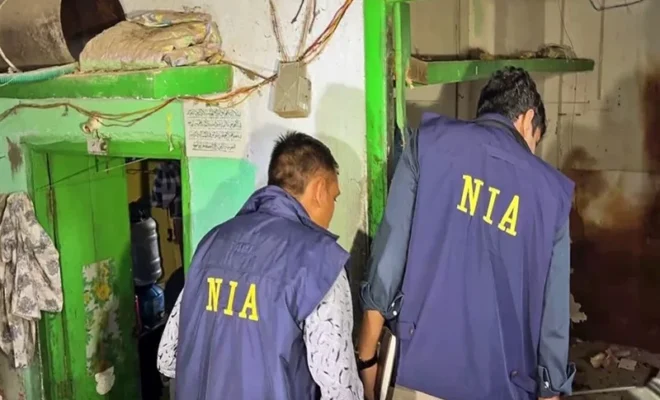
The Indian cyber security setup has further stepped up efforts to probe the reported case of cyber terrorism conspiracy under Operation Sindoor, as the National Investigation Agency (NIA) conducted raids in five states following the reported attack on 54 government websites.
This case pertains to the reported DDoS attack on government websites, computer resources, and Critical Information Infrastructure. As per the information available from the NIA, the reported actions were aimed at undermining national sovereignty, security, and unity and creating fear among people.
What Happened During Operation Sindoor?
Operation Sindoor means the Indian armed response that was initiated in May 2025, in retaliation for the Pahalgam terror attack on April 22, 2025. This cyberattack case involves efforts made to disrupt the digital infrastructures of Indian government institutions during this highly volatile period.
Currently, the NIA is investigating the possibility that the attacks were an attempt to disrupt government institutions during a time when tensions regarding national security were very high. Most importantly, what is worth noting here is that the NIA mentions the attempts at DDoS attacks.
Why Were 54 Government Websites Targeted?
Based on the information provided by the NIA, the suspect reportedly attempted to execute sophisticated DDoS attacks on 54 sites hosted by government agencies. DDoS attacks are executed by bombarding an Internet service with a large amount of traffic or requests in order to disrupt the accessibility of the service.
Should the targeted agency have any sort of digital infrastructure, the effects of a DDoS attack would likely go beyond an online service interruption.
This is why the NIA is pursuing this case under the category of cyber-terrorism as opposed to regular hacking.
Where Did the NIA Conduct Searches?
The recent searches have been carried out in five different places in India. The NIA teams conducted searches of premises located at Junnar in the Pune district of Maharashtra state, Nadiad in the Kheda district of Gujarat state, Ramagundam in the Karimnagar district of Telangana state and Gopalganj in Bihar and Delhi.
The multi-state nature of the investigation is important in the sense that investigators now are not only concentrating on those persons who were arrested in the first place, but are trying to find out whether there were any other people associated with the planning, coordination and execution of the alleged cyber attacks.
What Was Seized During The Searches?
During the searches, investigators have seized certain number of electronic devices and documents that the NIA claims may have some information related to the alleged hacking operations.
According to the agency, the searches led to the seizing of three laptops, five mobile phones and other digital media devices such as pen drives. All this information is expected to be forensically analyzed to establish communications and technical links with the rest of the network related to this case.
Two Accused Have Already Been Arrested
These latest searches are part of an ongoing probe which has already led to the arrest of two individuals. This matter was first registered by the Gujarat ATS, but now it has been transferred to the NIA.
According to the agency, while conducting their probe and doing technical analyses, it was found that there were other suspects as well who have helped the persons who were already arrested, including helping them prepare to conduct DDoS attacks.
These latest searches aim to find out the extent of the connection between these people.
What Makes This a Cyber-Warfare Concern?
The incident brings to the fore how modern warfare may transcend the realms of traditional military campaigns to reach out even into the digital space.
What looks like an ordinary government website to the common individual may become part of the broader digital network belonging to the government. In that light, any attempt to disrupt multiple government servers at once becomes an issue of coordination, resilience and even national security.
An attack against 54 government websites in Operation Sindoor becomes especially critical in view of the fact that it took place amid the backdrop of a military showdown.
Yet, it must be noted that there is a difference between a suspected cyber-attack campaign and a proven state-sponsored cyber war mission. The current NIA probe centers on determining the perpetrators of the cyberattacks, as well as their coordination and objective.
Why the Digital Evidence Matters Now
The next crucial stage of the investigation would likely be forensics on the seized gadgets.
Digital evidence will enable investigators to piece together the communications, trace accounts or infrastructure used in the attack, identify relations between the suspects and figure out if there were more participants involved in the operations.
Since most cyber crime investigations are highly dependent on digital trails, forensics might yield some evidence which is not readily available through the initial investigation process.
NIA stated that its investigation is ongoing and further steps will be taken based on the results.
What Happens Next?
It is expected that the investigation will concentrate on uncovering the overall network involved in the attack and the exact part played by each suspect.
The authorities will try to find evidence through the laptops, phones and storage devices which can link the people who have been searched today to those who were arrested before. The investigation will also try to figure out how big and sophisticated the DDoS campaign was and if any other governmental system was targeted.
Until then, it will be an extension of the investigation, not its end.
Conclusion
NIA’s multi-state searches draw the spotlight on a growing issue that threatens national security – the vulnerability of government systems to coordinated cyberattacks.
With 54 government websites alleged to have been targeted in Operation Sindoor, cyber resilience emerges as an integral part of national defence. Though the network and intentions behind the alleged attacks continue to be investigated by the authorities, the recent searches confirm that efforts to compromise crucial government digital infrastructure have assumed the significance of national security threats.
Unlike the routine website outage, the most recent operation by the National Investigation Agency (NIA) involves an investigation into allegations of an attempt to disrupt 54 Indian government websites in Operation Sindoor.
Stay Updated: Explore More NIA Raid Stories
What Triggered NIA’s 25 Raids?
Check out the latest details on the PFI-linked investigation involving an alleged plot against PM Modi.
Why Did NIA Target Four States?
Find the key details behind NIA’s multi-state raids at locations linked to PFI.
Why Did NIA Raid 60 Locations?
Uncover how the major operation targeted suspected ISIS-linked terror networks.
What Sparked Raids Across 10 States?
Browse the latest developments from NIA raids on PFI offices over alleged terror activities.
What Links J&K Raids To Terror Funding?
See the details of NIA’s J&K raids linked to a Pakistan-backed terror funding case.