
Dope Tests for Commercial Pilots: Aviation Ministry Considers Mandatory Checks After Air India In-Flight Incident
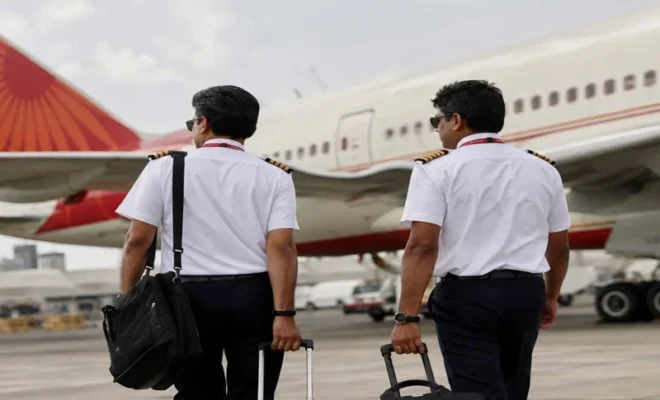
The safety regime for the pilots flying commercial aircraft in India may soon get even more stringent. The Ministry of Civil Aviation is deliberating on whether to make all commercial pilots undergo at least one test every year randomly for psychoactive substances, instead of the existing regime, wherein only some of the pilots are made to undergo such tests.
This is following increased scrutiny after the recent event of a sudden loss of 300 feet of height during cruise of an Air India flight from Phuket to Delhi on August 4. Many passengers and crew were hurt in the process. The incident was declared as a serious incident and has now been referred to the Aircraft Accident Investigation Bureau (AAIB).
Crucially, there is no determination as yet that any substance use caused the incident. The pilot-in-command had given his first test, which required follow-up lab test.
What Happened on the Air India Flight?
On August 4, Air India Flight AI2379 traveling from Phuket to Delhi experienced an encounter of severe turbulence which led to a drop in altitude by about 300 feet.
Afterward, the aircraft regained stability and safely landed in Delhi. As per government sources, passengers and crew members sustained injuries during this episode. In response, the AAIB decided to investigate this case.
Following the prescribed procedure after such an occurrence, the two pilots had to undergo psychoactive substance tests. The co-pilot’s test did not show the same level of worry as that of the pilot-in-command who showed results requiring confirmatory tests.
Samples had been sent to a particular lab for further tests. Both pilots had been grounded during this process.
Does a Positive Screening Result Mean the Pilot Was Using Drugs?
No, absolutely not. It is very critical indeed.
The initial results from the screening of the Air India captain were stated by the authorities as needing further verification through additional tests. The screening results do not determine finally whether there was any actual impairment or if the use of a prohibited substance was involved.
According to the Ministry of Civil Aviation, the procedure needs to be completed first before making any decisions. And the AAIB investigation of the accident also does not have anything to do with the laboratory confirmation process.
Thus, the initial screening results cannot be automatically considered as a fact proving the impairment of the pilot during the flights.
What Are the Current Dope-Testing Procedures for Pilots?
According to the current guidelines of the DGCA, the airline companies are obligated to conduct random tests on the psychoactive substances used by 10% of pilots annually.
Therefore, the current procedures of the testing do not require all commercial pilots to be tested for drugs once a year. Random testing takes place.
The question arises whether these requirements are still valid.
What Is the Government Considering Now?
The Indian Civil Aviation Minister K.Rammohan Naidu made an announcement on August 25 regarding consultations being carried out by the Directorate General of Civil Aviation towards enhancing the current testing regime.
One of the suggestions is making sure that each pilot who works in the commercial airline industry gets tested randomly within the year. However, this suggestion is still undergoing evaluation by the government. This means that this should be regarded as a suggestion under evaluation rather than a new policy.
This would be a major upgrade from the current 10 percent testing annually.
Why Random Testing Is Being Considered
Randomness is an essential component of the proposed system.
If the pilots know when a test is going to be administered, the deterrence effect may not be as high. However, random drug tests imply that pilots will not know when they could be tested.
Thus, the argument presented by the Indian government is also aimed at developing a better culture of compliance among pilots and making sure that they are fit for flying any time they show up for work.
Also, the proposed new policy for testing pilots for psychoactive substances is a part of the overall evaluation of the pilot drug testing standards of India in light of the recent Air India incident.
Air India Has Already Moved Further
As the government contemplates a change in the rules regarding pilot drug tests for the aviation industry, the airlines Air India and Air India Express have already taken a step further.
After the incident in Phuket-Delhi, the airlines began mandatory testing for psychoactive substances for all pilots employed by them.
What Happens If a Pilot Tests Positive?
There are consequences for psychoactive-substance tests in India’s current framework.
It has been reported that under the current DGCA framework, if the pilot tests positive, then he is required to undergo rehabilitation. The second positive test can bring about the suspension of the license of the pilot for three years, while the third time can make him lose his license.
The particular consequences would only be known once the framework has been changed after the consultations by DGCA.
Could the New System Affect Flight Operations?
This is among the questions that will have to be examined by the government and the aviation industry.
Testing each commercial pilot on an annual basis would involve putting up an extensive testing framework comprising laboratories, scheduling mechanisms, medical practitioners, record keeping processes, and handling procedures for inconclusive findings.
The DGCA is thus seeking advice from various stakeholders before it decides on whether the testing process would be feasible in practice.
The objective would be to enhance safety without causing any disruptions to the operations of airlines.
Why the Proposal Matters for Passengers
For travelers, the whole issue boils down to one simple thing: Are pilots fit both physically and professionally to fly?
Today’s aviation industry has many procedures that involve training, medical qualification, fatigue, alcohol, and safety management systems. One more procedure for testing psychoactive substances is meant to make sure that pilots qualify for flying standards.
In case of effective implementation, the procedure of random testing would offer travelers extra guarantees that pilot qualifications are checked all year round and not just during the process of periodic medical examination.
What Happens Next?
The DGCA is in the process of engaging stakeholders and evaluating ways by which the current system can be improved.
The main thing to remember at present is that 100% random testing on an annual basis has not yet been established as a national policy. The government is considering the proposal and evaluating its viability.
In the meantime, the inquiry into the Air India Phuket-Delhi case and laboratory testing of the pilot’s sample are two different issues that need to be addressed separately.
Conclusion
The Phuket-Delhi case involving Air India has led to further debate regarding monitoring of pilot health and usage of psychoactive substances in the Indian aviation sector.
The decision by the government to randomly test all commercial pilots annually would be a significant change from the present 10% annual testing policy. However, the proposal is being debated, and consultations are being held with various stakeholders before a decision is made regarding implementation of the new policy.
From the consumer perspective, the new regulation is simply an improvement of a preexisting one.
More Air India Stories You Shouldn’t Miss
What Forced Air India’s Return?
Check out the technical issue that sent this Mumbai-bound flight back to Delhi.
What Really Happened Beyond Turbulence?
Uncover the key details behind the Air India aircraft incident.
What Happened During AI2379 Turbulence?
Find out what unfolded mid-air during the AI2379 turbulence incident.
How Can Amritsar Reach 27 Destinations?
Explore Air India’s Easy Connect service linking Amritsar to global destinations via Delhi.
What Else Happened During The Incident?
Look into the latest details surrounding the Air India aircraft incident.