
New Electric Ray Species Discovered in Arabian Sea: Scientists Name It Tetronarce ramanamurthyi
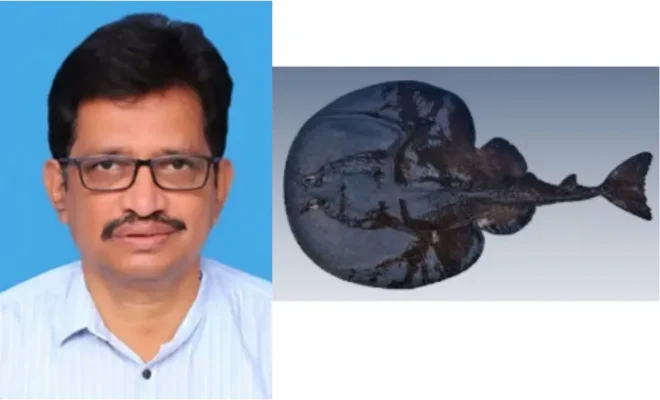
Zoological Survey of India (ZSI) scientists have identified a new species of electric ray in the deep seas of the southeastern part of the Arabian Sea, being the first record of the genus Tetronarce in the northern Indian Ocean. The newly discovered species is called Tetronarce ramanamurthyi.
The new species was unveiled on October 27, 2026, through the Ministry of Earth Sciences. It was discovered through the efforts of the Deep Ocean Mission of the Government and has been published in the international scientific journal Zootaxa.
Nine Specimens Help Identify the New Species
Description of the new species was based on nine specimens found in deep waters of southwestern coast of India. Description of the physical traits and genetic analysis through DNA sequencing were carried out to confirm the distinct evolutionary lineage of the ray.
This research was led by Dr K. K. Bineesh, scientist at the Marine Biology Regional Centre, ZSI, Chennai, along with Anil Kasinath, Junior Research Fellow. Their collaboration with Dr David A. Ebert from the Pacific Shark Research Center at Moss Landing Marine Laboratories, San Jose State University, USA, was also an important aspect of the research.
It adds knowledge about electric rays to the field of science.
What Makes the Arabian Black Electric Ray Unique?
Popularly known as Arabian Black Electric Ray, the Tetronarce ramanamurthyi exhibits dark blue blackish to dark brown coloration on its upper surface.
It has a flattened body that constitutes a disc that is wider than it is long and differentiates it from other members of the genus.
Distinctive traits include large openings around the eyes called spiracles, the lack of fleshy extensions around the spiracles, and small electric organs.
The study found out through the anatomy of the fish that it had 99 vertebrae altogether.
Genetic tests carried out using mitochondrial genes, COI and ND2 confirmed it as a separate species after genetic divergence was found from related species.
Electric rays are among the group of cartilaginous fishes.
They have specialized electric organs that produce electricity that aids in prey capture and defense mechanisms against any predators.
Species Named After Deep Ocean Mission Scientist
The taxon was named after Dr. M.V Ramana Murthy, Mission Director of the Deep Ocean Mission project under the Ministry of Earth Sciences. The naming is an acknowledgement of his outstanding contribution to marine science, ocean engineering, and mitigation of marine hazards in India.
The Deep Ocean Mission aids studies on the Indian deep-sea resources, marine biodiversity, and ecosystems.
Why the Discovery Matters for Marine Conservation
It is difficult to study deep waters due to their great depths, difficulty of access, and special equipment needed for scientific research. Such discoveries prove that by using traditional methods of anatomy in conjunction with genetic analysis, scientists can discover unknown marine species.
The discovery of Tetronarce ramanamurthyi offers a new standard for scientific research in terms of distribution, classification and biodiversity in the northern part of the Indian Ocean.
Scientists believe that the further exploration of the depths will contribute to the development of science, as well as conservation measures for the seas.
Global Headlines: Tennis Triumphs, Rail Innovation & India’s Growing Influence
How Did Elena Rybakina Beat Sabalenka to Claim the US Open?
Discover the reported US Open final result, Rybakina’s rise to world No. 1, and the key moments behind the championship victory.
How Fast Did India’s First Vande Bharat Freight EMU Go?
Explore the 130 kmph trial run on the Ahmedabad–Mumbai route and learn how the freight train could transform goods transportation.
Why Is the UN Chief Backing India’s Permanent Security Council Seat?
Find out what António Guterres has reportedly said about India’s bid for a permanent UN Security Council seat and what it could mean for global representation.
Why Does South Africa Want a Bigger Global Role for India?
Explore South Africa’s position on India’s international role and why its foreign minister says BRICS is not an anti-Western bloc.
Can India’s Digital Testing System Regain Public Trust?
Learn how exam centre outages are raising questions about digital testing infrastructure, system reliability, and the need for greater accountability.