
OPED – Beyond Hyphenation: Why India-US Relations Must Stand on Their Own Merits
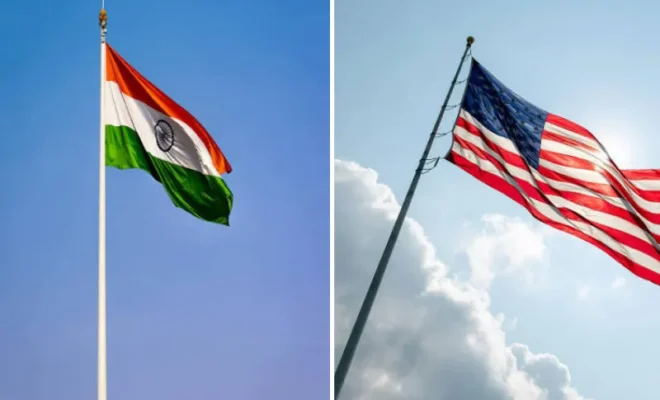
Through the ages past, the relations between India and the US have always been studied using the same geopolitical approach – relations between India and the US and Pakistan; the relations between India and the US and China or their respective views and interests in Asia. However, as the balance of power changes all over the world, this approach is becoming ever more outdated.
The relationship between India and the US covers all sorts of issues from trade to defence, technology, education, energy and people-to-people ties. It is significant not only due to the fact that both states are worried about China and have interests in the Indo-Pacific region, but also because each of them has something to offer to the other. The future of this relation depends on the recognition of such independent interests rather than the relations with other countries.
The Problem with Geopolitical Hyphenation
The hyphenation approach leads to the perception that a country’s bilateral relationship is part of a broader strategic competition. The ties between India and the US are always seen as a part of Washington’s relations with China or New Delhi’s long history with Russia. While such an interpretation might shed light on the issue, it would never be able to describe all aspects of the Indian foreign policy.
Strategic autonomy is a concept that India has been pursuing since its founding because it needs to take decisions based on its own interests. India is engaged in diplomatic relations with a number of different countries, among which there are the United States, Russia, Japan, and Europe without being in an alliance with any bloc.
Likewise, the United States has its own domestic agenda, economic interests, and international commitments. It is impossible to expect from both sides to share the same views on international affairs.
Therefore, disputes on trade barriers, tariffs, technology limits or energy deals need to be discussed as normal issues of negotiation rather than signs of strategic relationship failure.
A mature strategic alliance does not presuppose identical foreign policies but the ability to overcome disagreements without affecting shared interests.
Trade Must Move Beyond Strategic Rhetoric
Nevertheless, economic collaboration continues to form an integral part of India-US relations. Both nations enjoy a number of complementarities; whereas the United States has great technological, financial and research capabilities, India boasts its enormous market size, growing manufacturing sector, competent labor and developing digital infrastructure.
Nevertheless, goodwill in the strategic sphere will not help in resolving disputes in the trade area. Such issues as market access, tariffs, regulation, intellectual property rights, industrial policies continue to influence negotiations.
At the same time, both nations should concentrate on results. Consistent trade policies can stimulate investment, strengthen value chains, create jobs. Collaboration in semiconductors, pharmaceutics, renewable energy, artificial intelligence, advanced manufacturing may generate business opportunities.
It is important that trade policies will not serve only the purpose of maximizing political gains through separate declarations. It is necessary that both India and the US develop those policies which would prove themselves to be sustainable over time and commercially sound.
India needs access to technology and capital from America in order to boost its innovation. And America needs India as a growing consumer market and digital economy. These reasons justify collaboration irrespective of any geopolitical rivalry.
Defence Cooperation Without Strategic Dependence
Defence has emerged as yet another crucial component of the partnership. Joint exercises, military logistics pacts, intelligence sharing and defence technology ventures have seen increasing engagement between the two nations.
But this does not mean that greater defence relations necessarily translate into an official alliance. India still cherishes its right to set its security agenda, while the US maintains its own regional interests and strategies.
The most effective way is to work on those areas where cooperation yields tangible gains. Maritime security, information sharing, disaster relief, defence production and new military technology constitute such fields for collaboration.
What India has to do is ensure that it enhances its domestic defence industry and does not make strategic engagements substitutes for technological autonomy. Likewise, US policymakers need to accept that Indian actions would not necessarily reflect US aspirations.
Trust develops where both know the limitations of the other and bargain accordingly.
Technology and People-to-People Ties Offer a Stronger Foundation
The future of Indo-US ties will hinge more and more on technology and people. Collaboration in areas such as artificial intelligence, cyber security, space exploration, biotech and semiconductors could help boost the economy and ensure technological resilience.
Collaboration among universities, research institutes and businesses is key to ensuring that diplomatic initiatives translate into concrete results, forming a connection that lasts regardless of changes in political leadership.
There is also the question of the Indian diaspora in the US. Their contribution in the fields of technology, medicine, business and education illustrates the extent to which bilateral ties go beyond government-level talks.
But there is the question of immigration policies, which could potentially have an impact on these connections. Both sides would do well to find a clear and predictable way forward for professional interactions that are consistent with their respective national laws and objectives.
Managing Differences Without Losing Direction
It is impossible for any serious partnership to be without conflict. There will inevitably be differences of opinion between India and the US on various aspects of trade policy, conflicts around the world, energy decisions and approaches to global institutions.
The issue is how to turn these into grounds for pulling apart or grounds for negotiating.
A partnership whose only basis is the shared attitude to a third power is inherently at risk of shifts in priorities. Should these happen, cooperation based purely on one aspect can falter. A partnership built on economics, technology, institutions and people stands on more solid ground.
This entails clear communication and realistic attitudes on both sides.
Building a Partnership on Its Own Merits
India-US relations have advanced to a point that calls for an assessment of the successes and failures of their bilateral relationship. The progress is to be assessed from the results in terms of trade, technological cooperation, defense readiness, education and dispute resolution.
India does not have to give up its strategic autonomy in order to engage in cooperation with the US. Neither does the US have to concur with India’s views on all issues in order to acknowledge the value of a long-term relationship.
In the end, the quality of the relationship would depend on whether both sides can convert their common interests into enduring achievements despite their differences.
The course of India-US relations cannot be dependent on how either of them conducts itself with respect to a third party. It must depend on what the two countries can accomplish together, how they can resolve their disputes through dialogue and how their partnership works in favor of their people.
India’s Latest Updates: Defence, Finance, Green Initiatives & AI
What Is SIMBEX-26 and Why Does It Matter?
Discover the key highlights of the India-Singapore naval exercise in Visakhapatnam and how it strengthens maritime cooperation between the two nations.
Who Can Benefit From the Financial Inclusion Campaign?
Explore the nationwide campaign launched by the Department of Financial Services, including its key dates, objectives, and potential benefits for citizens.
What Is CBDT’s New Form 173A About?
Learn how the new reporting form relates to tax exemptions on government securities and what eligible taxpayers need to know.
How Can You Celebrate a Greener Diwali in 2026?
Find out how WWF-India and MoEFCC are promoting eco-friendly celebrations and discover practical ways to reduce your festive environmental impact.
How Will AI Help Preserve the Sourashtra Language?
Discover how Bhashini and IISc Bengaluru are developing AI-powered text-to-speech models to improve language accessibility and support linguistic preservation.