China’s Pacific Missile Test Signals a New Phase in Indo-Pacific Nuclear Competition
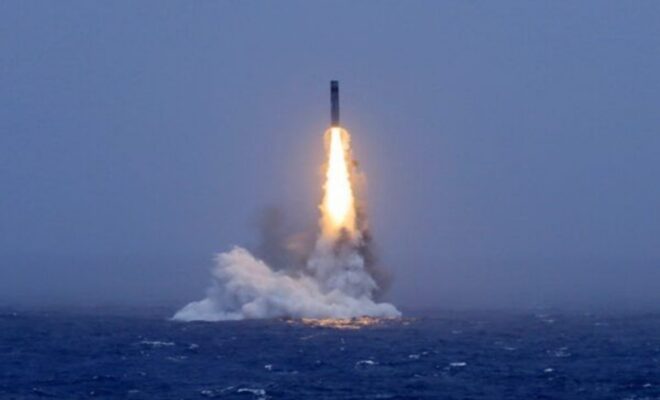
The recent ballistic missile test conducted by China in the Pacific Ocean has received global attention. However, the test is not only notable due to the missile but for what it stands for in the strategic sphere. Although China has referred to the test as an annual exercise in military training, countries such as the US, Japan, Australia, and New Zealand have been critical, describing the test as destabilizing.
In addition to the diplomatic responses, the test demonstrates the growing change in China’s nuclear policy. It is increasingly considered as the indicator of the growing confidence on the part of Beijing in displaying its nuclear capabilities through the use of the sea-based deterrent.
Why This Missile Test Matters
The importance of this launch is not in the missile’s effectiveness but in the message sent by China through the test.
While typical weapon tests are done in secrecy within national borders, this particular missile was fired from a submarine in the South China Sea, which landed in international waters of the South Pacific. Such a move demonstrates the confidence that China has in the ability of its submarine nuclear forces to operate.
Experts say that such displays are meant to create credibility. This is because a nuclear deterrent is credible if the potential opponents have faith that the nuclear forces will respond in any case.
This move by China showed that its naval deterrent force is reaching a new stage.
More Than Routine Military Training
The Chinese government described the event as part of its military exercises program. The surrounding circumstances have caused many to doubt the nature of the event.
It is important to note that the launch has taken place after another long-range missile demonstration in 2024, which was declared publicly.
The coincidence of events may also be worth considering. The most recent missile demonstration occurred at a time when China-Russia naval exercises, regional security issues concerning Pacific states, and actions carried out by US allies in the Indo-Pacific have taken place.
China’s Growing Sea-Based Nuclear Capability
One of the most significant aspects that can be noticed from this missile launch is the expansion of the nuclear deterrent power of China by using its submarines.
Generally speaking, the theory of modern nuclear strategy is focused on the creation of the “nuclear triad” which includes land-based missiles, strategic bombers, and submarine-launched ballistic missiles.
Of all the mentioned components, submarines are especially valued due to their ability to stay undetected and even survive if the enemy strikes first.
China has been working on improving this sphere for many years already. The use of modern ballistic missile submarines together with improved submarine-launched ballistic missiles allows China to reach the distant targets while staying within the waters under the protection of the Chinese navy.
The Importance of the Bastion Strategy
Experts in security matters have described this approach that is being developed by China as a “bastion strategy.”
While traditionally submarines were deployed out in the middle of the Pacific Ocean, the new strategy allows China to deploy submarines in relatively safe areas like the South China Sea and the Bohai Sea.
These areas are well-guarded by the Chinese naval and aerial forces, thus making it quite hard for other countries’ anti-submarine assets to locate and track them.
The increased range of missiles has reduced the requirement of patrolling by submarines near their targets.
With submarines staying safely in their bastions, long-range missiles can be launched at distant continents.
Regional Security Concerns
The demonstration of the missile has caused alarm throughout the Indo-Pacific region.
The development is seen by Japan as a sign that maritime surveillance and anti-submarine warfare will gain increasing significance.
In Australia’s case, there is more reason to develop nuclear subs through the AUKUS partnership on security.
There is also alarm from Pacific Island states due to the missile landing in the South Pacific region, which is known to be a no-nuclear zone.
For them, the demonstration of missiles, despite being legal, is alarming as it means normalizing military activities in waters previously known as peaceful.
Transparency Versus Strategic Ambiguity
China stated that it had informed all relevant countries prior to launching the missile.
However, opponents observe that the information about the specific type of the missile, the platform for its launch, the place of the launch, and the specific path it took are not known.
It is indicative of the general trend in China’s military communications.
Beijing tends to show enough strength to bolster deterrence but not reveal too much information so that outsiders could evaluate its effectiveness.
The Impact on Global Nuclear Competition
The ongoing nuclear modernization program by China is taking place amid other shifts in global strategic rivalry.
Based on information made public, it is reported that China’s nuclear arsenal has seen an increase in numbers in recent years, along with the development of technologies for silos, strategic bombers, and submarines.
With the capability of China’s submarine force continuing to improve, the importance of arms control, confidence-building measures, and strategic stability is expected to see a marked rise.
It is suggested that undersea nuclear competition has become prominent in the Indo-Pacific region, as never before seen in decades past.
Why This Matters for the Indo-Pacific
However, the implications of the missile test are more far-reaching than just within China.
Defense budgets are being boosted throughout the Indo-Pacific region while states engage in closer security relationships as well as enhanced technology for maritime reconnaissance.
With the growth of Chinese capabilities, other states in the region may build out their submarine capability, anti-missile defenses, intelligence sharing, and naval cooperation.
Therefore, the missile launch does not simply stand alone but can be seen as a factor accelerating regional change.
Conclusion
China’s latest exercise involving missile launches into the Pacific Ocean is a crucial step forward for the development of its strategic deterrent capabilities.
Despite Beijing insisting on the nonchalant nature of the drills, one cannot help but think about the deliberate nature of the demonstration of enhanced military capabilities in the current geopolitical environment.
This move showcases the rising capability of the Chinese armed forces to conduct effective operations of their sea-based nuclear capabilities, while also hinting at the increasing complexity of the strategic environment in the Indo-Pacific region.
It is not known yet whether this will result in negotiations on the subject or additional military tension, but what is known is that the nuclear situation in the Indo-Pacific is about to enter a new stage of its development.
Stay Ahead with the Latest Headlines That Matter Most
What Happened to Indian Sailor?
Explore the full story behind the tragic Oman coast attack and the latest official updates.
Why Is Services Index Important?
Check how the new monthly services index could influence India’s economic growth and policymaking.
How Will PF Transfers Change?
Explore the new EPFO transfer options and learn how the portal upgrade benefits employees.
When Will SBI IPO Launch?
Discover the expected IPO launch date, GMP trends, allotment details, and key investor updates.
How Is Railways Stopping Theft?
Discover the technology and CCTV measures Indian Railways is using to curb massive linen theft.