
PM Modi Meets Japanese Defence Minister: Why India-Japan Naval Ties Are Entering a New Phase
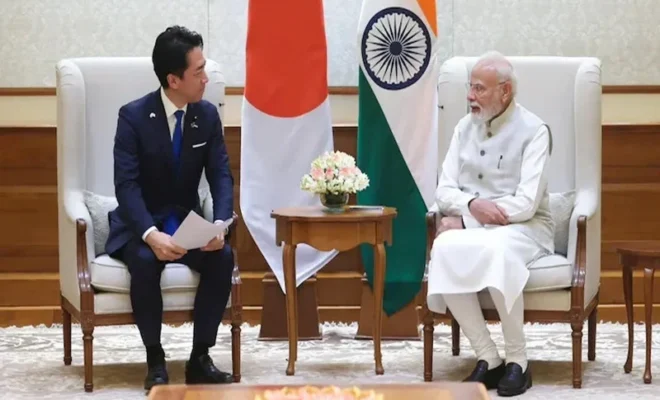
Prime Minister Narendra Modi held discussions with Japanese Defence Minister Shinjiro Koizumi in New Delhi on 20th August 2026 as India and Japan seek to enhance their defence and security alliance, with maritime cooperation becoming one of the top priorities. Prime Minister Modi emphasized the significance of India-Japan defence ties for the promotion of peace and prosperity in the Indo-Pacific region.
This visit took place during Koizumi’s maiden visit to India and is part of New Delhi’s efforts to upgrade its strategic alliance with Japan into something more tangible in the areas of naval operations, defence technology, manufacturing and maritime security.
Why PM Modi’s Meeting With Koizumi Matters
The meeting is important because India and Japan’s defence cooperation is shifting from rhetoric to operation and industry cooperation. Modi referred to the talks he had had with Japanese Prime Minister Sanae Takaichi when she was visiting India as part of the 16th India-Japan Annual Summit.
India and Japan were already enjoying a “Special Strategic and Global Partnership,” but the recent events suggest that the aim is to bring about some practical significance to this relationship in the maritime sphere. The Indo-Pacific region, which is crucial for both India and Japan strategically, is becoming the focus of their defense planning.
Maritime Security Takes Centre Stage
The most crucial aspect from the visit was the signing of Memorandum of Arrangement on Maritime Security Cooperation between India and Japan. It outlines the framework for coordination between the Indian Navy and Japan Maritime Self-Defense Force for issues such as maritime-domain awareness, information sharing, search and rescue, as well as humanitarian assistance and disaster relief.
This is critical due to the growing importance of securing the sea lanes for both countries. In the case of India, it is highly dependent on its maritime connectivity within the Indian Ocean for trade and energy resources, and the same holds true for Japan since it depends on secure sea lanes for trade and energy resources.
India and Japan Are Looking Beyond Naval Exercises
The nascent collaboration is not confined to joint ship operations and joint exercises only. Collaboration in defence technology and industry sector is also growing in significance.
India and Japan have been looking into possibilities of co-development and co-production of defence systems within the Make in India programme. In light of the recent amendments in the Japan’s Three Principles on Transfer of Defence Equipment and Technology, the scope for collaboration in this domain has grown further.
In recent talks, both sides have also taken stock of possibilities of joint naval shipbuilding and manufacture of equipment. Some reports also suggest that collaboration could be in areas like ship repair, mine warfare and deeper industrial cooperation between India and Japan.
The Naval Technology Connection
This new maritime agreement is following another recent development of the current year, whereby India and Japan have signed their first defense co-development deal that involves the development of a Naval Radio Antenna.
This is important because, apart from the usual measures such as training exercises and discussions, modern defense partnership is now being judged based on whether or not the countries are able to develop, manufacture and maintain their high-end defense systems in conjunction.
In India’s case, collaboration with Japan might help with manufacturing and development of technological prowess within the country. In Japan’s case, India is an important player in the Indo-Pacific region.
Why Naval Cooperation Is Important for the Indo-Pacific
The emerging naval cooperation between India and Japan also has regional aspects.
Both states favor the notion of an open, robust and prosperous Indo-Pacific region. India uses its maritime security strategy for this purpose, whereas Japan advocates its Free and Open Indo-Pacific initiative. These two states share a lot of common interests and thus provide the partnership with solid maritime underpinnings.
However, the goal here is not just to bolster their military might. Increased maritime awareness, exchange of maritime information, disaster response capacity and coordination will contribute to securing international shipping routes.
What It Means for India’s Defence Industry
For India, the industrial aspect can become as crucial as the strategic one.
The new defense cooperation that India and Japan have embarked upon may provide Indian shipyards, technology firms, and defense startups with chances. The focus on co-development and co-production by the Make in India policy becomes especially meaningful when India aims at enhancing domestic production of its defense hardware and reducing reliance on foreign defense hardware.
In this respect, Modi has also drawn attention to the chances of cooperation between Japanese companies and Indian defense companies and startups, especially in development and production.
With these chances realized through concrete cooperation, India and Japan could move from buyer-supplier cooperation to technology and manufacturing cooperation gradually.
Why Japan Is Important to India’s Maritime Strategy
Japan provides the partnership with advanced technology, abundant marine experience, and strong industry.
India, on the other hand, has strategic geographical depth in the Indian Ocean and a growing capability for manufacturing its own defense systems.
This is significant for the two states, especially now that both are increasingly concerned about their maritime security and resilience in the Indo-Pacific region.
As such, the partnership goes beyond the two nations themselves. It helps build a larger coalition of nations that want more cooperation in the region.
What Happens Next?
The immediate focus will likely be on translating the latest agreements and discussions into practical cooperation.
The maritime-security arrangement provides a framework, but its long-term importance will depend on how effectively Indian and Japanese naval forces use it for information sharing, exercises, search-and-rescue coordination and humanitarian operations.
Similarly, discussions around shipbuilding and defence technology will need to move from proposals to actual co-development and manufacturing projects before their full strategic value becomes visible.
Conclusion
The visit by Prime Minister Narendra Modi with the Japanese Defence Minister Shinjiro Koizumi comes at a time when India-Japan defense relations are shifting to a more operational stage.
The relationship is growing not just through the usual diplomacy and military interactions but in areas like maritime domain awareness, naval coordination, defense technology, and shipbuilding collaboration.
India sees Japan as a significant strategic and technological ally. Japan sees cooperation with India as a way of furthering its involvement with the broader Indo-Pacific.
Recent developments indicate that the India-Japan defense partnership is shifting to become less strategic and more operational, technological and naval.
The story is no longer just about India and Japan being defense allies; it is about the two countries working to make their defense partnership operational, technological and naval with the Indo-Pacific at the core.
Stay Updated on the RBI’s Latest Money Moves
Could Plastic Notes Change Cash Forever?
Check out how RBI’s durable ₹10 and ₹20 notes could reshape everyday cash use.
How Will Mule Accounts Fight Cyber Fraud?
Find out how the Supreme Court’s nationwide SOP could strengthen action against cyber fraud.
How Can You Claim Unclaimed RBI Money?
Uncover the step-by-step process to recover unclaimed deposits through the UDGAM portal.
Are Digital Currency Approval Logos Fake?
See how to spot scams misusing official RBI approval logos and protect your money.
Will RBI Extend Loan Moratoriums Again?
Track down why RBI told the Supreme Court that extending loan moratoriums is not viable.