
India’s Central Asia Strategy: Chabahar Port, Connectivity and the Iran Sanctions Challenge
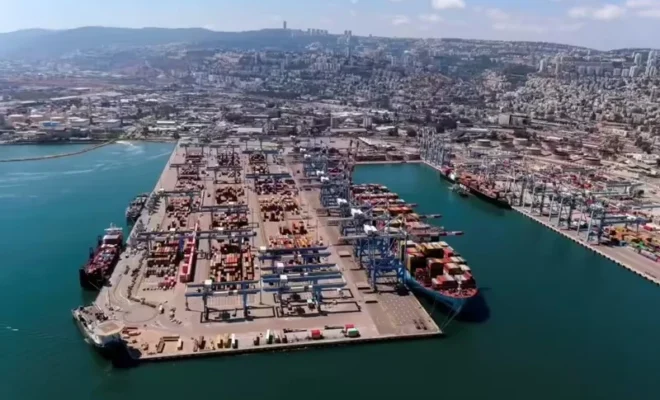
The Indian dream of increasing economic and strategic engagement with the region of Central Asia has always been challenged by the issue of geography itself. The reality is that India does not share a direct land boundary with the states of Central Asia; besides, the overland access through Pakistan is politically closed for India. Chabahar Port of Iran became a viable option to make India access Iran by sea and move ahead further towards Afghanistan and Central Asia from there.
The situation has changed very drastically now. The imposition of sanctions on Iran by the USA, the expiry of previous sanctions waiver and unrest in the region of West Asia has put a cloud of uncertainty on India’s operations at Chabahar. However, New Delhi still believes in the strategic importance of the port. “India is looking for a sustainable way forward to associate with Chabahar” as claimed by the Foreign Secretary of India Vikram Misri in August 2026.
Why Chabahar Is So Important to India
The significance of Chabahar does not lie merely in its being another overseas port for India. It is significant due to its geographical positioning on the coast of eastern Iran with easy access to the Gulf of Oman and the Indian Ocean.
The geographical positioning of Chabahar has enabled India to use it as an alternate entry point into Afghanistan and Central Asia without having to use the territory of Pakistan. Previously, the Indian government had characterized Chabahar as offering an alternate and direct sea-road link to Afghanistan and Central Asia.
The rationale behind the use of the strategic position of Chabahar was further clarified once China developed its Gwadar Port in Pakistan. Located about 170 km from Chabahar, there is an interesting comparison of the ports that are sponsored by the leading countries of Asia.
India’s Long-Term Investment in Chabahar
India’s involvement with Chabahar began over two decades ago. The talks started in the early 2000s, while serious efforts came afterwards.
In May 2024, India and Iran reached an agreement for a 10-year period under which Indian company, Indian Ports Global Limited, will manage the Shahid-Beheshti port at Chabahar. The deal comprised of $120 million for the development of the port and the procurement of the necessary equipment, along with a proposal for a $250 million credit facility.
It was a result of the vision that Chabahar can be more than an Iranian port but can be used as an entry point to connect Indian market with Afghanistan, Central Asia and Russia and ultimately the markets of Eurasia.
Chabahar and the International North-South Transport Corridor
In addition to being linked with India’s plans through the International North-South Transport Corridor (INSTC).
The INSTC project seeks to establish a multi-modal network that will link India with Iran, the Caspian region, Russia, and other destinations via transport services across land, sea, and air.
According to India’s Ministry of Ports, Shipping and Waterways, Chabahar is one of the transit points in the INSTC and a corridor linking Indian and Central Asian markets through the INSTC.
It implies that Chabahar is part of a larger connectivity plan for India. The significance of Chabahar goes beyond transporting cargo from India to Iran; the ultimate goal is to develop alternative corridors in Eurasia.
The Central Asia Opportunity
Central Asia is geopolitically significant for India on account of its resource base, markets, geographic location and increasing importance in Eurasian connectivity.
The five Central Asian republics – Kazakhstan, Kyrgyzstan, Tajikistan, Turkmenistan and Uzbekistan – are situated in a strategic location between Russia, China, Afghanistan and the Middle East. While India has attempted to establish closer political and economic ties with the states of Central Asia, physical connectivity has continued to be a challenge.
As pointed out in a report by the Delhi Policy Group, India’s trade with the five Central Asian republics has been modest, about $1.2 billion in 2025-26. In addition, challenges have been posed by the geographic obstacle provided by Pakistan, instability in Afghanistan and China’s own connectivity projects.
Chabahar has precisely sought to overcome such connectivity hurdles.
The Iran Sanctions Problem
India’s current Chabahar problem is now the sanctions regime that surrounds Iran.
Previously, the US had issued a specific sanction waiver which enabled India to continue its activities in the Chabahar port project. However, this specific sanction waiver expired in April 2026 and has created some uncertainty regarding the future of India’s operation in Chabahar.
However, it is not just about whether India wants to continue its presence. The international banks, insurers, shipping lines and businesses are also afraid to conduct business dealings in relation to Iran due to US sanctions.
It creates what experts call a “financial and operational choke point.” Although there could be a functioning port, its practical use becomes limited when the shipping lines fail to obtain insurance coverage, the bank is unwilling to conduct the transaction, or any other company fears secondary sanctions.
India’s Difficult Balancing Act
The Chabahar project exemplifies the complexity in the foreign policy balance of India.
While India shares strategic and economic interests with the US, it is vital for India to keep its ties with Iran since it helps to enhance India’s connectivity and regional influence. Therefore, New Delhi has to sustain its partnership with the US without completely ignoring the project that aims at increasing India’s strategic independence.
This task has been made even more difficult due to the escalation of conflict involving Iran in 2026.
In their talks in September 2026, Indian Prime Minister Narendra Modi discussed freedom of navigation, maritime trade and safety of seafarers with Iranian President Masoud Pezeshkian. According to Reuters, “India must continue to balance ties with Iran, Israel and Arab nations in the face of the region’s renewed conflict”.
Thus, Chabahar goes beyond being an infrastructure project. It is now a part of India’s larger diplomatic policy in West Asia.
Why India Has Not Simply Walked Away
Despite the sanctions problem, India has still been able to convey the message of the importance of Chabahar project for them.
And why not? The logic is very simple in this regard. India would have very few options in case of abandonment of Chabahar project because each and every other alternative has some sort of geographical, political or infrastructure problem. Chabahar is especially important for India because of the issue of the transit route through Pakistan.
According to the latest news reports, India has found some sustainable solution for staying associated with the Chabahar project.
Chabahar vs Gwadar: The Larger Regional Contest
The significance of Chabahar is better appreciated once it is put in perspective against Gwadar.
Gwadar is a Chinese port in the China-Pakistan Economic Corridor that falls under the Belt and Road initiative. Chabahar, on the other hand, is a symbol of the efforts by India to build an alternate framework of connectivity.
The two ports share geographical proximity but are strategically linked to different visions for the region.
India may not need Chabahar to counter China port to port. India’s immediate aim is to make sure that India’s interests have their own way into Central Asia and Eurasia through its trade.
The Road Ahead for India
For the future of India’s Central Asia policy, it will be crucial how the port of Chabahar will continue to operate despite the presence of sanctions and instabilities in the region.
India needs to deal with the problem of sanctions while creating additional links with other regions. On the other hand, increased connectivity with the Central Asian countries will mean much more than simply operating a port.
Chabahar will provide the opportunity, but it is the efficiency of the whole corridor that is important for India’s Central Asia policy.
Conclusion
India’s Central Asia strategy has always been constrained by geography. Chabahar offered New Delhi a way around that constraint, creating a maritime gateway toward Afghanistan and Central Asia while also linking into the wider INSTC network.
But the project now faces its biggest challenge yet. US sanctions, the expiry of the earlier waiver and continuing conflict around Iran have created uncertainty over how India can maintain its involvement.
At the same time, New Delhi’s recent statements indicate that it does not view Chabahar as an easily disposable project. Its strategic value remains tied to India’s larger goals of connectivity, trade diversification and strategic autonomy.
The central question is therefore no longer whether Chabahar matters to India. It is whether India can find a sustainable way to keep the corridor functioning while navigating the increasingly complicated geopolitical environment surrounding Iran.
India’s Expanding Global Strategic Footprint
How Is India Reshaping South Asia?
Check out India’s “Neighbourhood Shaping” doctrine and its regional impact.
Why Is India Sourcing Commodities Directly?
Find out how India is adapting to shifting global supply chains.
Can India Expand Its Maritime Influence?
Uncover the Indo-Mediterranean Corridor and Vision 2047 ambitions.
What Does India Gain In Central Asia?
Browse the Uzbekistan uranium deal and SCO Summit agenda.
How Is India Rethinking Central Asia Trade?
Dive into the Middle Corridor and India’s strategic recalibration.