
Haryana ELV Fuel Ban From October 1: New NCR Rules, Affected Vehicles and What Owners Need to Know
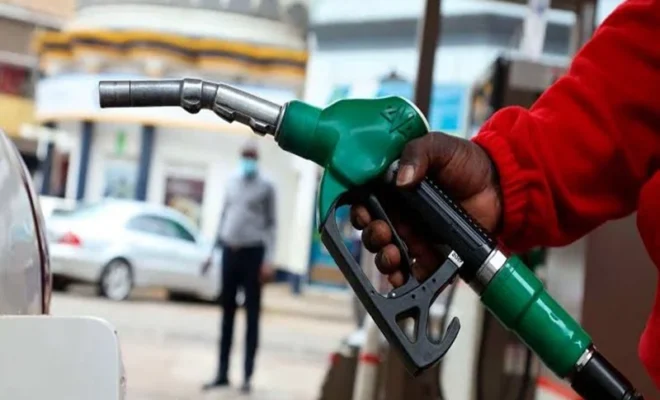
A major vehicle rule is set to take effect in Haryana’s National Capital Region from October 1, 2026, with fuel stations preparing to deny fuel to vehicles classified as End-of-Life Vehicles (ELVs). The move is part of the wider air-pollution control framework being implemented across Delhi-NCR under directions from the Commission for Air Quality Management (CAQM).
The Haryana government is installing Automated Number Plate Recognition (ANPR) cameras at fuel stations to identify vehicles that fall under the ELV restrictions. In the first phase, 775 cameras will be installed across Gurugram, Faridabad, Sonipat and Jhajjar. The state has said the installation is to be completed by September 30, ahead of the October 1 enforcement date.
There is also a separate NCR-wide “No PUCC, No Fuel” requirement coming into effect from October 1. Under CAQM Direction No. 101, fuel can be restricted for vehicles without a valid Pollution Under Control Certificate.
What Is the Haryana ELV Fuel Ban?
The Haryana ELV fuel ban means that vehicles identified as being at the end of their legally permitted operational life can be denied fuel at petrol pumps.
The policy is linked to CAQM’s efforts to reduce emissions from older vehicles operating in the NCR. Haryana Transport Minister Anil Vij has said that vehicles registered in Haryana that qualify as ELVs will not be supplied fuel from October 1, with the ANPR system being used to identify them at fuel stations.
This is important because the measure is not simply about asking owners to stop using an old vehicle. The enforcement mechanism is being connected directly to fuel stations, making it considerably harder for restricted vehicles to continue regular road use.
Which Vehicles Are Affected?
The correct definition here would be “End-of-life vehicle” instead of “any old vehicle.” Over the years, the NCR has imposed certain restrictions on various kinds of vehicles depending on the type of fuel used and age; the 10 year restriction in case of diesel vehicles and 15 years in case of petrol vehicles is common knowledge. These restrictions have been noted in some Supreme Court cases.
However, in some recent developments in case of vehicles that have a higher emission standard, the Supreme Court has ruled that no coercion can be done to owners of BS-IV and above emission-version vehicles even if they have completed 10 years in case of diesel and 15 years in case of petrol vehicles.
Where Will the New ANPR Cameras Be Installed?
The initial phase of the system that has been rolled out in Haryana has four NCR districts: Gurugram, Faridabad, Sonipat, and Jhajjar.
Under the current proposal of the Haryana government, 249 cameras would be installed in Gurugram, 215 in Sonipat, 195 in Jhajjar and 116 in Faridabad, making the total number in the first phase equal to 775. The project is estimated to cost approximately ₹41.74 crore.
Under the more general Haryana proposal, around 2,780 ANPR cameras will be installed in the NCR fuel stations of Haryana.
How Will ANPR Cameras Identify Old Vehicles?
The technology is intended to make enforcement automatic.
If a vehicle comes to a fuel station which has signed up for the scheme, the ANPR camera can scan the registration plate of that vehicle. This will allow the registration number to be cross-checked against the vehicle database in order to see if it is an ELV or not.
This makes enforcement not only about roadside inspection but also inspection of fuel stations to ensure that only those vehicles which have been authorized receive fuel from there.
Haryana has called this system an effort to make identification systematic and more accurate.
What About the PUCC Rule From October 1?
This is an important distinction for vehicle owners.
Alongside the ELV enforcement, CAQM has issued Direction No. 101, which provides for restrictions on fuelling vehicles without a valid Pollution Under Control Certificate, or PUCC, across the NCR from October 1, 2026.
Therefore, having a vehicle that is not classified as an ELV does not necessarily mean an owner can ignore the October 1 deadline. A valid PUCC will also become an important requirement for obtaining fuel under the NCR-wide system.
What Should Vehicle Owners Do Before October 1?
The owners of vehicles which fall into the category of older vehicles in NCR areas of Haryana must first confirm the registration status of the vehicle, its fuel capacity and emission standards instead of depending merely on its age.
Owners of such vehicles should see whether they possess any PUCC or if it needs renewal. The documentation related to registration and pollution will come handy once automated systems are in place.
In case vehicles fall under ELV category, owners should see what process exists for scrapping or deregistration and should not wait till they are denied fuel from a petrol pump.
Haryana has been acting against old vehicles already. In the June update by the state government, 2,883 old vehicles were found impounded, 2,010 scrapped and 6,054 No Objection Certificates issued for voluntary withdrawal during the year.
Why Is Haryana Introducing This Rule?
The goal of the initiative is pollution prevention.
Vehicle pollution is one of the major concerns in the entire Delhi-NCR area, especially when pollution levels spike. This has led CAQM to target vehicle pollution along with cleaner mobility and technology-based enforcement.
This move is designed to prevent people from using vehicles which come under end-of-life restrictions.
It is, therefore, one component of a much broader NCR clean air policy and not an isolated transport policy for Haryana alone.
Is Every Old Car Automatically Banned From October 1?
No. That’s an important point to be made.
The headline “Older cars won’t get fuel” might give the impression of a more general policy than the policy itself. The right classification here would be End-of-Life Vehicle, and the criteria would depend on whether the vehicle is a petrol or diesel car, its emission norms and its registration number.
In light of subsequent orders of the Supreme Court with regard to BS-IV or newer vehicles, it must be noted that age alone should not be considered the only criterion.
It is therefore advisable for vehicle owners to check their vehicle status from the transportation authorities themselves.
What Happens If an ELV Is Still Being Driven?
Refusal of fuel availability is just one part of the enforcement scheme.
Earlier directions issued by CAQM have provided for the identification, challaning, impounding, and scrapping of applicable end-of-life vehicles. As per the government data, Haryana has been using these tools against those vehicles that fall within the applicable restrictions.
It implies that vehicle owners cannot view the October 1 deadline as a mere short-term problem at the petrol pumps. Depending upon the legal status of the vehicle, there could be more to follow.
What This Means for Haryana Vehicle Owners
For vehicle owners in Gurugram, Faridabad, Sonipat, and Jhajjar, October 1 is a significant date from an enforcement standpoint since ANPR-based identification will be done at fuel stations in these districts.
For all other NCR regions, the general CAQM regulations will also become relevant, especially regarding the regulation that requires a valid PUCC.
The most prudent way out for the owner would be to determine the current status of their vehicle’s registration prior to the deadline rather than rely on the ANPR system at the petrol station.
Conclusion
Starting from October 1, 2026, the Haryana ban on ELV fuel will serve as one more example of the transition to using modern technology to monitor compliance with the regulations concerning NCR vehicle pollution. The installation of hundreds of ANPR cameras at fuel stations will make it possible to detect ELVs through automated electronic means instead of purely manual checks.
On the other hand, the implementation of the October 1 No PUCC, No Fuel regulation implies that the vehicle owner must think about his/her pollution certificate too.
Most importantly, it should be remembered that each old vehicle cannot be treated as an ELV by default.
India’s Energy, Trade & Strategic Moves
Could Ukraine Crisis Raise Fuel Prices?
Check out how the Ukraine crisis could affect India’s fuel prices.
Can Rosatom Help India’s Nuclear Goals?
Find out how Rosatom’s proposals align with India’s 100 GW nuclear target.
What Does India’s Uzbekistan Deal Mean?
Uncover the uranium deal and key agenda items from the SCO Summit.
Why Is India Rethinking Central Asia Trade?
Dive into India’s strategic recalibration and the Middle Corridor.
How Will Hyderabad’s Gig Hub Help?
Explore the new hub offering EV charging and rest facilities for gig workers.