
US Reaffirms Support for IMEC: How the India-Europe Trade Corridor Could Reshape Global Trade
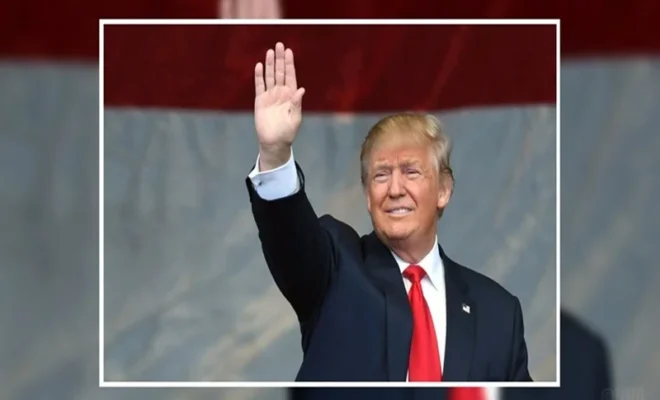
The India-Middle East-Europe Economic Corridor (IMEC) is back in the global spotlight after US President Donald Trump publicly reaffirmed Washington’s support for the ambitious connectivity project on September 22, 2026.
Speaking at a meeting with Gulf Cooperation Council and Arab leaders on the sidelines of the United Nations General Assembly in New York, Trump said his administration strongly supports IMEC and argued that recent attacks on commercial shipping have highlighted the need for alternative energy and trade routes.
The renewed US backing comes at a significant moment. IMEC was originally unveiled at the G20 Summit in New Delhi in 2023 as a proposed network connecting India with the Gulf and Europe through ports, railways, shipping links, energy infrastructure and digital connectivity.
The project has faced delays and geopolitical complications since its announcement. But renewed American support could put the corridor back at the centre of discussions about the future of global trade and supply chains.
What Is the India-Middle East-Europe Economic Corridor?
The India-Middle East-Europe Economic Corridor or IMEC is a multimodal trade and connectivity network plan which aims at connecting India, the Middle East, and Europe.
The initial concept involves the construction of a route from east to west, where an eastern route connects India to the Gulf region while the northern route connects the Gulf region to Europe, and this network will involve maritime transport and railway connectivity.
However, the bigger idea goes beyond just container transportation. IMEC has also been associated with energy networks, electricity transmission, clean energy cooperation, and digital communication networks. As per the Middle East Institute, IMEC is a proposed infrastructure project that combines trade, energy and digital networks between the three regions.
In more concrete terms, it is an attempt to create yet another important commercial route for some of the biggest markets of the world.
Why Has the US Renewed Its Support Now?
Indeed, the timing of the return of Washington’s support comes at a very crucial time as there are disruptions taking place in the region which concern traditional lines of trade and energy supplies.
In linking his support to IMEC, Trump has highlighted the need to shift vital energy infrastructure away from vulnerable areas due to the ongoing conflict between Iran and the disruptions being caused by the shipping industry.
IMEC now has a whole new strategic dimension to offer.
Initially, the scheme had only been proposed as an economic and connectivity project. Now, however, the role of IMEC in maintaining supply chain security and energy security is gaining more significance.
The return of US support thus raises the bigger question of ensuring reliable trade in case the traditional maritime routes become vulnerable due to geopolitical considerations.
How Could IMEC Change India-Europe Trade?
There already exists business relationship between India and Europe. This has been growing over the years. The India Ministry of Commerce has emphasized the need for closer India and EU connectivities because the trade between the two countries has almost doubled over the last ten years to about $140 billion.
IMEC would offer another form of network through which the movement of goods from the two markets will be done.
In addition to the usual transport of the goods via maritime channels, some goods will be transported using a combination of ships and rail transport networks via the Middle East to Europe.
It is not just time saved that counts. Such a network offers diversification for businesses when some specific channels experience any form of disruptions.
The Rail-and-Port Network at the Centre of IMEC
Railways will be among the key factors in the corridor that will be developed.
The idea is to link the major ports through the use of railways so that the goods can travel from part of the Middle East region without having to traverse by sea only.
There will be creation of an interconnected India-Gulf-Europe trade logistic system.
Ports will still be necessary since there will be movement of goods from India to the Gulf and then to Europe via sea. Railway network will connect the ports and form a multimodal transport system.
The main aim is to enhance international interconnectivity in trade.
Could IMEC Reduce Shipping Time and Costs?
Proponents of IMEC have said that the enhanced multimodal transport link would make the trade between India and Europe quicker, and even more cost-effective.
According to The Middle East Institute, IMEC has the potential of saving billions of dollars in freight costs and even reducing the travel time by up to 40% compared to the current route. Nevertheless, these benefits remain purely potential since the corridor has not been established as a cohesive system yet.
The real economic effects will depend on how many of the infrastructure projects get implemented, the efficiency of border control and customs procedures and cooperation between the countries involved in logistics.
Why India Stands to Gain
India is located at the eastern end of this proposed corridor and serves as a key manufacturing hub, as well as one of the largest consumer markets in the world.
Better connectivity with Europe would provide much-needed support to Indian exports in various industries, including manufacturing, engineering, pharmaceuticals, electronics, textiles, and others.
The corridor can help to enhance India’s position in terms of global supply chain diversification by seeking other options and manufacturing sites.
Growing trade between India and Europe makes the issue of connectivity all the more crucial. Recent trade deals made between India and the European Union may contribute to increased demand for efficient transport infrastructure.
Why Europe Is Interested in IMEC
Europe can use the IMEC project to build stronger trade ties with India and the Gulf countries, in addition to gaining further supply chain diversification.
Europe has been considering strengthening its economic ties with India, while at the same time, European firms are also worried about their supply chains.
A robust India-Gulf-Europe link may provide new avenues for both European firms that want to enter the growing Indian market and Indian firms that want to export goods to Europe.
It would also enhance the economic significance of the Mediterranean and Gulf region ports.
IMEC Is Also About Energy and Digital Connectivity
The corridor is wider in scope than the railway initiative itself.
It involves the construction of an infrastructure that will facilitate the exchange of energy and digital resources, connecting power grids, and enabling trade in clean energy and better digital connectivity between the areas involved.
This is significant considering that future global trade will be about more than just moving goods; it will be about having secure energy and data infrastructures.
Countries such as UAE, Saudi Arabia, India and even Europe could benefit greatly through such integration.
The Biggest Challenge: Geopolitics
The potential of IMEC is not tantamount to certainty that the entire corridor will be constructed within a short period of time.
The corridor goes through geopolitically complex territory, where the politics of certain participating countries have undergone significant changes since 2023.
According to The Middle East Institute, regional wars and hostile relations pose a great problem for IMEC and funding and timelines are still uncertain.
Recently, there were reports that tensions between Saudi Arabia and Israel represent one of the largest hindrances for the original idea of building the corridor.
It is possible that the role of American diplomacy in this case will be crucial.
Why Today’s US Backing Matters
The fact that Trump has come back and endorsed the project is not, in itself, enough to conclude that IMEC has the funding required and can go ahead and start construction work.
Nevertheless, it provides the project with increased political prominence at a time when the issue of supply chain security has become a very big international issue.
It is very important for the United States, from a strategic point of view, that there are good economic connections between India, the Gulf and Europe because all nations want to find an alternative to their vulnerable trade routes.
Could IMEC Become a New Global Trade Route?
With full development, IMEC will be much more than just a transportation system.
It can become a component of the economic structure that links India’s manufacturing sector and consumer market with logistics centers in the Gulf region and Europe.
The importance of this initiative will largely depend on whether the countries participating can manage to resolve their political differences, find funding, construct the required infrastructure, and establish effective logistics systems.
In this context, IMEC can be seen as a connectivity project that will unfold over time.
Conclusion
The revival of the support by the United States of America for IMEC brings back the India-Middle East-Europe Economic Corridor into the discourse on world trade as issues of supply chain stability and energy security have gained importance in recent times.
The initial objective of IMEC has been the integration of India, the Gulf, and Europe using integrated port facilities, railways, energy, and digital networks. The possible advantages of the initiative include enhanced connectivity, more logistics solutions, and greater economic integration between the three strategic regions.
However, there are many geopolitical and implementation challenges before IMEC.
In case these challenges are met, then IMEC will become an important feature of the world trade map providing both India and Europe with physical connectivity while also generating economic possibilities in the Middle East region.
India’s Global Trade Strategy Is Shifting
Why Is India’s IMEC Gaining Global Preference?
Check out why India’s IMEC corridor is drawing attention over China’s BRI.
Is Global Trade Consensus Really Changing?
Find out how India is taking a more pragmatic approach to global trade.
How Is Spacenet Reshaping Global Trade?
Uncover Spacenet’s digital trade platform and its ₹99 crore funding.
Could BRICS Reshape Global Finance Rules?
Explore how BRICS expansion and local-currency trade could affect global finance.
Why Are Buyers Turning Toward India?
Dive into how Gulf volatility is redirecting global trade toward India.