
OPED: Beyond Evacuation: The Missing Power Grid Resilience in India’s Cyclone Strategy
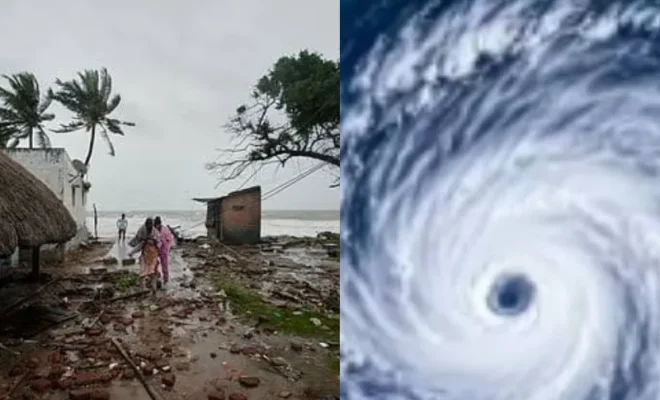
Despite the considerable advances that have been made in this area by the Indian government, there is one major flaw that still seems to show up every time there is a disaster: power grid. While warnings, evacuation procedures and other facilities have improved greatly, electricity infrastructure has proved to be very susceptible.
Preparation for cyclones does not come to an end once the storm has passed or the evacuation operation has ended. Hospitals, communication systems, water pumps and emergency services all require electricity to work properly and without this, no matter how well an evacuation operation went, nothing will ever go back to normal.
The problems caused by Cyclone Arnab in October 2026, which affected electricity infrastructure in coastal Andhra Pradesh, serve as a reminder of how important it is.
The Power Grid Is Often the Weakest Link
The impacts of cyclones on the electricity infrastructure include high wind speed, tree falls, flooding, storm surges, and damage to transmission and distribution lines. Power lines could break and power poles could fall down and substations may get out of reach or flooded.
This vulnerability has a lot of significance in coastal Odisha. The CDRI, which conducted its study in collaboration with the Odisha government, reported that over 30% of distribution substations and 75% of distribution lines inspected belonged to the coastal zone with several lines aged over 30 years. About 80% of poles and long-span conductors were found to be highly vulnerable to high wind speed.
It has highlighted a structural problem. Warnings can assist people in evacuating themselves from such areas, but they cannot save old electricity infrastructure from severe weather conditions.
India’s Cyclone Strategy Needs to Move Beyond Emergency Response
There are already several measures that exist in India to strengthen resilience in the country’s power infrastructure. The Disaster Management Plan of the Central Electricity Authority 2022 outlines measures in relation to mitigation, preparation, response, and recovery for the power sector.
Other measures outlined by the Ministry of Power in relation to cyclone-resilient infrastructure include underground cabling for vulnerable areas, ring or mesh distribution networks, emergency restoration systems, and spare transmission towers and mobile substations.
The Revamped Distribution Sector Scheme has sanctioned ₹3,088 crore for cyclone-resistant infrastructure projects in Maharashtra, Gujarat, Kerala, and Andhra Pradesh. Such projects include underground cabling, ring main unit, aerial bunching cables, and distribution transformers.
The problem is not about the lack of recommendations but the implementation of such measures through investment in vulnerable areas.
Why Underground Cabling Alone Is Not Enough
The installation of electricity through cables below the ground is sometimes seen as a solution to the problem of cyclones interrupting the electricity supply.
This is because electricity cables below the ground are less vulnerable to high winds and falling trees, especially in urban regions and vital corridors.
But this does not necessarily solve the problem because floods and rising water levels in coastal regions, as well as storm surges, might affect these underground cables. Also, finding the faults might be difficult at times.
In India, there is need for a multi-solution approach. Flood defense of substations and elevation of electricity facilities where necessary, drainage system, backup power and alternative feeders within the distribution system are some of the approaches that should be put in place.
Hospitals, drinking water supply facilities, emergency control room and telecommunication facilities are some of the key installations.
The Funding Gap Cannot Be Ignored
Investment for construction of such cyclone-resilient infrastructure is huge. For instance, Odisha’s proposal for building resilient grid in terms of power grid resilience scheme amounts to ₹9,755 crore, including ₹3,755 crore towards transmission scheme and ₹6,000 crore towards distribution improvement scheme.
The state government has applied for financial help from the center on the grounds that protecting power infrastructure would mean protecting healthcare facilities, water, communication, and livelihoods as well. This raises the question of policy as to whether disaster-resilient power infrastructure should rely mostly on the economic strength of the states and distribution companies.
Build Resilience Before the Next Cyclone
Real-time surveillance of at-risk electrical assets is also required in India. GIS technology, meteorological forecasts, automated detection of faults and drone surveys will aid in detecting vulnerabilities and restoring services more effectively.
The pre-positioning of spare transformers, poles, conductors and mobile substations before cyclone season will save time on repairs. In addition, restoration exercises should be conducted with the involvement of disaster management authorities, hospitals, telecommunications companies and local governments.
What is crucial about all this is that resilience must become a performance measure instead of a disaster response drill. Utilities will have to be evaluated for vulnerability, backup plans, restoration capabilities and provision of essential services amid emergencies.
A Cyclone-Ready India Needs a Reliable Power Grid
Evacuation strategy in India has shown how proper planning and coordination can save lives. The next phase should pay equal attention to protecting the infrastructure that people need once they reach safety.
The readiness of India against cyclones should not be gauged based on how many people are evacuated before the impact on land. The readiness should also gauge how fast hospitals have electricity again, how quickly water services become available again and how well communities are connected back with vital services.
The true test of disaster preparedness is after the disaster. Building stronger power grid system is not just a matter of energy sector; it is a matter of security, economy and climate change preparedness.
Defence Operations, Sports Victories, Telecom Rules & Tech Alerts
How Did the Indian Navy Rescue 20 Crew Members From Azini?
Discover the details of the high-seas rescue operation in the Arabian Sea and how the Navy responded to the reported piracy incident.
How Did Lakshya Sen Win the Hylo Open 2026 Title?
Relive his straight-sets victory over Jonatan Christie and explore the key highlights of his men’s singles championship run.
What Do TRAI’s New Complaint Redressal Rules Mean for Telecom Users?
Find out how the new rules address delayed complaint resolution and what financial penalties telecom operators could face.
Which Hill Stations Need Extra Caution During November Rains?
Explore the latest winter travel advisories for coastal destinations and South Indian hill stations, along with essential precautions for travellers.
Why Did Google Ban Android Manufacturer Videostrong?
Uncover the allegations involving more than 1.3 million Android TV boxes and understand what the reported security breach means for device users.