
Houthi Strikes on Saudi Aramco Sites: What the Escalation Means for Global Energy Security
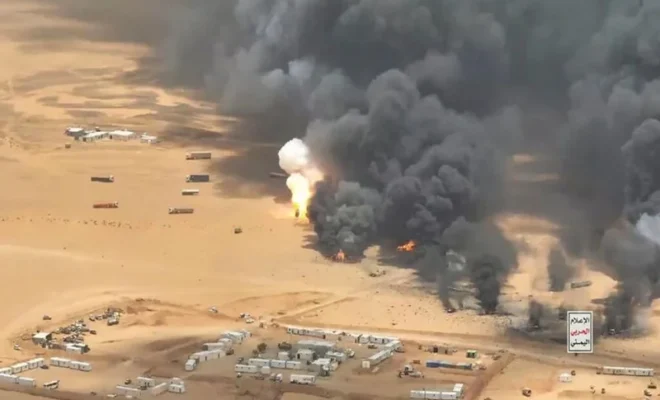
There has been a renewed threat from the Houthi group on the southern region of Saudi Arabia. According to reports, attacks were launched in places such as Abha, Jazan, Najran and Khamis Mushait. In addition, it was reported that 73 people were hurt and there were fires at the energy production stations. There were temporary interruptions in some of the operations of the attacked stations.
The Houthis admitted being behind the attacks and stated that drones and ballistic missiles had been used on Aramco facilities, economic centers and military station. This, according to the group, was a form of retaliation for the attacks conducted by the Saudis in Yemen.
This attack is not only about the war between the two nations anymore. Saudi Arabia is the largest exporter of oil in the world. Any attack on its oil facilities becomes an energy security problem for the whole world.
What Happened in the Latest Houthi Strikes?
These recent attacks have taken a step up in terms of seriousness since they hit multiple sites in southern Saudi Arabia instead of a remote site.
According to the Saudi authorities, the attacks hit civilian and economic sites in Abha, Khamis Mushait, Jazan and Najran. Some fires have been recorded in the energy sites, and emergency crews have been sent to try and control the situation.
The Houthis stated that this attack used many missiles and drones and mentioned some Saudi Aramco sites in Abha, Najran and Jazan as part of their targets.
The full impact on Saudi oil production and exports remains unclear. That distinction is important because damage to individual energy facilities does not automatically mean a major loss of crude exports.
Why Are Saudi Aramco Facilities So Important?
Saudi Aramco is the cornerstone of the Saudi Arabian energy industry and among the most significant oil corporations in the world.
The Jazan complex of industries is especially notable because it consists of the refinery plant capable of processing 400,000 barrels a day, together with additional energy infrastructure. There are reports that the facility had already been functioning while under pressure from previous attacks.
In case any major refinery, processing, storage or transportation facilities were to experience an extended disruption, the impact would be felt not only in Saudi Arabia but in international oil markets as well.
What is most important for international markets is not whether a facility was attacked but whether it caused sustained reduction in production, refining or exports.
Why This Is a Global Energy-Security Problem
Being part of the global oil market, Saudi Arabia becomes very important for the market participants who are monitoring all possible risks concerning the production facilities of this country.
The new attack comes at a very critical moment because energy markets are already witnessing other geopolitical challenges in the Middle East region. On September 8th, Brent crude was trading above $99 per barrel after Reuters reported that prices were up more than 2% due to the concerns over more supply disruptions.
Such a geopolitical risk premium is created in the markets, which means that there is no need to wait until the actual shortage happens because the prices can go up as soon as the risks emerge.
The difference is essential here.
The Jazan Factor: Why Location Matters
The significance of Jazan lies in its position in southwest Saudi Arabia near the country’s border with Yemen and the Red Sea.
Due to its closeness to the trouble area, energy infrastructure at this site is especially vulnerable when compared to infrastructure located farther inland within Saudi Arabia.
Moreover, Jazan serves as a link in broader maritime energy corridors. The instability in the Red Sea may lead to an increase in insurance premiums and detours that will raise energy transport costs.
Thus, the repercussions of the Houthis’ actions can go beyond oil production.
What Does This Mean for Oil Prices?
The most immediate market response has been a rise in the price of crude. The Brent crude rose to above $99 per barrel following the recent attack, with traders trying to see if the attacks would lead to any long-term loss in supply.
Assuming the damage is minimal and the attacked facilities are able to return to normalcy within a short while, the effect on the price level may end up being mostly psychological.
But repeated attacks might lead to another scenario altogether.
In case the oil companies, shipping companies, and insurers assume that Saudi Arabian installations will face an ongoing risk of attacks, there could be a long-term risk premium that sustains high crude prices without loss of supply.
Why the Red Sea Makes the Situation More Complicated
Energy security is not just a problem for Saudi Arabian production plants.
The Houthis have posed threats against shipping in and around the Red Sea, which is important since the Bab el-Mandeb Strait is a vital sea route that connects the Red Sea to the Gulf of Aden and beyond to the Indian Ocean.
Such problems would make shipping firms re-think about their routes.
Since longer routes would mean increased costs of fuel and delivery and even insurance charges for the energy companies, even a slight increase in the price of the transport of oil and petroleum would be felt even when production costs are not affected.
Such problems have made shipping security important in the discussion of energy security globally.
Is This Another 2019-Style Saudi Oil Shock?
Comparison with the Abqaiq-Khurais attacks of 2019 is bound to happen, but at the present time it is too early to assume that the present situation has reached that level.
The attack in 2019 led to an abrupt disruption of oil production in Saudi Arabia and a huge spike in Brent prices.
Present reports are not yet indicating that there has been a similar drop in oil production from Saudi Arabia. Instead, the more pressing issue is the possibility of continued attacks that would lead to vulnerability of Saudi infrastructure and a continued risk premium in international markets.
In essence, the most pressing issue is not an attack, but rather repeated attacks that will lead markets to reassess the security of Middle Eastern energy resources.
What Happens If the Escalation Continues?
In the coming days, it will become apparent whether these recent attacks turn into a temporary disruption or the start of an energy crisis.
The markets will closely monitor the extent to which operations at Saudi oil fields return to normal, whether there are more attacks, whether the Saudis launch a tougher counter attack and whether there is disruption to Red Sea shipping.
It is already clear that Saudi Arabia will take a strong stance and the Houthis have warned that they will keep launching their operations within Saudi territory.
This makes it likely that a vicious cycle emerges where every attack leads to retaliation and vice versa.
What It Means for India and Other Importing Countries
Higher oil prices would have consequences far beyond the Middle East.
Countries that import large quantities of crude, including India, are particularly sensitive to sustained increases in international oil prices. More expensive crude can raise refinery costs and put pressure on fuel prices, transportation expenses and broader inflation.
The impact would depend heavily on the duration and scale of the disruption.
A short-lived spike may have a limited effect, while a prolonged supply shock could create much broader economic pressure across importing economies.
Conclusion
The most recent Houthi attacks on Saudi energy facilities have transformed a regional conflict into a renewed global energy security concern.
The direct physical damage has yet to be determined, but there is no indication of any disruptions on the scale of previous oil crises caused by Saudi Arabia. However, given the frequency of attacks, vulnerable infrastructure, shipping through the Red Sea and high prices of oil, this case is especially sensitive.
Now, the crucial issue is whether the most recent attacks are an isolated incident or part of a broader strategy targeting Saudi energy infrastructure.
The real danger here does not lie in one damaged oil facility, but rather in the threat of repeated attacks leading to a perception of a new level of geopolitical risk among the energy markets.
Stay ahead with the latest shifts shaping India and global trade.
How Is India Reshaping Global Supply?
Check out how India’s direct sourcing strategy is transforming global commodity supply chains.
Why Are Global Buyers Choosing India?
Discover how Gulf trade disruptions are pushing buyers toward Indian suppliers.
What’s Next for India-Poland Strategic Ties?
Find how cybersecurity, space, and critical minerals are strengthening bilateral cooperation.
How Will India-Kuwait Ties Evolve?
Explore what the new defence and security framework means for strategic relations.
Could Hormuz Disruption Raise India’s Costs?
Uncover how the Gulf conflict and Strait of Hormuz standoff could impact crude prices and India’s import bill.