
Indonesia Airports Reopen After Anak Krakatau Eruption: Flight Disruptions, Safety Updates and Key Details
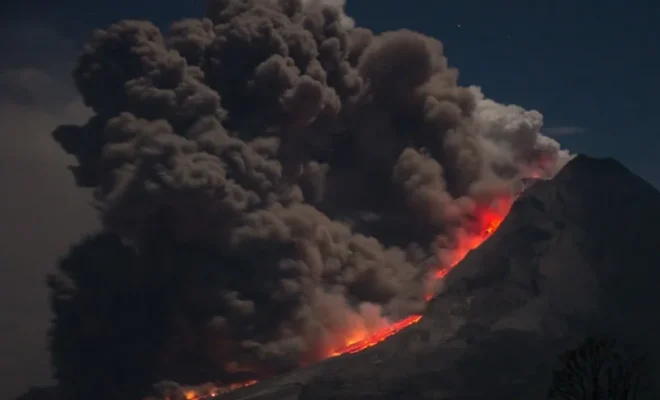
Air travel has now been resumed in Indonesia following the eruption of Mount Anak Krakatau, which resulted in the closure of eight airports in the region. The major airport in Indonesia, Soekarno Hatta International Airport in Jakarta, has reopened on Tuesday since it was determined that it was safe for planes to take off again.
The eruption led to an estimated disruption of around 341,000 travelers and about 3,000 flights. This is one of the biggest disruptions in the aviation industry in Indonesia due to volcanic eruption in recent times. However, the authorities are still monitoring the volcano for any future eruptions.
Why Were Indonesian Airports Closed?
The closure of the airports was as a result of ash emitted by the several eruptions that had been occurring at the active volcano Anak Krakatau, found in the Sunda Strait that separates Java and Sumatra.
The ash cloud from the volcano covered some parts of western Indonesia and got to an altitude of 50,000 feet and posed a hazard for flights. Ash cloud from the volcano is extremely hazardous to flight operations as it damages plane engines among other crucial systems and thus becomes unsafe for flights.
The disruption started over the weekend as a result of the closure of eight airports. Some closures were then extended as runways, taxiways, and planes were checked.
Which Airports Have Reopened?
The Indonesian government has already reopened the airports which were closed temporarily due to the volcanic activity.
These include Soekarno-Hatta International Airport, Halim Perdanakusuma Airport in Jakarta and Husein Sastranegara Airport in Bandung, which reopened shortly after midnight on September 8. Budiarto Airport and Pondok Cabe Airport have also opened up in the early hours of Tuesday.
As far as Atung Bungsu Airport in Pagar Alam is concerned, it was reopened the same day on Monday after conducting an evaluation of safety.
Reports have been received that other affected airports like Radin Inten II and Muhammad Taufiq Kiemas in Lampung have also opened up, and hence all the eight airports affected by ash have reopened.
Nevertheless, opening up doesn’t automatically imply that all the flight schedules have been normalized.
What Happened to Flights?
It has caused significant congestion among the airline operators and customers as almost 2,961 flights were either delayed or cancelled due to the eruption, affecting close to 341,000 passengers at the affected airports.
Airlines had no option other than cancelling their services, delaying their departures and changing their flight paths due to the presence of the ash cloud.
Both international and domestic flights have been affected by the situation, including those using Jakarta and the other regional destinations.
Why Are They Still Inspecting Aircrafts?
Just because an airport has been re-opened does not necessarily mean that all aircrafts there can now operate normally.
The authorities have been conducting checks on the aircraft which were in the volcanic ash environment before permitting them to operate again. As was reported from Soekarno-Hatta, officials estimated around 178 aircrafts needed to be checked for safety before resuming operation.
This is necessary as volcanic ash can enter the engines of aircrafts and damage the important parts. Airlines thus need to ensure safety of their aircrafts before operating normally.
Thus passengers must expect airlines to gradually restore the timetables and not resume the normal operations immediately.
Is Anak Krakatau Still Active?
Absolutely. The opening up of airports does not imply that the volcanic situation is over.
Anak Krakatoa is a live volcano; there have been new eruptions as airports start opening. There is ongoing monitoring of the volcanic activity, ash levels, and wind directions because any change in weather may push the ash clouds back into aviation routes.
Indonesia’s aviation authorities have therefore kept coordinating with airlines, airports, and air navigation authorities despite monitoring the airspace affected by the volcanic ash.
What Is the Situation With the Volcanic Ash?
Even though airport operations have been opened up, volcanic ash is still being detected in the air as of Tuesday.
Indonesia’s agency on meteorology, climatology, and geophysics has detected the ash clouds at heights up to approximately 6,000 feet moving south-southwest from western Banten to the Indian Ocean. There are ongoing wind pattern monitoring because of changes in wind direction could affect aviation.
This implies that travelers must understand that the re-opening of the airport does not mean safety from the volcanic situation.
What Should Travellers Do Now?
For travellers heading to/from Jakarta, Banten, Lampung or other surrounding areas, it is recommended that they first check the current flight status with their airline.
This is because even though the airports are now operational again, airlines are still facing schedule changes as well as aircraft checks.
It would be better if travellers could also have all their booking documents, IDs and alternative travel plans ready.
Most importantly, travellers must not make their own assumptions on whether everything will run normally just because the airports are open now.
Is It Safe to Travel to Indonesia Right Now?
The opening of the affected airports shows that the conditions are currently deemed to be safe enough by the aviation authorities. Nevertheless, Anak Krakatau still erupts, which means that the situation is being constantly monitored.
Also, the location of Indonesia makes it part of the Pacific Ring of Fire, and thus, it experiences constant volcanism. It is especially important in relation to Anak Krakatau because it is famous due to the fact that its eruptions led to a tsunami in 2018.
The authorities do not view this situation as a potential threat to tsunamis, yet the tourists need to listen to the recommendations regarding safety in case of any changes.
Why the 2018 Anak Krakatau Eruption Still Matters
The volcano is Anak Krakatau, which developed on the debris of the same name volcanic system, which led to the disastrous eruption of 1883.
This eruption triggered a tsunami that killed many people. This explains why the Indonesian government constantly monitors the volcano and responds very cautiously when the volcano starts being active again.
The present crisis, on the other hand, has turned out to be mostly an issue for the aviation industry due to the danger of ash falling into the engines.
What’s Next?
For now, it is important to resume the regular flight schedules while monitoring the ash.
On the one hand, the authorities will probably continue to monitor the activity of the volcano and the movement of the ash through the atmosphere.
On the other hand, it will take some time for airlines to clear the backlog of cancelled flights and return to their regular schedule.
Conclusion
Airports in Indonesia are now operating normally after experiencing significant disruptions due to ash coming from the Anak Krakatau eruption. However, the opening of the airports does not imply that everything is over. The volcano is still active, there is still ongoing monitoring of the ash in the air and there is still ongoing checking of aircraft and fixing the schedule.
The best thing to do for travellers would be to stay informed and check their flight information.
Indonesian airports are operational again, but Anak Krakatau volcano is still erupting. After experiencing one of the largest disruptions of flights in recent times due to volcanic ash in Indonesia, airlines are starting to resume flights, but travellers should monitor their situation due to another potential ash plume soon.
Global Shifts, India’s Rising Edge
How Is India Reshaping Commodity Sourcing?
Check out why India’s direct sourcing strategy is gaining global importance.
Why Is India Challenging The Map?
Find out why India wants accurate depictions of J&K and Ladakh.
Could New Rules Change Airfare Regulation?
Uncover what the Supreme Court hearing could mean for airline passengers.
Why Are Global Buyers Choosing India?
Browse how Gulf trade disruptions are creating new opportunities for India.
What Happened Aboard The Diverted Flight?
See why an IndiGo flight was diverted after the pilot fell ill.