
Why the Bab el-Mandeb Strait Matters: Understanding the Houthi Blockade Threat and Its Global Impact
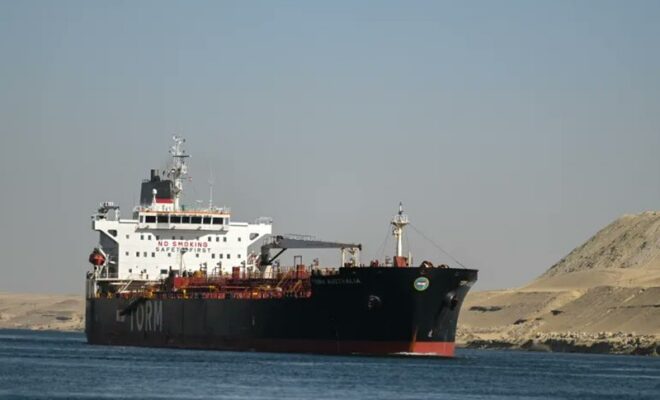
However, when most people imagine global trade, what comes to their minds is the huge ports of Singapore, Rotterdam, and Shanghai. Little do they know that the efficient flow of global business relies equally on several strategic waterways that are commonly known as maritime choke points.
One of those is the Bab el-Mandeb Strait that is currently growing into one of the most important – yet fragile – maritime trading routes in the world.
As a result, the recent Houthi move to threaten the area of imposing a blockade on the Bab el-Mandeb is not just another security issue in the region, but rather a potential problem for one of the busiest global shipping lanes, transporting energy, containers, foodstuffs, and other commodities from Europe, Asia, and the Middle East. Even without actual blocking, uncertainty can be enough to make vessels change their routes and increase insurance fees.
This particular case shows the extent to which the local war involving one non-state actor can affect supply chains located thousands of kilometres away.
Why the Bab el-Mandeb Strait Is So Important
Bab el-Mandeb Strait links the Red Sea to the Gulf of Aden, which then leads to the Indian Ocean. It provides the southern access to the Suez Canal and, therefore, forms a crucial link in maritime trade between Europe and Asia.
Approximately 12% of world trade and a substantial proportion of world oil traffic use this route each year. To ship operators, this is the shortest and most cost-effective link between Europe and Asia.
Without this channel, ships will have to take the longer route through the Cape of Good Hope at the southern tip of Africa, adding up to 10 to 15 days of travel time and causing higher fuel charges, higher freight, insurance charges, and higher time of delivery.
Why the Houthi Threat Matters Beyond Yemen
The Houthis have proven their capability in the past to hit commercial ships through drones, anti-ship missiles, and explosive boats. Even though they don’t physically control the whole Bab el-Mandeb Strait, they have enough asymmetric capabilities that would make shipping in the area quite dangerous.
This difference is crucial. A blockade doesn’t necessarily mean having full control over a body of water. When shipping firms think that the vessel could be targeted, many of them would choose safer routes. The maritime insurance rates would increase drastically, rendering the shipping route uneconomical for most shippers.
In international shipping, perception is as important as actual capability.
The Economic Impact Begins Long Before a Closure
Another common assumption is that economic disturbance commences once shipping halts. The reality is that the market starts responding to uncertainty almost instantly.
Freight costs increase due to the need for increased voyage duration, fuel use, and insurance cost. The scheduling becomes unpredictable, ports become congested, and companies dependent on imported parts get delayed.
Chokepoint studies in maritime transport indicate that such disruptions tend to cause ripple effects within global supply chains, persisting well beyond when navigation has already been restored because ships, ports, and logistics take time to normalize their operations.
The Bab el-Mandeb incident cannot thus be seen solely in terms of shipping; it is a supply chain issue.
The Dual-Chokepoint Risk
Perhaps the most frightening part about the present situation is that Bab el-Mandeb is no longer the only cause for concern.
On the other hand, tensions at the Strait of Hormuz are also contributing to uncertainty in global energy markets.
In case there is a simultaneous disruption in the two pathways, then the repercussions will be far-reaching and more than just regional politics.
The term used to describe such a situation has become “dual-chokepoint.”
Even if none of these passages get blocked, the reduced traffic from both can have a tightening effect on global energy supplies and increase oil prices further.
Why India Cannot Ignore This Crisis
For India, the unfolding of events in the region of Bab el-Mandeb Strait hold specific significance.
A large part of India’s trade to Europe passes through the Red Sea-Suez route. Prolonged disruption would result in increased costs of imports, delay in exports and impact sectors that rely on prompt deliveries.
Rise in cost of freight directly adds to the inflation due to higher transportation costs for materials, machineries, electronics, chemicals and consumer goods.
India’s increasing reliance on maritime trade globally makes faraway geopolitical troubles relevant to its economy.
Energy Security Is at Stake
However, the importance of the Bab el-Mandeb Strait is not limited to being a major shipping route; it also represents an energy corridor.
On a daily basis, millions of barrels of crude oil and oil products transit this strait. Any increased shipping risks will lead to immediate changes in the global energy market.
Current developments are already contributing to a new concern about potential interruptions of oil supplies, which is now being monitored by the global energy traders in relation to both the Red Sea and the Strait of Hormuz.
Uncertainty is not something the energy market likes.
Test of Global Maritime Security
Bab el-Mandeb incident poses a more fundamental strategic question.
What is the best way for the international community to act in a situation where a non-state military force can pose a threat to one of the key trade corridors in the world?
International cooperation had allowed to create relatively safe sea lanes for the global trade for many years.
Normalizing attacks on cargo ships can result in rerouting sea routes by shipping firms, more naval presence in strategic water areas and increased geopolitical rivalry there.
Therefore, the matter under discussion is much wider than just the crisis in Yemen.
Geography Still Shapes Global Power
Many thought that technology and globalization will diminish the significance of geography.
This is increasingly not the case. It could be the Strait of Hormuz, Panama Canal, Malacca Strait, or Bab el-Mandeb; the fact is that narrow strips of water keep shaping world politics and economies.
In fact, a narrow strip of water can have a bearing on inflation, energy prices, food security, cost of production, and international diplomacy on different continents.
The Bab el-Mandeb Strait shows us that globalization is still very much geography dependent.
Stay Updated on Global Developments
Why Did India Issue Iran Advisory?
Find out why Indian citizens have been urged to leave Iran immediately.
Why Must Indians Stay Indoors?
Learn why the MEA advised Indians in Iran to remain indoors.
Is UAE Safety Affected By Tensions?
Check out how regional tensions could impact Indians living in the UAE.
How Did The Oman Attack Unfold?
Uncover the confirmed details surrounding the Indian sailor’s tragic death.
What Happened To Frozen Assets?
Explore the latest updates on the release of frozen Iranian assets.
Conclusion
The threat posed by Houthi blockade cannot be seen merely as another piece of news emerging out of the Middle East.
This situation reveals the immense vulnerabilities of the international trade network, wherein events in one part of the world impact the operations of companies, consumers, and governments thousands of kilometres away.
Regardless of whether or not a long-term blockade takes place, the present-day situation clearly shows how fast uncertainties about the strategic chokepoints can alter shipping routes, influence oil prices, and increase the cost of conducting international business.
The Bab el-Mandeb Strait is much more than just another small body of water. It is one of the world’s major economic arteries and each time a new threat arises, it reminds us of how fragile they are.