
Dual-Track Subsea Cable Strategy: How BRICS and Western Nations Are Rethinking Undersea Security
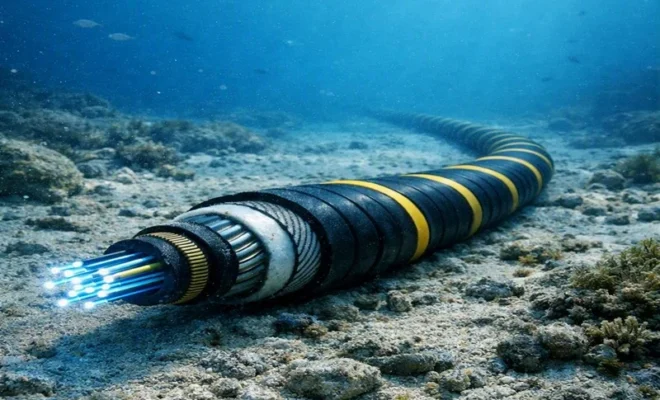
Undersea cables have become some of the most significant critical infrastructure in the world. Over 99% of global internet traffic moves through these fiber-optic cables, which form the backbone of international banking, cloud computing, government-to-government communication, and other essential digital transactions.
This dependency is altering the approach that governments have towards subsea infrastructure, moving away from the traditional view of it as commercial telecommunications infrastructure towards seeing it in terms of economic resilience, national security, and geopolitical contestation.
A two-pronged strategy for subsea cable security is thus being formed. One side of this sees BRICS nations contemplating increased cooperation regarding subsea cable connectivity and resilience. The other side sees Western nations and their allies improving monitoring, regulation, redundancy, and repair of undersea cables. While not identical, both these strategies spring from the same premise – that an interruption in a cable may have repercussions well beyond the world of communications.
Why Undersea Cables Have Become a Security Issue
Subsea cables are physically vulnerable despite being technologically sophisticated. They can be damaged accidentally by anchors and fishing activity, affected by natural hazards, or deliberately targeted during periods of geopolitical tension. The International Telecommunication Union has identified physical vulnerability, geographical concentration, longer repair times and dependence on a limited number of cable systems as important resilience challenges.
The strategic concern becomes even greater because modern economies depend on uninterrupted international connectivity. A disruption can affect financial transactions, cloud services, government communications, businesses and ordinary consumers.
Recent incidents and suspected sabotage activity have pushed the issue higher on national-security agendas. In September 2026, Reuters reported that NATO allies had thwarted a suspected Russian operation involving subsea infrastructure near Svalbard, highlighting the growing concern over the vulnerability of cables in strategically important waters.
The BRICS Approach Is Moving Toward Connectivity and Resilience
The group is creating its own discourse in regard to submarine cable infrastructure. In particular, the BRICS New Delhi Declaration, which was adopted in September 2026, pointed out that submarine cable infrastructure is an important basis for international digital connectivity and resilience.
The document drew attention to the efforts of the BRICS task force, which was dealing with the issues related to cable needs, and mentioned the feasibility study that might be carried out to design a high-speed communication network among BRICS countries using submarine cables.
This move is notable because it goes beyond national digital infrastructure and looks into connectivity between emerging economies.
However, it should be emphasized that the proposal does not mean that BRICS has established its own network of submarine cables yet.
India’s Position Is Particularly Important
India finds itself strategically situated within this new ecosystem of cables due to the fact that the Indian Ocean is one of the most significant areas when it comes to subsea connectivity in the world.
According to a study by Carnegie India, the Indian Ocean region is characterized by a high density of subsea cables, with India growing more and more dependent on them along with the growth of its digital economy. This study points to the discrepancy between India’s significance as the consumer of the connectivity and its modest participation in cable management and development.
India is thus interested in two sides of the emerging strategy – it needs to increase its resilience but also establish ties with countries having developed technologies in cable management, deployment and repairs.
The Quadrilateral Security Dialogue (Quad) has already established such framework through the Partnership for Cable Connectivity and Resilience, founded by Australia, India, Japan and the United States in 2023.
The Western Strategy Is Increasingly Focused on Protection
Some of the measures adopted by Western governments include surveillance, regulation, redundancy, investments, and international cooperation.
European Union has formulated the EU submarine cable security toolbox based on the risk assessment done regarding the cable infrastructure in Europe. Some of the measures include stress testing, risk management, and identification of cable projects requiring prioritized funding. In February 2026, European Commission unveiled €347 million worth of investments related to submarine cable security and resiliency.
The United Kingdom has also formulated policies to protect its subsea infrastructure. The policies formulated in May 2026 focused on placing more obligations on cable operators and giving the government more emergency powers due to increased concern regarding maritime activities.
Increasing focus is being placed on making sure that the current network is resilient rather than laying new cables.
Redundancy Is Becoming the New Security Principle
Among the key principles of subsea security is redundancy.
If a certain country or a particular region relies too much on a limited number of cable networks or points where these cables land, then damage to one network or landing point will have serious repercussions. To build redundancy means to ensure that traffic could be re-routed in case of unavailability of one link.
Geographic diversity, redundancy of the infrastructure, improved surveillance capabilities, quicker repairs, and closer collaboration between governments and the private sector are among the 2026 ITU recommendations.
It is a significant change in the approach.
Nowadays, it is no longer about preventing the damage but rather about preparing for its occurrence and creating systems which would allow recovering from it.
Repair Capacity Could Become as Important as Naval Security
A cable is only as resilient as the ability to repair it.
When a subsea cable is damaged, specialized vessels and equipment are required to locate the fault, reach the site and restore connectivity. Geographic distance, weather, vessel availability and regulatory permissions can all affect the speed of recovery.
Research on India’s subsea cable governance has highlighted the country’s lack of Indian-flagged repair vessels as a structural vulnerability. It has also recommended greater domestic repair capacity, additional landing hubs and integration between cable monitoring and maritime security systems.
This suggests that cable security is not simply about protecting cables from attack. It is equally about ensuring that governments and companies can respond quickly when something goes wrong.
The Emerging Two-Track Model
It follows that the unfolding scenario on a global scale might be described as two-track.
While BRICS countries are trying to increase connectivity, cooperation, and infrastructure across borders, the Western states and their allies are equally concentrating on resilience, surveillance, security, regulation, and alternate routes to the same ends. This is shown in such initiatives as the EU’s submarine cable security strategy, the proposed UK government safeguards and the cable resilience partnership of the Quad nations.
Yet the two tracks should not be seen as mutually exclusive systems operating separately from each other. There is growing international understanding that subsea cable resilience requires collaboration among governments, telecommunications companies, technology companies, and international organizations.
Why This Matters for the Future of the Internet
The increasing focus on subsea cables is an indication of one of the realities in the digital economy – even though we feel the internet to be wireless, the infrastructure of the global internet is largely grounded on the seabed.
As technology like artificial intelligence, cloud computing, digital payments, and cross-border data transfers continue to grow, dependence on secure cross-border connectivity will only increase. In fact, research from 2026 describes subsea cables as critical infrastructure for AI-era data flows and warns of increasing vulnerability to geopolitical conflict.
This makes resilience inseparable from economic security.
Conclusion
The worldwide discussion on subsea cables is entering a new stage. The BRICS nations are considering ways of enhanced connectivity and collaboration, while the western nations, along with their allies, are looking into ways of protecting, securing and repairing the cables.
Thus, the dual-track approach to subsea cables is not an either-or choice of connectivity versus security, but rather an acceptance that the two have become intrinsically tied together.
The countries that will have the means of diversifying cable routes, enhancing repair capabilities, protecting landing sites and collaborating beyond borders will be more capable of maintaining connectivity during the period of disruptions.
This becomes especially relevant for India as a country in the Indian Ocean that is experiencing economic and strategic growth.
The next fight for digital resilience will not take place in a data centre or on servers. It will happen thousands of meters below sea level, in the area where cables carrying all the world’s information become vital infrastructure in its own right.
BRICS 2026: Inside India’s Global Push
Why Is India Backing BRICS Expansion?
Check out why South Africa supports India’s bigger global role.
What Can We Expect From BRICS?
Find out what the 18th BRICS Summit could bring in New Delhi.
Is India Building a New Global Bloc?
Uncover why India’s BRICS chairship focuses on pragmatic cooperation.
How Is Global Order Changing Today?
Browse Jaishankar’s views on resilience and shifting global dynamics.
Why Are Modi’s Russia-Iran Talks Important?
Dive into the summit talks on oil prices and supply chains.