
FBI Expands Global Hunt for Cross-Border Financial Fraud Linked to Indian-Origin Entities
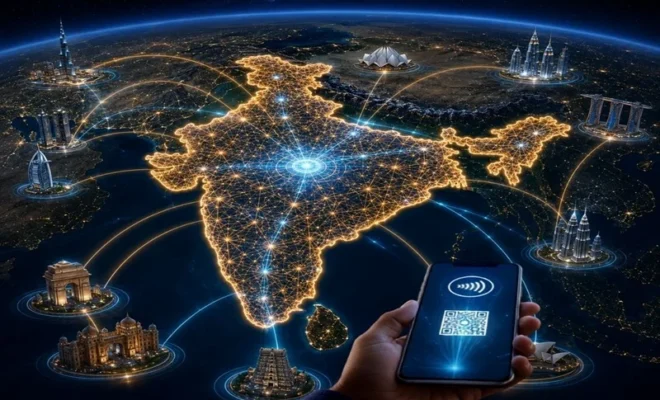
The most recent attempt by the FBI to go after financial fraudsters across international borders highlights the point that financial crimes in today’s world transcend geographical boundaries. Financial crimes might involve solicitation of money in one country, transfer of money through another country, conversion of the same into cryptocurrency in yet another country, and the final withdrawal from bank accounts located in several different jurisdictions.
This is especially relevant in the context of India, in light of FBI placing Manjit Singh Bedi, who was born in India, in their list of Most Wanted Fraudsters. The FBI accuses Bedi of being part of an elaborate scam that has resulted in losses of at least $600,000 for the United States government due to misappropriation of the Supplemental Nutrition Assistance Program. The FBI is ready to give a reward of up to $150,000 for information leading to the capture of the suspect.
However, the significance of the case lies not in the nationality or origin of the individual who has been accused of committing a fraud, but rather in the fact that it is a part of the bigger shift that is happening in the domain of financial crimes.
India Has Become an Important Part of the Enforcement Picture
The FBI itself has made it clear that cooperation with Indian authorities is becoming an essential part of their anti-fraud strategy.
The FBI, Department of Justice and Internet Crime Complaint Center have been cooperating with India’s Central Bureau of Investigation and other state-level agencies since 2022 to investigate cyber-enabled financial crime and transnational call-centre fraud. According to the 2025 Internet Crime Report from the FBI, this cooperation led to more than 1,200 pieces of information exchange and more than 475 arrests via 27 joint operations since 2022. In 2025 alone, the FBI estimates that their cooperation with Indian authorities resulted in about 175 arrests by means of 13 joint operations.
This is a crucial difference. It is not just a case of American investigators “hunting Indians.” It is a case of American and Indian authorities increasingly cooperating in order to target criminals who abuse both nations.
According to FBI’s testimonies to Congress, the Bureau has an international reach that covers more than 200 countries, territories and islands and FBI employees cooperate with the foreign law-enforcement authorities overseas. One of the cities where FBI operates abroad is specified in their testimonies as New Delhi.
The Call Centre Economy Has Become a Global Criminal Infrastructure
Fraudulent call centers have been viewed for years as isolated cases involving fictitious technical support operators, imposter government agencies or phony customer service representatives.
The truth is now proving to be much different.
Organizational structures are being uncovered which consist of recruiters, call center operators, technologists, launderers, money mules, account holders and international collaborators. The victim receives a call purportedly from a reputable organization, is told to transfer money and unwittingly enters into an international financial supply chain.
The scope of the problem is huge. The FBI reported in December 2025 that there were more than 80,000 complaints made involving tech/customer support and government impersonator call center frauds, with more than $2.9 billion lost.
An FBI investigation launched in February 2026 discovered scams reported by Maryland victims were the result of activity conducted by call center operators in India. It was estimated to have approximately 660 victims in the United States with nearly $48.8 million lost. Indian authorities shut down the call centers and arrested six Indians.
This is the new world of organized financial crime: a victim in America, an operator in India, an international financial supply chain and proceeds that travel through cryptocurrencies and banking systems.
The Money Trail Is Now the Battlefield
It could thus be said that the most significant step being taken by the FBI could be the move towards focusing on the financial structure of the fraud.
It is not just about the individual who is making the fraudulent calls. It is about finding out who controls the accounts and who moves the money. It is about identifying the infrastructure, the launderers of the funds and who is benefiting from it all.
India too has moved on the same lines with its own enforcement agencies.
The Annual Report of the Enforcement Directorate for 2025-26 speaks of the use of evidence provided by the FBI to help identify the infrastructure in a case of cyber fraud with foreign victims and illegal call centers in Delhi-NCR. Indian authorities are conducting money laundering cases and attaching assets worth ₹91 crores using international tools to trace the assets abroad.
That is where the complications in cross-border enforcement lie.
Taking down one player will do nothing. Follow the money trail and you will see the entire network.
Why Indian-Origin Cases Receive Attention
The recent cases of people of Indian origin have obviously drawn much attention of the media, especially in the USA.
But here is the risk when you reduce a rather complicated issue of transnational crime to the question of identity. The vast majority of people of Indian origin who are in the United States and other countries are not connected with any financial crimes. In addition, the existence of fraud networks working in India doesn’t mean that Indian companies or technology specialists are suspect.
It is necessary to differentiate between criminal actions of a particular individual and his/her nationality. Police work with evidence, networks, financial transactions. And this approach should be taken into consideration by everyone.
For instance, in the case of Mr. Bedi, there were allegations of involvement in the fraud with SNAP benefits, business activities and fleeing from the USA. According to the FBI, Bedi was accused of wire fraud, SNAP benefits fraud and, moreover, violated the terms of his release because he fled the country.
Why Going Overseas Does Not End the Investigation
One of the most important messages coming from US authorities is that international borders are no longer a reliable shield for financial criminals.
The FBI has publicly emphasised that it works with international partners to locate suspects, disrupt criminal infrastructure and recover assets. Its international operations testimony specifically describes investigations involving scam centres in South and Southeast Asia and cooperation with authorities across multiple countries.
The Bedi case illustrates this principle particularly clearly. According to the FBI, he is believed to have travelled to India after allegedly violating his US release conditions, prompting the Bureau to seek public assistance in locating him.
The message is straightforward: crossing a border can complicate an investigation, but it does not necessarily end it.
The Victims Are Becoming the Priority
The other dimension that is worth considering is the human one.
The topic of financial fraud usually revolves around amounts of money – millions or even billions of dollars lost in such operations. But beyond those figures lie individuals who risk losing money they have saved up for their retirement, state aid, emergency fund or lifetime of savings.
Elderly Americans have increasingly become the target of elaborate fraud rings. The FBI has cited several cases where the elderly individuals have been tricked by impostors and coerced to transfer large amounts of money.
This is why combatting financial fraud is more than just a matter of law enforcement. It is also one of consumer protection.
India and the US Have a Shared Interest
It is hoped that the increasing collaboration between India and America is seen as a matter of common interest, and not an indication of diplomatic disputes.
America wishes to keep its people and financial systems safe from any foreign organized crime syndicates.
India has an equal interest in seeing its technological facilities, businesses and workforce not used by any organized criminals.
It thus becomes beneficial for both nations if there can be fast transmission of information, tracking of finances internationally, identification of any assets, and prosecution wherever the evidence points towards it.
This is clearly demonstrated through the FBI’s working with the CBI.
The Next Phase Will Be About Speed
What looms largest on the horizon is time.
Fraud rings can process money in almost real-time. Investigations do not always have the same luxury since they cross multiple legal jurisdictions, privacy laws, banking operations, and evidentiary standards.
This creates an edge for those that commit crimes through these networks.
Overcoming it will mean better information sharing, faster collaboration between financial institutions and law enforcement agencies, more robust anti-money laundering regulations and mechanisms for the recovery of stolen monies.
Advances in technology will also complicate the problem.
Artificial intelligence could create more effective fraud messages, while cryptocurrency and digital finance infrastructure will provide another level of money processing to deal with.
The response will need to be just as fast.
The Bigger Lesson
Indeed, the growing international search for individuals by the FBI is not simply the process of apprehending people.
Rather, the point is to make the statement that criminal activities will not be tolerated where there is an opportunity to exploit differences between jurisdictions.
In other words, one must not have the ability to rob an American citizen in India, transfer funds to a third country and turn them into digital currency, believing that investigation stops at the borders.
On the other hand, communities or businesses should not be evaluated on the basis of actions of some criminals.
Here, the right approach should be the cooperation, which is based on the evidence.
As can be seen from the cases that became known in 2026, international cooperation grows to be more systematic and more oriented towards finances.
And it looks like the most efficient approach to dealing with international financial crimes.
Stay informed with these essential guides, scams alerts, and digital safety updates.
How Does Digital Arrest Scam Work?
Check out this guide to understand the scam, warning signs, and essential steps to stay protected.
Why Are Mule Accounts Under RBI Watch?
Find out how the Supreme Court’s new SOP aims to tackle mule accounts and cyber fraud.
Can WhatsApp Stop Scam Calls Today?
Uncover WhatsApp’s latest security features and learn how to enable stronger anti-scam protection.
How Can Students Link APAAR Online?
Browse this simple guide to connect APAAR ID with academic records through DigiLocker.
Is Linking Your Bank To ChatGPT Safe?
Reveal how the new personal finance tool works and the key safety steps to follow.