
India-China Border Trade Resumes After 6 Years: Nathu La, Shipki La and Lipulekh Passes Reopen
Trading through the India-China border has re-opened via several key Himalayan passes after remaining suspended for six years – an important indication of the ongoing improvement in relations between the two nations. Trading through the Nathu La in Sikkim and Shipki La in Himachal Pradesh has been revived as of August 1, while Lipulekh passage in Uttarakhand was already restored in June.
This development is particularly meaningful as these routes were closed due to the pandemic as well as increased tensions between the two countries following the confrontation at the Galwan valley in June 2020. This move helps restore the old traditions of cross-border trade and adds an economic element to the efforts of stabilizing the relations between the capitals of both countries.
Why Was India-China Border Trade Suspended?
These routes have been closed due to the disruptions caused by the coronavirus pandemic. At the same time, this has happened in particularly hard times when relations between India and China are deteriorating due to the confrontation in eastern Ladakh.
In particular, Nathu La was reopened in 2006 and was dormant for more than six years. Shipki La and Lipulekh passages have also faced prolonged disruption.
Nathu La Trade Reopens in Sikkim
Nathu La, which is situated at the height of 4,302 metres in Sikkim, is considered to be one of the most strategic and historically significant India-China trade routes. The opening ceremony of 2026 trade season took place on 1 August at No Man’s Land, with the participation of officials from Sikkim and Tibet Autonomous Region.
The reopening is believed to help hundreds of registered Indian traders who earn their living through border trade. According to some reports, 38 traders were part of the first reopening, while more than 600 registered Indian traders will benefit from the reopening of this route.
The trade is taking place following the standard operating procedures and with the same list of approved goods that exists earlier. The route is planned to function from Monday to Thursday during the period of the trading season.
Shipki La Reopens in Himachal Pradesh
Secondly, the opening of trade across Shipki La will be another significant step for the revival of cross-border trade. Since 2020, the border trade via this route has remained suspended; however, it has resumed with the flag-off of traders at Chhupan Trade Mart in Namgya. In Himachal Pradesh’s Kinnaur district, the revival of Shipki La is expected to boost local trading activities.
Lipulekh Pass Reopened After Six Years
Lipulekh Pass, which falls within the Pithoragarh district of Uttarakhand, is expected to resume operations after six years. Initially, a group of Indian traders is expected to travel to Tibet from the Lipulekh Pass in June. A total of 26 trade passes were granted to a group of 17 traders and nine helpers, while a customs office was set up at Gunji.
According to reports, the traders have welcomed the revival of the route, and more than 100 trade permits were received by the administration. For the local communities in the region, the reopening of the route has been seen as a revival of their cross-border trade in connection with their Himalayan economy.
What Can Traders Expect?
The reopening does not imply that there will be unregulated commercial traffic between India and China through the international boundary. There is still regulated trade that happens seasonally under mutually agreed terms of trade such as commodity lists, trading days, and customs regulations.
In the case of Nathu La, it was reported that registered traders could engage in trade until they reached a set value of their total trade, and at the same time the current list of imports and exports remains relevant.
This implies that the economic effect will only affect border traders, transporters, and suppliers.
Why the Reopening Matters for India-China Relations
In terms of the economic relevance of such pathways, the magnitude of their significance is quite small relative to the whole picture of trade between India and China, but in a diplomatic context, it is quite high.
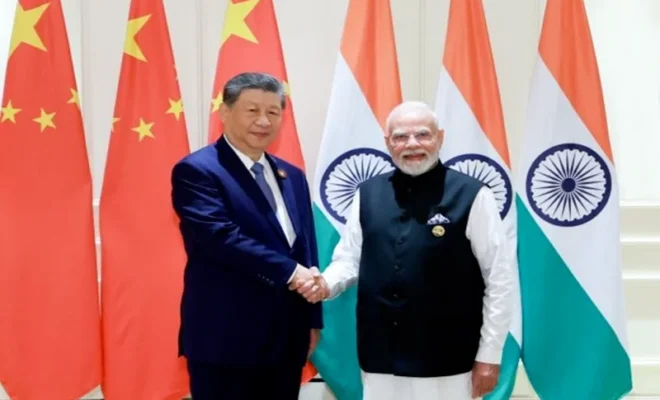
The opening of trade routes occurs within the general context of better cooperation. India and China have been trying to restore economic and institutional contacts after the disengagement along parts of the Line of Actual Control. Recently, there was an important meeting between the Indian Prime Minister Narendra Modi and Chinese President Xi Jinping at the 2026 BRICS summit held in New Delhi on restoring relations and increasing economic cooperation.
Does This Mean India-China Relations Are Fully Normal Again?
Not quite yet. The resumption of cross-border trade is not an indication of the resolution of all India-China issues. Differences on territorial disputes, strategic rivalry, economic imbalance, and security concerns keep shaping their relationship.
According to Reuters, the present period is characterized by cautious stabilization after the escalation that followed the military clash in 2020. As far as economic and people-to-people ties are improving, significant gaps still exist.
This means that the trade ties are one aspect of the process rather than a total diplomatic reset.
What It Means for Himalayan Border Communities
But for those traders who live near the above-mentioned elevated routes, the opening of the route means something different and more immediate to them.
Border trade during the season acts as a source of income not just for traders, but for transporters, porters, donkey owners, warehouse keepers, and other local businesses associated with the trade network.
The government of Sikkim has explicitly referred to the opening of Nathu La trade as a chance for boosting the local economy and employment prospects.
The Bigger Picture
However, the opening of Nathu La, Shipki La and Lipulekh has taken place at a time when both the nations are seeking to build back economic and diplomatic connections.
There has been a new high in bilateral trade between India and China during the year 2025 although India has a large trade deficit with China. Now, the two nations have started talking about market access and other issues related to their economy.
In such a context, the opening of historical trading paths across the Himalayas holds a lot of significance.
Conclusion
The reopening of India-China trade through the Himalayan border posts of Nathu La, Shipki La and Lipulekh is significant in the re-establishment of economic activities along the Himalayan border after six years.
The opening of these trade posts is of great significance to the local traders who will be able to resume their traditional occupation while India-China ties have another sign showing signs of normalization after several years of tension.
The opening of these trade routes does not mean that all disputes between the two nations have come to an end but indicates that economic engagement is coming back into areas where it had all but stopped.
It is not because all India-China disputes have ended but because economic engagement between India and China is being cautiously re-established one border post at a time.
India-China Tensions: What Happens Next?
Could Doval’s Beijing Visit Ease Tensions?
Check out what the 25th border talks could mean for India-China ties.
Why Does The Border Stand-Off Continue?
Find out why tensions remain despite the latest WMCC meeting.
How Is Trade Facing Supply Disruptions?
Uncover how the India-China row is affecting HUL’s supply chains.
What Did Manmohan Singh Suggest?
Browse the former PM’s suggestions to Modi amid border tensions.
Could Border Tensions Escalate Further Now?
Track down how the deadly clash intensified the India-China dispute.