
Canada Work Permit Rejections Explained: Colleges Issue New Immigration Guidance for Indian Graduates
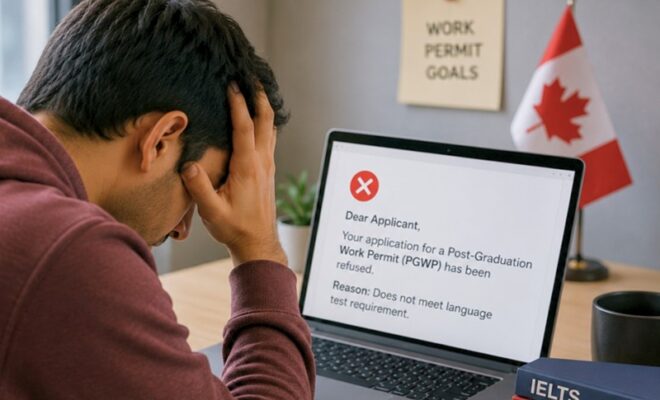
With more Indian graduates in Canada failing to get a PGWP, colleges have come out to issue guidance and advice to the concerned students to consult immigration experts. In this case, protests have been witnessed by students saying that they undertook a course eligible for a PGWP but later discovered that according to immigration laws of Canada, their programmes were not qualified for a work permit.
This has created new worries for many Indian students considering the PGWP as a way of acquiring work experience in Canada and consequently becoming eligible for a permanent residence in the country.
Why Are Work Permits Being Rejected?
The rejection has primarily been caused by programme eligibility rather than students’ performance.
Many of the students whose applications have been refused were undertaking a programme in business management diploma programme through the collaboration of Portage College and Canadian Institute of Osteopathic Therapy in Calgary. On completion of the course, it was discovered that their programme was not eligible for a PGWP in the immigration law of Canada.
Students feel that they took up the programme knowing that they were eligible for a work permit.
What Guidance Have Colleges Issued?
To resolve the emerging debate, a public statement was released by Portage College.
The college mentioned that they were working with Canadian immigration authorities to gain a clearer understanding of the matter and advised affected individuals to seek legal counsel from immigration lawyers or RCICs. The institution mentioned that the decision regarding issuance of work permits lies in the hands of Canadian immigration authorities only and not educational institutes.
They further mentioned that they will keep collecting information regarding the matter.
Importance of PGWP
The Post Graduation Work Permit allows eligible international graduates to work in Canada after their education.
It allows Indian graduates to gain Canadian work experience, gives them the chance to find better jobs, and assists in immigration processes through various immigration pathways of Canada.
Without the PGWP, many graduates find it difficult to get permanent jobs or continue their immigration processes.
Why Indian Students Are Concerned
There have been reports that about 1,500 international students may be impacted due to the current issue.
According to reports, these students have held protests because they claim that they paid large sums of money for tuition fees and finished the programme with the expectation that they would become eligible for work after their studies.
Due to the changes made to the eligibility criteria, some students feel that their chances have been ruined.
What Should Affected Students Do?
College and immigration experts recommend students not to base their decisions entirely on social media or unauthorized information.
For those that receive a refusal, it is recommended that you analyze the grounds for refusal mentioned by Canadian immigration officials and consult with qualified immigration experts. Depending on each specific situation, different courses of actions can be taken such as filing for reconsideration, providing further evidence, or considering immigration channels other than the one you’ve applied through if possible.
It is also advisable for students to keep all of the documents proving their acceptance into the program.
What Does This Mean for Future Students?
This issue underscores the need to make sure whether the study program you have enrolled in is eligible for the Post-Graduation Work Permit.
There have been a number of changes to Canada‘s international student policy, such as those concerning PGWP eligibility, English language requirement, and prohibition on some programs. It is recommended to review all the eligibility requirements published by Canadian immigration authorities before applying to the desired program.
Moreover, experts advise checking eligibility with both your institution and Canadian immigration department.
Conclusion
The recent cases of work permit denials in Canada have made a lot of Indian graduates uncertain about the status of their programs, especially since they were convinced that their program satisfied the requirements for PGWP. Colleges have already started to provide information to their students and discuss this matter with Canadian immigration authorities, but the final decisions can only be made by the Canadian government.
For current and prospective students, this case can be a good reminder to check the eligibility of the program and turn to professionals in case of any uncertainty.
Enrollment in the program at a Canadian college doesn’t mean eligibility for the Post-Graduation Work Permit.