
DeepTech Startup GalaxEye Secures Key US Patent for High-Resolution Satellite Imaging
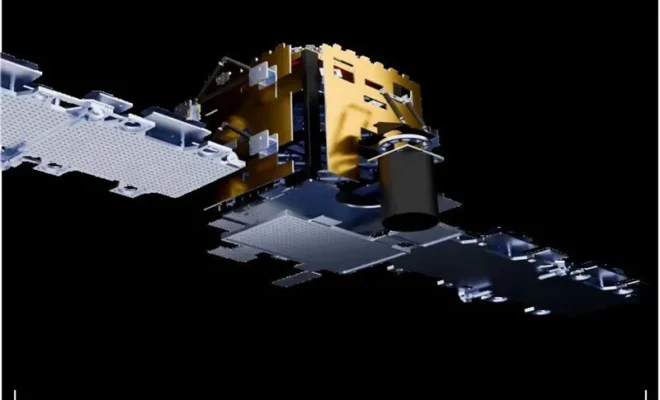
India’s space tech firm GalaxEye wins a US patent for the core technology underlying the company’s OptoSAR imaging satellites, in what can be called a landmark achievement in terms of intellectual property for the Indian space industry. As per the Bengaluru-based company, it is the first ever Indian startup to win a US patent for satellite imaging technology.
The patented technology allows synchronization of optical and SAR sensors in order to collect observations of the same place at the same time with both sensors being synchronized in space and time. This combination could make satellite earth observations very useful in places where the use of optical satellite imagery is restricted due to factors like cloud cover or darkness.
What is GalaxEye’s New US Patent?
GalaxEye US patent deals with the technology involved in aligning and synchronizing optical and microwave sensors for simultaneous acquisition of the data. This technology itself has already been patented in India.
The importance of it is in the integration of two distinct technologies into one satellite system. Optical sensors operate just like high-tech cameras while SAR relies on microwaves. The latter is capable of operating around the clock and through clouds.
Through synchronization of these technologies GalaxEye attempts to solve one of the main problems of traditional satellite observations – the problem of obtaining Earth observation data which refer to exactly the same location and moment.
How Does OptoSAR Technology Work?
The underlying principle of the OptoSAR satellite of GalaxEye is the integration of optical imagery and SAR in a single satellite.
Optical imagery can provide very detailed and clear information about objects like buildings, roads, vegetation and bodies of water. Optical sensors, however, depend on proper illumination and can be obscured by clouds.
SAR is unique in its approach. It does not use sunlight, but sends radar signals and receives the images of the earth’s surface. As a result, it can get images at night and in case of cloudiness.
The problem was in the integration of this type of information. The images obtained from different satellites might be acquired at different time moments and from different angles. GalaxEye’s patented technology is meant to resolve this issue.
Why is High-Resolution Satellite Imaging Important?
Enhanced earth observation satellites would not necessarily be used for taking pictures from outer space alone.
Excellent quality and continuous satellite imagery would benefit many aspects of governments and corporations such as infrastructure, agriculture, maritime surveillance, disasters, and the environment. According to GalaxEye, the future satellite constellation will be useful for defense, governmental and business uses such as national security, agriculture, infrastructure, insurance, maritime intelligence, and disaster management.
Optical and radar satellites are especially useful together since they provide a more comprehensive image of the area.
What is Mission Drishti?
This patent is intimately linked to the company’s first satellite mission called Mission Drishti. GalaxEye launched Drishti on May 3, 2026. It described the satellite as the world’s first OptoSAR imaging satellite. The approximately 190-kg satellite used both multi-spectral imaging and SAR on the same platform.
However, soon after the mission suffered a set back in July due to loss of communication with the Drishti after an anomaly caused by geomagnetic solar storms. GalaxEye however stated that the mission had tested crucial aspects of the space craft even before the loss of communications.
In this case, the patent in the United States becomes very crucial because it covers the core technology which the company plans to exploit commercially.
GalaxEye’s 30-Satellite Ambition
The company does not plan to limit itself to launching only one spacecraft. GalaxEye has already declared its intentions of deploying a fleet of 30 satellites within the following five years in order to increase the scope of its Earth observation capabilities.
The future fleet may help GalaxEye to increase the frequency of its observations as well as the geographical range of the service.
Furthermore, the company managed to acquire the Bengaluru-based spacecraft engineering company called StarOps in August 2026.
Why the US Patent Matters for India
However, the significance of the US patent for GalaxEye is not just within the context of the intellectual property portfolio of one company.
The private space industry in India has been growing immensely over recent times, as startups have been moving away from manufacturing individual parts and services to satellite systems and technologies.
Therefore, GalaxEye’s feat serves as an indicator of this trend. The technology developed by GalaxEye has been developed in India, launched into orbit using Mission Drishti, and patented through intellectual property in the US.
Moreover, the company has termed this feat as an indication that the Indian startup ecosystem has capabilities to develop technologies which target the international market.
Where Could This Technology Be Used?
Uses are numerous, considering that satellite imagery is increasingly being used for intelligence purposes rather than only visually. In the agriculture sector, the possibility to observe repeatedly will enable monitoring of the crops and land conditions.
Disaster management also has uses since radar imaging can be useful even in cases where cloud cover or smokes interfere with the normal use of optical imagery.
Earth observation may assist insurance companies to assess their risks related to infrastructure and environment, and maritime authorities and the government can utilize satellite intelligence in observing big geographical areas. Defense and security applications also constitute a crucial potential market according to GalaxEye.
What Makes GalaxEye Different?
The main idea behind GalaxEye’s product is not higher resolution images. It is combining different types of data in a coherent manner.
While optical imaging allows capturing visible and spectral data, SAR enables observations in darkness and under clouds. The synchronization of both data sets collected from the same platform has the potential of enriching Earth observation data even further.
Such a capability is the reason why GalaxEye’s OptoSAR technology stands out among other competitors in commercial satellite imagery business.
What Happens Next?
The US patent will provide an added level of intellectual property protection for GalaxEye as it works towards commercialization of its technology.
In the near future, the company will be working on development of its planned satellite constellation, improving spacecraft engineering expertise and commercializing the OptoSAR platform.
If GalaxEye manages to deploy its planned satellite constellation, it will evolve from showcasing the new type of satellite to becoming one of the important players in Earth intelligence business in India.
Explore More Space Stories
What Makes EOS-05 Mission Important?
Check out why ISRO’s EOS-05 mission matters for India’s space ambitions.
How Will ISRO Data Help Agriculture?
Find out how new Earth observation data can support agriculture monitoring.
What Happened During Vikram-1 Integration?
Uncover the latest Vikram-1 developments and India’s growing private space race.
Why Is ISRO Planning Three Launches?
Browse the reasons behind ISRO’s return to multiple rocket launches.
What Did ISRO Launch In 2021?
See how ISRO’s 2021 mission carried Indian and Brazilian satellites.
Conclusion
GalaxEye US patent is important since it holds the rights to technology that would integrate optical and radar satellite imaging into a synchronized system.
For GalaxEye, it helps reinforce their position as they gear up for the launching of a 30-satellite constellation and further expansion of the company. For India’s private space industry, it is yet another instance of Indian startups inventing proprietary technologies that have ambitions outside the Indian space industry.
The larger significance, therefore, does not lie in a single patent. Instead, it lies in the growing capability of India to develop, launch and commercially protect advanced space technology in the international domain.
GalaxEye’s innovation is not only about clearer images from satellites; their patented OptoSAR technology hopes to combine the benefits of optical satellite images with the all-weather capability of radar satellite imaging, thus providing an unprecedented way for the observation of earth.