
Delhi Drafts Strict E-Rickshaw Safety Policy: 2.5 Lakh Vehicle Cap and No Driver-Seat Passengers
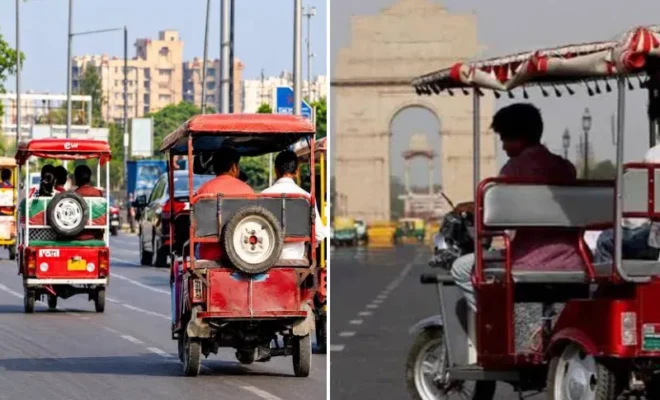
The Delhi government has reportedly drafted a stricter e-rickshaw safety policy that proposes limiting the number of registered vehicles to 2.5 lakh and prohibiting passengers from sitting beside drivers. The proposed measures aim to improve passenger safety, reduce traffic congestion and strengthen regulation of electric three-wheelers operating across the national capital.
E-rickshaws play an important role in Delhi’s last-mile connectivity, linking residential neighbourhoods with metro stations, bus stops, markets and other transport hubs. However, concerns about overcrowding, unsafe seating arrangements, unregulated operations and traffic violations have increased calls for stronger enforcement.
The proposals would introduce additional controls on vehicle registration and passenger accommodation, subject to the final policy and applicable government notifications.
Proposed Cap on E-Rickshaw Registrations
The proposed ceiling of 2.5 lakh vehicles could help authorities regulate the growing number of e-rickshaws operating on Delhi’s roads. A registration cap may also support better monitoring of permits, vehicle fitness and compliance with transport regulations.
However, implementing such a limit would require clear rules for existing operators, new applicants and vehicle owners seeking registration renewals. Authorities would also need to clarify whether the cap applies to all registered e-rickshaws or only vehicles operating within specified areas.
For drivers who depend on e-rickshaws for their livelihoods, changes to registration rules could have significant financial implications. A transparent transition process would therefore be important to minimise uncertainty for existing operators.
No Passengers Beside the Driver
Another key proposal is a prohibition on passengers occupying the seat beside the driver. Such seating arrangements can interfere with the driver’s movement, reduce visibility and increase the risk of accidents.
Restricting passengers to designated seating areas could help improve driving safety and make it easier for enforcement personnel to identify overcrowding. The policy could also establish clearer expectations regarding passenger capacity and safe vehicle operation.
Effective implementation would depend on clear communication, regular inspections and consistent penalties for violations.
Balancing Safety With Last-Mile Connectivity
The use of e-rickshaws ensures affordable means of transportation for short distances and connectivity for places where other large vehicles of public transport might not provide an easy access. E-rickshaws further ensure the use of electric power as an essential component of the broader process of transitioning to clean urban transport in Delhi.
But the use of electric means of transportation is contingent upon their safe operations and efficient traffic management. The poor regulation of such vehicles poses danger to passengers, pedestrians and other road users.
Therefore, any new regulation must take into account the need to promote both public safety and economic needs of drivers as well as commuter convenience.
What Will Happen Next?
It will depend on the notification and implementation of the government of such policy. It would require that the authorities specify procedures for registration, restrictions for the number of passengers and treatment of existing operators.
If these measures will be enforced, they could prove effective for ensuring greater accountability and safety of e-rickshaws used in Delhi. Until then, the suggested restriction on the number of vehicles and passengers should be considered as a draft regulation.
Weather Shifts, Tech Industry Moves & Emerging Market Trends
Will North India See Drizzles and Cooler Autumn Days?
Check out the IMD’s regional weather advisories for light drizzle and changing temperatures across North India.
What Did Bharat Biotech Say About Covaxin and Allergies?
Explore the reported allergy-related cautions and understand why people with existing health conditions should seek medical advice before vaccination.
Why Aren’t Indian IT Firms Convinced by Biden’s Visa Support Promise?
Discover the concerns shaping the IT industry’s response to proposed US visa support and what they could mean for Indian technology companies.
When Does Flipkart Freedom Sale 2026 Begin?
Find out the reported sale dates, smartphone deals, laptop discounts and top offers on home appliances.
Could India’s Plant-Based Meat Market Reach $500 Million?
Explore the growth drivers, changing food preferences and market opportunities shaping India’s plant-based meat industry.