
Swachhata Hi Seva Campaign 2026 Launched Nationwide: Focus on Five Pillars
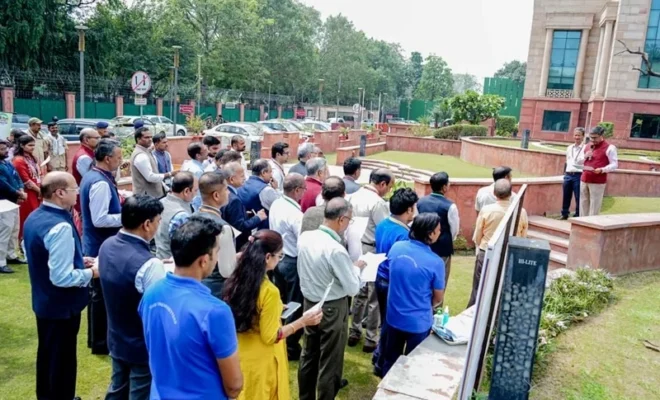
The Swachhata Hi Seva 2026 campaign launched in India will be held throughout the country starting from September 17. This campaign is an effort where citizens, schools, local bodies, institutions, and government departments come together for cleanliness drive. This year’s campaign bears the slogan “Swachhata Mein Sahbhag; Swachh Bharat, Viksit Bharat”.
This implies that cleanliness is the responsibility of all rather than it being an activity undertaken only by the government departments. The annual campaign, which has been observed since 2017, focuses particularly on behavioural change. While the 2026 version emphasizes the youth and students, other features include cleanliness of difficult-to-clean places, protection of sanitation workers, proper waste management, and value addition of waste.
What Is Swachhata Hi Seva 2026?
Swachhata Hi Seva or SHS is a national movement of cleanliness and participation aimed at motivating citizens to voluntarily clean their surroundings. In 2026, the SHS program will be an initiative involving the Ministry of Drinking Water and Sanitation and Ministry of Urban Development, alongside States, Union Territories, Panchayats and other authorities.
The SHS program will formally kick-off on September 17. The preparations by the government had focused on visible results of cleanliness and massive Jan Bhagidari. The government has also said that cleanliness must become a habit and not merely a campaign activity.
The Five Pillars of Swachhata Hi Seva 2026
The 2026 campaign has been organized around five major pillars that cover physical cleanliness, education, sanitation-worker welfare, citizen participation and the circular economy.
Transformation of Cleanliness Target Units and Clean Public Places
The first pillar revolves around identifying and improving difficult and overlooked places called Cleanliness Target Units or CTUs as well as popular public spaces.
The aim here is to go above and beyond the usual cleaning efforts through the identification of places that have a tendency to get filled up with garbage or become neglected. Such places will be pinpointed and improved in a time-bound manner. Public places that receive a lot of footfalls will also be covered through such cleanliness drives so that the effects can be seen by people.
This pillar thus centers on making a difference that can be noticed..
Swachh Paathshala – Yuva for Swachhata
The second pillar ensures that the youth play a pivotal role in the campaign. Through Swachh Paathshala – Yuva for Swachhata, young people will get the opportunity to get educated on waste management, cleanliness, rainwater harvesting, and water management.
The Swachhata Yatra involves Swachhata Gyan Yatra, in which young people can see how the waste is managed after it is collected from houses and schools. Additionally, there is a Swachhata Evam Jal Sanchay Samvad, which combines cleanliness with water conservation.
The emphasis on the youth is aimed at creating a behavioral change in terms of cleanliness from schools to houses.
SafaiMitra Suraksha Evam Samman Shivir
The third pillar will look into those workers whose job is to maintain cleanliness in cities and villages. The SafaiMitra Suraksha Evam Samman Shivir will offer single-window services that include health check-ups, protective gear, and linkages to relevant central and state government welfare schemes.
Sanitation workers and Swachhagrahis will be felicitated in recognition of their contribution to the cleaning drive.
Thus, worker safety and dignity become significant aspects of the 2026 movement in contrast to the previous movement where sanitation was seen in terms of infrastructure.
Jan Bhagidari for Swachhata
The fourth pillar revolves around the citizen participation. This pillar encompasses awareness of the Solid Waste Management Rules, 2026, 4W segregation and composting.
The Swachh Bharat Mission has associated cleanliness with community involvement activities like the sports for Swachhata, planting trees through “Ek ped, Maa Ke naam,” and other participation events. In addition, special Gram Sabhas in villages and Special Council Meetings in urban areas are planned in connection with Swachh Bharat Diwas on October 2.
An important participation event across the country is scheduled for October 1 from 8 AM to 9 AM as citizens join hands in “Ek Din, Ek Ghanta, Ek Saath,” spending an hour in voluntary cleanliness services.
Swachhata Se Samriddhi
Pillar number five makes a link between cleanliness and economy through the concept of circular economy. As part of the Swachhata Se Samriddhi Campaign, there will be campaigns such as Waste to Wealth and Waste to Art.
There will also be reuse and recycle campaigns where old books, toys, and clothes are involved, as well as plastic recycling melas involving bulk waste producers. The general aim will be to show that waste can be used as a resource where it is segregated, reused, recycled, and made into valuable products.
What Happens on October 2?
October 2, observed as Swachh Bharat Diwas, will be another major milestone in the campaign. Special Gram Sabhas will take place in rural areas, while urban areas will conduct Special Council Meetings.
These meetings are expected to discuss the outcomes of SHS 2026 as well as awareness of the Solid Waste Management Rules, 2026. Cities and villages will also conduct plantation activities under Ek Ped Maa Ke Naam. Citizens will have the opportunity to voluntarily take a Swachhata Pledge through the MyGov platform.
Why the 2026 Campaign Matters
This particular campaign is important because, unlike other cleanliness campaigns, it goes beyond just cleaning and extends into the segregation of waste, saving water, involvement of youth, welfare of sanitation workers, and waste management.
There has been increased focus by the government on concrete results in recent times. The Swachh Seva Aankalan, launched for rural regions on September 15, is a self-assessment tool that evaluates and monitors the delivery of sanitation services at the Gram Panchayat level.
Waste management is not limited to the community; schools too have become an integral part of the drive now. The Education Ministry has launched a Quiz on Solid Waste Management Rules 2026 for school children from Class 6 to Class 12.
Conclusion
Swachhata Hi Seva 2026 is a national campaign for sustaining cleanliness as a civic responsibility. The five pillars of the campaign deal with transformation of unclean areas, education of youth, sanitation workers’ safety, citizen engagement and converting waste into wealth.
Under the theme “Swachhata Mein Sahbhag; Swachh Bharat, Viksit Bharat”, the participation of people in cleaning activities is of utmost importance. Instead of merely cleaning public areas for a few days, the goal is to adopt practices which can sustain after the completion of the campaign.
Swachhata Hi Seva 2026 is going beyond the traditional concept of cleanliness drives by combining cleaner public areas, youth participation, Safai Mitra welfare, waste management and citizen engagement in one national campaign.
India’s Latest Stories, Explained Simply
Why Were Tibetan Protesters Detained?
Check out what happened near Bharat Mandapam and why demonstrators were detained.
What Was the Singapore Fraud Case?
Find out how the CBI brought Harnek Singh back to Delhi after 13 years.
Why Is India Shifting Trade Strategy?
Uncover the ideas behind India’s pragmatic approach to global trade.
What Changes Could 8th Pay Bring?
Browse the CSS Forum’s demands for stronger pension and employee benefits.
Why Did MCD Seal PG Buildings?
See why illegal buildings were sealed and a magisterial probe was ordered.