Government e-Marketplace (GeM) Signs MoU to Boost Recycled and Upcycled Textiles Procurement
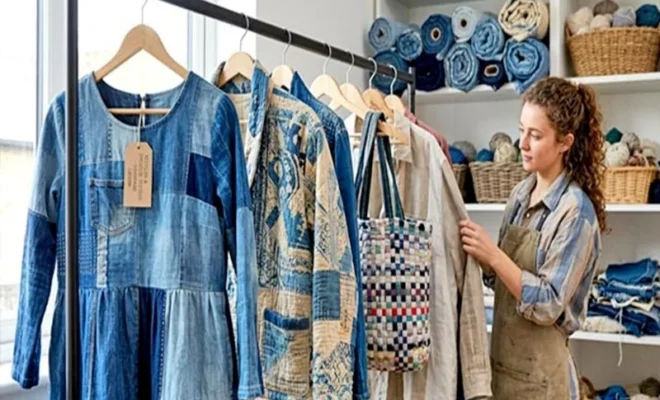
It is an interesting development by the Government e-Marketplace (GeM) to take an important step to foster sustainable public procurement with the signing of an MoU, which will boost the use of recycled and upcycled textile goods through procurement.
This is an important development since public procurement has the potential to generate huge demand for sustainable goods. By promoting the use of recycled and upcycled textile goods in the purchase process through GeM, a big market for such items can be generated.
This move by GeM also highlights the increasing interest in circular economy within the textile sector, where waste is considered a resource and not just a waste.
What Is the GeM MoU About?
Purpose of the MOU is to improve availability and procurement of recycled and upcycled textile products via GeM – Government e-Marketplace.
Government e-Marketplace (GeM) is a web portal where procurement of government departments and other public entities is conducted for goods and services of different nature. Procurement of sustainable textile products through this channel will provide government procurers easy access to an alternative to traditional textile products.
Hence, the MOU acquires importance not just from the procurement perspective but also in relation to the goal of achieving resource efficiency and sustainability in production.
Why Recycled and Upcycled Textiles Matter
However, there is significant textile waste produced during manufacturing, processing, and consumption in the textile industry. Recycled textiles offer a solution to reuse and recycle the materials used and produce products using them, whereas upcycling entails finding a use for the waste materials.
Public Procurement may contribute to directing consumers’ attention towards more circular production systems.
It will not only reduce the negative impact on the environment but also provide the companies with an opportunity to produce products out of waste materials.
How GeM Can Help Sustainable Textile Businesses
Government e-Marketplace will play a significant role in linking sustainable fabric manufacturers and suppliers with the government buyers.
For companies that manufacture sustainable products like recycled and upcycled goods, a government procurement portal can open up new business avenues. Getting visibility on such a portal will also encourage manufacturers to diversify their sustainable product range and adopt recovery processes.
For small and new companies, government requirements can prove to be very beneficial since they will provide them access to an extensive buyer network.
What It Means for Government Buyers
For government departments, the initiative could make it easier to incorporate sustainability into everyday procurement decisions.
Rather than treating environmental considerations as separate from purchasing, buyers can increasingly evaluate products based on how efficiently resources are used and whether materials can be recovered, reused or recycled.
The availability of recycled and upcycled textiles on GeM could therefore give public-sector buyers more options when purchasing textile-related products.
Supporting India’s Circular Economy
Moreover, the MoU also ties in with the idea of a circular economy, which involves keeping products and materials in use for as long as possible.
Linear production, according to conventional wisdom, starts with extracting raw materials, manufacturing, using, and eventually disposing of the items. The goal of the circular approach is to minimize waste and reuse, repair, recycle, and repurpose materials.
Recycled and upcycled textiles fit well within the framework, as they decrease dependency on virgin resources while giving the materials a second chance economically speaking.
Generating Demand for Sustainable Products
Creating demand for sustainable products is one of the main issues of sustainable manufacturing.
While companies might be ready to buy recycled materials and use cleaner manufacturing processes, it will be significantly easier for them if there will be a guaranteed market for the products.
Government procurement can serve as a source of such a demand.
Promoting sustainable textiles through GeM, the MoU can potentially contribute to the increased commercial viability of recycled and upcycled products, as well as stimulate suppliers to increase their production capacity.
Why This Matters for the Textile Sector
There is a wide range of textile stakeholders in India.
If there were an increased emphasis on recycling and upcycling goods, it would foster innovation in this sector. Firms may begin considering new ways of collecting used textiles, creating recycled fibers, and using excess materials to create new goods.
This would eventually result in a more efficient industry and the creation of new business ventures in this area.
The Bigger Sustainability Push
GeM is happening in an era where sustainability is getting more relevance in procurement decisions worldwide.
Governments happen to be large purchasers, and their procurement practices play a role in influencing what kind of goods businesses produce and how their supply chain works.
When the public sector demands sustainable products, there are more chances of suppliers producing sustainable alternatives.
Therefore, the GeM MoU has the potential of converting sustainability from an esoteric concept to mainstream procurement practice.
What Suppliers Should Look Out For
For businesses involved in the production and distribution of recycled and upcycled textiles, the news could present an opportunity of being part of the sustainable procurement process.
It will be necessary for them to comply with the specification requirements of GeM procurement.
Conclusion
MoU on recycled and upcycled textile procurement of Government e-Marketplace is a significant move in the right direction to link the government purchases with sustainability objectives.
It would not only help the government departments through increased options for sustainable procurement but will provide textile companies with the chance to create new products from their recycled and upcycled waste material.
However, even more significantly, it marks an important move towards viewing textile waste as an asset and moving towards circular production.
GeM initiative would not only help increase the use of recycled and upcycled textiles in government purchases but will also help move India’s textile industry in the right direction.