Odisha Sets Up CM-EAC Council With Top Economists and AI Leaders for $1
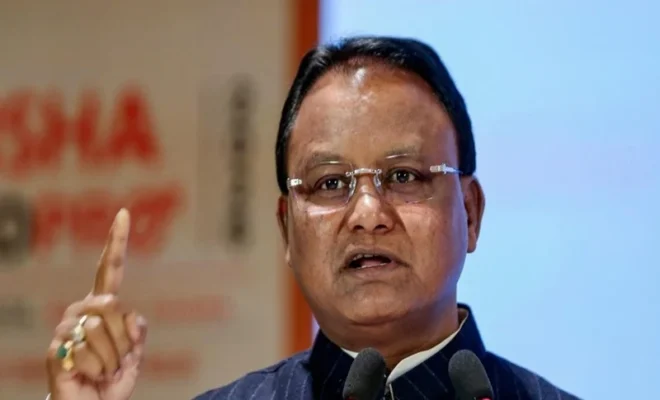
Odisha has formed a new Chief Minister’s Economic Advisory Council (CM-EAC) amid efforts to intensify the process of long-term economic planning. The 11-member committee is made up of economists, ex-senior civil servants, an agriculture expert, an expert on taxes, academicians and someone from the AI industry.
The objective of forming this council is to give futuristic and evidence-based advice to the Chief Minister of Odisha, Mr. Mohan Charan Majhi on the issues of economic development, public finances, investments, employment, technology and sustainable development. The first goal is to assist Odisha in achieving a $500 billion economy by 2036 and a $1.5 trillion economy by 2047.
Why Has Odisha Created the CM-EAC?
The Odisha government aims to improve its economic policymaking process by integrating expertise from outside into its development plan. Instead of depending on the input of the administrators alone, the new council consists of experts who have experience in areas such as economics, taxation, agriculture, administration, academic research and new technologies.
According to the Finance Department notification, the CM-EAC would serve as an independent advisory panel for the government. It will involve itself in studying economic developments at the international, national and state levels and their impact on Odisha.
Thus, the council is likely to give strategic advice instead of managing the departments of the government directly. The advice would include solutions for the current economic issues, as well as structural changes required for increasing the economic potential of the state.
Who Are the Experts on the Council?
The council consists of seven expert members whose expertise ranges across government, economics, taxation, agriculture, academics and technology.
Jugal Kishore Mohapatra, former Odisha Chief Secretary, is one of the expert members along with Santosh Kumar Mohapatra, who was previously the chairman of Paradip Port Authority. The expert on agriculture will be Shobhana Kumar Pattanayak, who was the Union Agriculture Secretary, while the expert on taxation will be Arbind Modi, who has formerly been a senior IMF economist.
The experts on economics and academics include Deepak Mishra, distinguished visiting professor of ICRIER and honorary distinguished professor of Delhi University, and Srijit Mishra, professor of the School of Economics at the University of Hyderabad.
Pratyush Kumar, co-founder and CEO of Sarvam AI, forms the technology part of the council.
Why Is an AI Leader Part of an Economic Advisory Council?
“The participation of an AI co-founder from Sarvam AI is another significant feature of this new council.” Odisha is not considering artificial intelligence just in the context of the technology sector but has considered AI, digital economy, and technology-driven governance within the scope of the council’s policies.
AI may have implications for productivity, delivery of public services, businesses, employment, and the creation of new technology industries. Participation of a technology leader in AI in this advisory body allows the government to leverage the expertise on a technology topic that has become increasingly relevant to competitiveness.
Artificial intelligence, digital economy, green energy transition, blue economy, climate resilience, and technology-driven governance are mentioned among other emerging areas in the council’s terms of reference.
What Is Odisha’s $1.5 Trillion Target?
$1.5 trillion is one of the goals under the more extensive Viksit Odisha 2047 plan. In order to get to that mark, Odisha aims at being a $500 billion economy by 2036 under the Samruddha Odisha vision.
This reflects an effort aimed at expanding the scale of the economy within the next few decades. Accomplishing these goals will necessitate increased investment, improved productivity, industrial development, improved human resources, and economic diversification.
In early 2026, the governor of Odisha stated that, according to the state’s vision document, the goal of increasing economic growth rates from 7% to 9.5% per year was planned, along with the increase in Odisha’s contribution to India’s GDP.
What Will the Council Actually Advise On?
CM-EAC has a broad mandate. Its economic functions involve assessing macroeconomic trends and advising the government on issues of growth, fiscal management, taxation, investment, and employment.
CM-EAC will also consider strategies for increasing the size of the non-farming economy of Odisha, promoting the MSME sector, developing industrial clusters, and human resource development. The reason why these sectors are very important is that in order to achieve a bigger economy, there is need for growth in many different sectors and not in a few sectors.
The council will also advise the government on policy innovations in some new sectors such as green energy, blue economy, digital services, artificial intelligence, and technology-enabled governance.
How Could AI and Technology Fit Into Odisha’s Growth Plan?
Indeed, the utilization of technology in the economic development plans of Odisha will not be limited only to attracting IT companies for investing in Odisha.
Technologies like Artificial Intelligence can be extensively applied in optimizing the government processes and increasing efficiency in terms of productivity, analysis and management of processes. The drive for encouraging investments in technology-driven sectors is very much evident in the way the state had invited investors to Hyderabad and Kolkata Investor Conferences for investing in IT, Aerospace & Defense, Pharmaceuticals, Biotechnology and other sectors.
Hence, it is evident that bringing in an industry expert in Artificial Intelligence to the CM-EAC panel is a part of a greater strategy.
What About Agriculture and Rural Development?
An expert is chosen for agriculture on the council, which indicates the significance of the agricultural industry for the economy and jobs in Odisha.
The scope of responsibilities of the council includes more than just agricultural policy issues. The emphasis on human capital, MSMEs, industrialization, skills, and the non-agricultural economy may indicate the need to link rural development with economic diversification.
In such a way, the transformation of people’s lives from agrarian to economically more productive could be one of the key priorities for economic planning in the state.
When Will the Council Meet?
Under the provisions of the Finance Department notification, the council led by the CM will convene once every six months at least. Expert members of the council will work for a term of two years starting from the date of issuance of the notification, unless otherwise decided by the government.
The Finance Department will work as a secretariat for the council. It will perform all the administrative, technical, and logistical functions. Ex-officio members will include the Chief Secretary and Development Commissioner-cum-Additional Chief Secretary. Member-Secretary will be the Principal Secretary of the Finance Department, and Convenor will be the Director (Budget).
What Could the CM-EAC Mean for Odisha?
The formation of this council creates an avenue for Odisha to incorporate independent economic and sector-based knowledge into policymaking.
Whether it will prove important will rest upon how effectively its findings are incorporated into government policies and action. The council is an advisory body, which means that it cannot automatically influence the decision-making process of the government or ensure the fulfillment of the economic goals of the state.
What the council offers, however, is a platform where economists, administrators, scholars and technology experts analyze Odisha’s economic situation.
Conclusion
The newly formed Odisha CM-EAC Council is certainly a major addition to the framework for long-term economic planning in Odisha. The inclusion of experts in economics, taxation, agriculture, administration, academia, and artificial intelligence makes it evident that the CM-EAC Council aims to bring about a broad vision for economic development in Odisha.
There is no doubt regarding Odisha’s economic aspirations: $500 billion economy by 2036 and $1.5 trillion by 2047. Attainment of these goals would require constant efforts towards investment, industry growth, skilling, technology adoption, and economic diversification.
In any case, it is the responsibility of the CM-EAC Council to build the evidences and strategies for this economic development.
Related Odisha Reads: Elections, Schemes & Political Developments
When Will Odisha’s Final Roll Arrive?
Check out the revised SIR schedule and key voter-list dates.
How Can Women Apply For Subhadra?
Find the key steps and eligibility details for Subhadra Yojana 2026.
What Shaped BJD’s Odisha Electoral Battle?
Uncover the key developments surrounding BJD’s electoral contest in Odisha.
Why Did Vaccination Spark Odisha Politics?
Browse the political exchanges surrounding Odisha’s vaccination drive.
What Happened When Pandian Joined BJD?
Get to know the background of V.K. Pandian’s entry into the BJD.