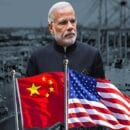
NATO’s Ankara Summit: Warning Signals India Cannot Afford to Ignore

The upcoming NATO Ankara Summit might look, at first sight, like yet another usual gathering of the Western military commanders. However, from the point of view of India, considering it as an event far from the Indian region would be a miscalculation.
Nowadays, the sphere of global security goes beyond geographical boundaries. Russia-Ukraine War, growing role of China, instability in West Asia, cyber wars, supply chain issues, and new technologies in defense have changed the nature of regional conflicts. Now, the decisions taken at the NATO summits can have an impact on the strategic situation in the Indo-Pacific region.
From this perspective, the upcoming Ankara Summit becomes not only a symbolical act of diplomacy but also a wake-up call for India.
NATO Is No Longer Looking Only Toward Europe
The main task of NATO for decades has been to protect Europe against military threats. This view on NATO has greatly changed over the last few years.
Now NATO’s strategy documents are regularly mentioning problems that go far beyond the Euro-Atlantic area. NATO today talks about cyber threats, artificial intelligence, maritime security, critical infrastructure, space and the strategic emergence of China.
It demonstrates the recognition of the fact that nowadays security issues are linked together. A military conflict in Eastern Europe can destabilize the situation with food supplies in Africa, raise the price of energy in Asia and change military alliances in the Indo-Pacific region.
The Ankara Summit is going to consolidate this expanded strategic approach to NATO’s task.
It means that for India it will be crucial how NATO is going to act in the future.
China Will Remain the Silent Centrepiece
Despite the continued dominance of Russia in the near-term security considerations for NATO, China has gradually evolved into the more significant strategic threat to the alliance.
Military and technological modernization efforts, growing naval power, and China’s role in vital infrastructural resources have forced the members of NATO to reevaluate their security doctrines.
NATO has time and again raised issues concerning cyber security, economic coercion, dependence on supply chains, and emerging technologies with regard to Beijing.
This obviously holds much relevance for India.
India has its own set of security threats from China on the Line of Actual Control, while at the same time competing with China in matters of technology, manufacturing, and maritime power.
Even if NATO stays away from direct conflict with China, strategic cooperation within the West will certainly have an impact on the Indo-Pacific security architecture where India is becoming an increasingly vital player.
Technology Is Becoming the New Battlefield
Contemporary wars are increasingly being waged using algorithms as opposed to armies only.
In recent times, artificial intelligence, cyber capabilities, quantum computing, satellites, autonomous weapons, and digital infrastructures have come to form the bedrock of national security.
The Ankara summit is anticipated to place more focus on technological resiliency as opposed to conventional military readiness.
This is a double-edged sword for India.
India has one of the rapidly growing digital economies as well as defense technology industries in the world. Nonetheless, the country continues to depend heavily on technologies from abroad.
It is against this backdrop that the summit serves to reflect the broader global reality where future geopolitical competition will increasingly be about technological supremacy as opposed to just military power.
The Indo-Pacific Is No Longer a Separate Theatre
The most significant shift of the strategy seen in recent times has been the increasing overlap between the European and Indo-Pacific security debates.
Developments taking place thousands of miles away have become directly linked with each other.
The disruptions faced in the Red Sea impact Europe’s trade.
Russian military actions affect the Asian energy markets.
Chinese navy expansion affects global maritime routes ranging from the Mediterranean to the South China Sea.
This is reflected by the Ankara Summit as well.
India, which is not a part of the NATO alliance, despite being an important actor in the Indo-Pacific region, cannot stay indifferent to the ongoing debate, which shapes maritime security, global supply chain, and defence cooperation.
India’s Strategic Autonomy Will Face New Tests
Strategic independence has been the hallmark of India’s foreign policy tradition rather than alliance politics.
This policy has helped India maintain positive relations with many world powers at once.
While maintaining collaboration in defence matters with Russia, India is developing closer relations with the US, France, Australia, Japan, and some European nations.
But a more polarized international community will make it tough for India to pursue such a balanced course of diplomacy.
With NATO adopting tougher stances on global security concerns that go well into Asia, non-aligned nations will find themselves under greater diplomatic pressure to articulate their strategies.
Hence, for India to further develop its issue-based relationships without affecting its foreign policy independence, it will be one of the most daunting diplomatic tasks in the coming decade.
Defence Partnerships Will Continue Expanding
India’s interaction with the members of NATO has increased consistently through the years.
France continues to be one of India’s most important strategic partners.
The United States of America has become India’s topmost defence partner.
A few countries from Europe have started regarding India as a crucial security partner in the Indo-Pacific region.
The Ankara Summit could help expedite discussions on interoperability, defence technology and innovations, maritime security, intelligence exchange, cyber defence, and resilient supply chains.
While India is not likely to align with NATO, the cooperation between India and the individual members of the organization will increase.
Economic Security Is Now National Security
The conventional divide between economics and security is fast vanishing.
Critical minerals, semiconductors, artificial intelligence, rare earth metals, energy routes, submarine cables, and global logistics are now key geopolitical priorities.
It is recognized by NATO that economic resilience plays an important part in military preparedness.
This approach matches closely with India’s emphasis on resilient supply chains, increased manufacturing, and technological self-sufficiency.
This means that the Ankara summit echoes an international trend where there is no separation between economic competitiveness and national security.
What India Should Watch Closely
The most crucial result for India may perhaps not be any specific statement made after the summit itself.
Rather, it is vital for New Delhi to carefully watch how NATO positions itself regarding its collaboration with respect to Indo-Pacific, technology, cybersecurity, maritime security, and strategic rivalry with China.
Also, the language used in Ankara may provide some useful information about the future priorities of the alliance.
Another equally important consideration would be how Europe manages its security obligations in Ukraine and prepares for its geopolitical rivalry stretching into Asia at the same time.
Stay Updated on Global Developments
Why Did India Issue Iran Advisory?
Find out why Indian citizens have been urged to leave Iran immediately.
Why Must Indians Stay Indoors?
Learn why the MEA advised Indians in Iran to remain indoors.
Is UAE Safety Affected By Tensions?
Check out how regional tensions could impact Indians living in the UAE.
How Did The Oman Attack Unfold?
Uncover the confirmed details surrounding the Indian sailor’s tragic death.
What Happened To Frozen Assets?
Explore the latest updates on the release of frozen Iranian assets.
Conclusion
NATO Summit in Ankara is not just another meeting of the West’s military leaders. It represents the continuous evolution of global security from being region-specific into becoming a system of interconnected geopolitical threats.
In the case of India, turning a blind eye to such trends means failing to see how they affect the country’s defense alliances, technological rivalry, maritime security, logistics and the power balance in the Indo-Pacific region.
India’s strategic independence is one of its key diplomatic assets. However, this independence should be complemented by awareness.
The NATO Summit is a timely reminder of how the present day geopolitical trends do not stay within one region alone. Decisions made in Europe increasingly affect Asia, and India’s security of tomorrow will depend not only on its ability to react to the crises, but also to anticipate them.
In the increasingly flexible global order, India cannot allow itself to be left outside looking in. It must continue crafting its own strategic path while remaining aware of every signal emanating from the changing security landscape of the world.