
ISRO NVS-03 Navigation Satellite Launch: GSLV-F18 Liftoff Scheduled from Sriharikota
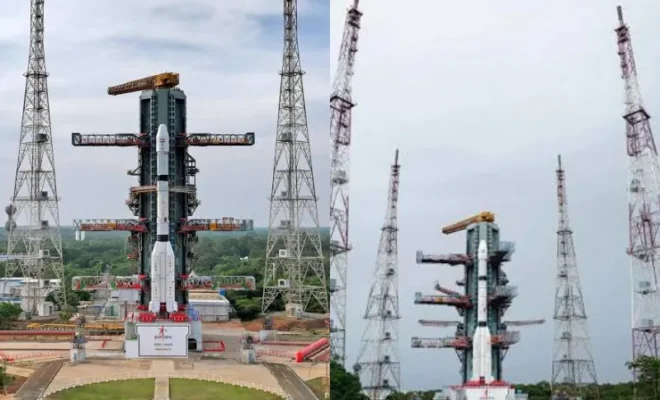
Indian Space Research Organization’s (ISRO) upcoming mission will see the launching of its next-generation navigation satellite named NVS-03 using the GSLV-F18 rocket on October 30, 2026. The launch will take place at 11:51 PM Indian Standard Time (IST) from the Second Launch Pad at Satish Dhawan Space Center, Sriharikota, Andhra Pradesh.
The objective of this mission is to enhance the capability of India’s indigenously developed satellite navigation system known as “Navigation with Indian Constellation (NavIC).”
GSLV-F18 Mission: Key Launch Details
The GSLV-F18/NVS-03 flight represents the twentieth launch of India’s Geosynchronous Satellite Launch Vehicle (GSLV). It will launch the satellite into Geosynchronous Transfer Orbit (GTO) where the satellite will be moved to its orbit.
NVS-03 has a mass of about 2,250 kg and is the third satellite in the second-generation navigation satellite constellation launched by India. ISRO will launch five such satellites as part of this new generation program.
The latest launch comes after the launch of NVS-01 in May 2023 and NVS-02 in January 2025.
What Makes the NVS-03 Satellite Important?
The NVS-03 has an indigenous atomic clock, along with the acquired atomic clocks. An atomic clock is very important in satellite navigation as it gives an accurate time measurement that can be used to determine a user’s position.
The satellite will also add the L1 frequency band to the existing L5 and S-bands. The addition will help increase the compatibility with the civilian navigation receivers, including those used in the smartphones and other applications.
NavIC delivers positioning, navigation and time services throughout India and around 1,500 kilometres beyond its borders. Some of the applications of NavIC include navigation on the roads and seas, aviation, disaster management, surveying and others.
NavIC Gets a Major Upgrade After Previous Setbacks
The current launch will have special significance due to the technical problems experienced during the previous launch of NVS-02. Although the satellite was able to enter into its primary orbit successfully in January 2025, it faced some problem related to its propulsion system, which made it impossible for it to perform the necessary orbit-raising manoeuvre.
ISRO has taken corrective steps to rectify the technical faults experienced.
The launch of NVS-03 will be able to enhance the functionality of the satellite constellation.
India’s Push for Strategic Independence in Navigation
“NavIC is the name given by India for its indigenous satellite navigation system, which is an alternative to relying on other navigation services such as GPS which is owned by the USA. The need for improving the NavIC system is critical for civilian infrastructure and national security.”
“The latest addition in the form of IRNSS 1-H satellite will be yet another achievement for the ISRO. But, the satellite will have to undergo some more maneuvers before it can become operational.”
AI Browsing, Festival Updates, Beauty Trends & Tech Explained
What Makes Perplexity Comet Different on iOS?
Discover how the Comet browser brings AI-first browsing to iOS and what users can expect from its features.
When Is Eid ul-Fitr 2026 Expected in India?
Find out the expected moon-sighting date, timings, and latest updates surrounding Eid ul-Fitr celebrations in India.
How Can You Try the UNO Reverse Makeup Trend?
Explore the viral UNO Reverse makeup trend and learn how to recreate the look with a simple step-by-step guide.
Why Has Telangana Received an IMD Orange Alert?
Check out the weather warning, expected rainfall, strong winds, and possible impact across parts of Telangana.
What’s New in Intel Core Ultra 200HX Plus?
Uncover the key features, performance improvements, and AI capabilities of Intel’s Core Ultra 200HX Plus processors.