ISRO Establishes Advanced ISTRAC Radar Research Facility in Guwahati for Satellite Tracking
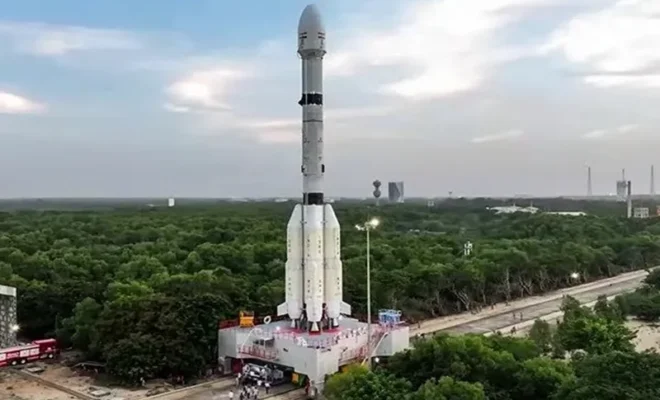
India’s space organization, the Indian Space Research Organization (ISRO), has added to its space infrastructure through the setting up of an Advanced ISTRAC Radar Research Center at Guwahati in Assam. This center will be instrumental in the tracking of satellites and space objects as well as helping out in space missions in the future.
The ISTRAC (ISRO Telemetry, Tracking and Command Network) facility will help India strengthen its capabilities in satellite tracking and space situational awareness.
What is the ISTRAC Radar Research Facility?
ISTRAC’s Radar Tracking Research Facility is a dedicated land-based structure, which is used for monitoring satellites or any other objects orbiting the Earth.
This radar tracking facility differs from traditional communication station because it actually detects and monitors the location, velocity, and trajectory of objects in the space. This will enable mission controllers to understand better movements of satellites.
The Guwahati facility will assist in research work in the area of advanced radar technology, as well as operational monitoring of satellites of ISRO.
Why Guwahati Was Chosen
Geographically speaking, Guwahati’s location makes it an ideal candidate for monitoring satellites in northeastern India.
With increasing number of satellites passing over many areas on Earth, greater monitoring facilities help improve communication and monitoring efficiency. The setting up of a radar research centre in Guwahati not only helps in strengthening the existing infrastructure in ISRO, but will also increase the monitoring facilities for satellites in eastern sky.
Moreover, it will also help the ISRO in achieving its aim of conducting high-tech research outside the conventional space centers in southern India.
How the Facility Will Support Satellite Missions
A continuously monitored system is needed for all satellites that enter the orbit during their service period.
The new ISTRAC Radar Research Centre will be of assistance to scientists who need to calculate the orbits of satellites, assess their status, and track them in space. This information is especially critical during the launching of satellites, orbital corrections, and space collision avoidance.
Moreover, this research centre will be of great use for tracking human spaceflights, navigation satellites, and deep-space missions.
Strengthening India’s Space Situational Awareness
One of the biggest issues in current space activities is the growing number of satellites and space junk around Earth.
The Guwahati radar development center will assist the Indian SSA program through detection and monitoring of those objects that might pose interference for functional satellites.
The better tracking enables the scientists to forecast near-misses, decrease the collision risks and make correct decisions regarding the maneuvering if necessary.
With the continuous growth in the number of satellite launches worldwide, this kind of equipment is becoming essential for major space organizations.
Supporting Future Space Research
In addition to the tracking function of the satellite, this center is also to be used as a research center for advanced radars.
Researchers will work on new tracking techniques, enhance radar precision, and work on technologies that could assist in the launching of satellites and rockets in the future.
The center could also collaborate with academic organizations in aerospace engineering and space sciences.
Why This Matters for India’s Space Programme
The Indian Space program has grown exponentially in the last ten years, with frequent launches, commercial missions, lunar missions, solar missions, and plans for manned space flights.
As the Indian Space Research Organization (ISRO) embarks on increasingly
complicated missions, ground infrastructure facilities become equally important as launch vehicles and satellites.
These facilities play an important role in ensuring that satellites stay connected, monitored, and safe throughout their service period.
This also builds up technical independence for India in space monitoring.
What It Means for the Northeast
The construction of the facility further shows how northeastern India is increasingly becoming part of the scientific and technological progress in the nation.
Besides the improvements in the national space infrastructure, the facility can offer a chance for cooperation in research, technical training and investments in more advanced scientific facilities in the region.
This facility is thus part of a wider strategy by ISRO in expanding its national presence while fostering innovation in various regions of the nation.
Conclusion
The setting up of the ISTRAC Radar Research Facility in Guwahati is yet another important milestone in developing the capabilities of India in space.
Through improving satellite tracking, conducting radar research and improving space situation awareness, the facility will facilitate better and safer space missions as well as reinforce India’s status as a global space power.
With increasing ambitions in space, advanced ground infrastructure such as the ISTRAC Radar Research Facility in Guwahati will play an important role in ensuring every satellite mission stays connected, secure and well-tracked.
India’s Space Story Is Moving Forward
Why Does EOS-05 Mission Matter?
Check out the mission timeline, launch details, and its significance for India’s space program.
What Is India’s 2035 Space Goal?
Find out ISRO’s roadmap for the Bharatiya Antariksha Station and its ambitious 2035 target.
How Will Satellites Aid Agriculture?
Uncover how new Earth observation data can support agriculture monitoring and planning.
What Comes Next For Vikram-1?
Explore the Sriharikota integration and the next steps in India’s private space race.
Why Are Space Scientists Leaving ISRO?
Look into the tightened exit rules and the reported voluntary retirements of Indian space scientists.