ISRO Prepares Next-Gen Earth Observation Satellite Launch Mission for Q4: What It Means for India’s Space Programme
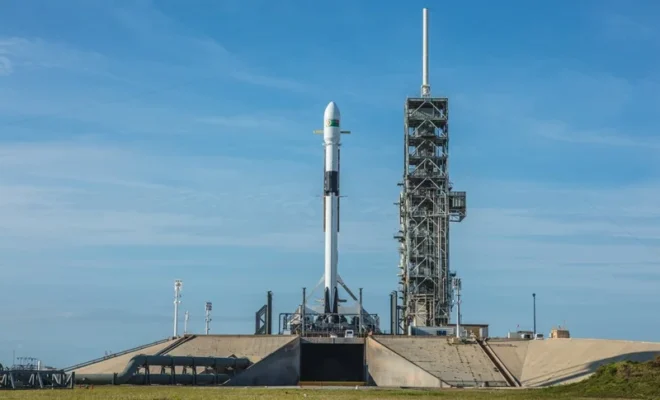
Indian Space Research Organization is making preparations for the launch of its next generation Earth Observation Satellite (EOS) mission. The mission that will be launched in the last quarter (Q4) is part of India’s attempt to increase its capabilities in the realm of earth observation through space.
Earth observation satellites have proved to be one of the most important elements of contemporary space missions as they provide continuous data of Earth’s land, water bodies, atmosphere, forest, and weather patterns. The mission will help India to acquire high-resolution images and near real-time information of the Earth.
What Is an Earth Observation Satellite?
Earth Observation Satellite is a satellite intended to view the surface of the Earth through sophisticated optical, infrared, hyperspectral or radar sensors.
Unlike telecommunication satellites that broadcast television or internet, Earth observation satellites collect images that assist governments in keeping track of environmental developments, resource availability, development and disaster situations.
The Indian Space Research Organization (ISRO) has progressively strengthened its earth observation program over the last two decades.
Why is This Mission Important?
While satellite launch seems to be a highly technical affair, its importance is felt even in our daily lives.
The data collected through satellites enables farmers to determine crop health, helps weather departments forecast bad weather, allows the authorities to keep track of floods and droughts, and helps city administrators manage city growth.
Earth observation data also aids in the assessment of ground water, forest conservation, fishery management, and infrastructural development.
In times of emergencies, images from satellites help the authorities assess situations quickly.
How Will the Satellite Help Ordinary Citizens?
Despite the technological nature of satellite launches, the effects touch on all aspects of life.
Data from satellites help farmers calculate crop condition, support weather forecasting agencies in predicting harsh weather phenomena, enable monitoring of floods and drought, and assist in city planning.
Earth observation images contribute to water resources evaluation, forest management, fisheries management, and infrastructure construction.
In case of an emergency, satellite images provide quick information for efficient rescue operations and assessment of damages.
What Technologies Could the New Satellite Carry?
Even though ISRO has not revealed all technical specifications of the mission, contemporary Earth observation satellites are equipped with sophisticated imaging systems that provide the ability to acquire information at several wavelengths.
This could mean that the satellite will be provided with optical systems for detailed photography, multispectral or hyperspectral instruments for vegetation and minerals research, and also radar imagery systems that will allow observing the Earth even at nighttime or when it is cloudy.
Such equipment allows constant monitoring of the Earth’s surface irrespective of the weather conditions.
Why Earth Observation Is Becoming More Important Globally
Changes in climate, fast urbanization, food security issues, and disaster management have caused an increase in the use of Earth observation satellites globally.
Satellite data is now required by governments not only for science but also for policy-making and economics.
There is significant investment being made by countries in the development of next-generation satellites that can provide more frequently and accurately.
Earth observation satellites would be useful for India in areas like agriculture, defense, water management, and environmental issues.
How This Fits Into ISRO’s Long-Term Vision
The upcoming ISRO Earth Observation Satellite launch mission shows the shift being made by ISRO towards increased launches and enhanced capabilities.
As per the analysis, ISRO has entered an era where it will be required to facilitate increasingly sophisticated missions, while simultaneously increasing industrial production, launches, and satellite construction. Future missions are expected to include state-of-the-art Earth observation satellites, human space flight, reusable launch vehicles, and advanced satellites. An expanding Indian commercial space industry would also help achieve this aim.
What Could Happen After This Mission?
The future mission is one of many other Earth observation missions that have been planned for the coming years.
ISRO will continue working on developing more advanced satellites with better resolutions, quicker revisit times, and improved remote sensing equipment.
Along with their own missions, India has also increased cooperation with the rest of the world and has initiated collaborative Earth observation missions with countries all around the globe. One example would be the Indo-French TRISHNA mission to observe the water-energy budget of Earth.
Why This Mission Matters for India
Observation of the Earth through satellites has become a necessity for contemporary governance systems.
Satellite images have come to assist in decision making in issues that range from agricultural production, preparation for tropical cyclones, environment degradation, infrastructure development, among others.
This particular mission has come at a time when the Indian government is trying to build its capacity to generate its own geospatial information without relying much on satellite images from other countries.
Conclusion
Launch of the upcoming ISRO Earth Observation Satellite is yet another significant event in the increasing Indian space program.
Apart from being technologically successful, this program is supposed to enhance disaster management, environmental protection, agricultural planning, and nation development through efficient earth observation information gathering.
With every Earth Observation satellite that ISRO launches into space, India becomes one step closer to understanding itself.
India’s Space Mission: What’s Coming Next?
How Is ISRO Improving Satellite Tracking?
Check out how the new Guwahati radar facility strengthens satellite tracking.
Why Does ISRO’s EOS-05 Mission Matter?
Find out why the GSLV-F17 launch is important for India’s space programme.
When Will India’s Space Station Launch?
Uncover ISRO’s roadmap toward the Bharatiya Antariksha Station by 2035.
How Can Satellites Transform Agriculture Monitoring?
Explore how new Earth observation data can support agricultural decisions.
What’s Next for India’s Private Rockets?
Dive into Vikram-1’s integration and India’s growing private space race.