
Connecting Coastal and Tech Hubs: The Economic Ripple Effect of High-Speed Rail
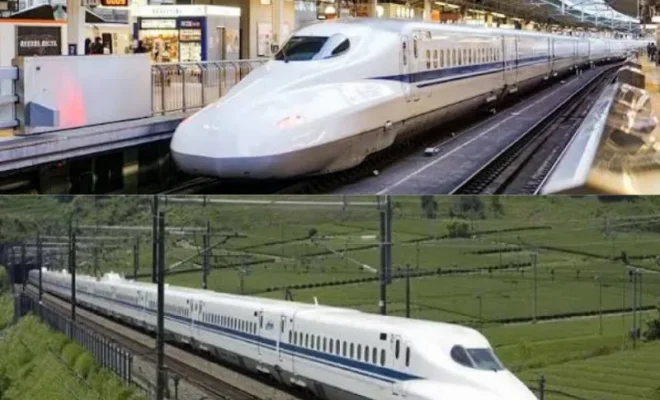
Not only the geographical location of industries but also the accessibility of people, companies, and ideas is key to economic growth. India’s coastal cities feature big ports, industrial centers, and business centers, whereas technological centers contribute to the development of innovations, software services and emerging industries. Such connections of economic centers can be built via high-speed rail infrastructure.
Union Budget 2026–27 has presented seven high-speed rail corridors such as Mumbai–Pune, Pune–Hyderabad, Hyderabad–Bengaluru, Hyderabad–Chennai, and Chennai–Bengaluru. The listed corridors demonstrate an attempt to connect economic centers via faster intercity transport links. Still, the importance of the mentioned corridors lies in their integration into industrial and commercial centers.
Bringing Coastal Economies Closer to Technology Hubs
Coastal cities play an important part in the economic environment of India. Cities like Mumbai, Chennai, and others having links to ports facilitate international trade, logistics, manufacturing and finance. Coastal cities like Bengaluru, Hyderabad, and Pune play an important part in technology-related activities.
Fast trains can help build stronger connections between these complementary economic resources. Shorter commuting time between Chennai and Bengaluru will help in easier meetings and collaboration. Likewise, connectivity between Mumbai and Pune will help in collaboration between financial establishments, manufacturing industries, research institutions and technology centers.
Not only big cities, but smaller industrial towns situated near railways will also be able to get into bigger markets and networks. Companies may consider setting up operations at places other than expensive metros.
Faster Travel Can Improve Business Productivity
Time is one element that is crucial for making business decisions. Extended travels may increase costs of doing business, affect time and hinder collaboration among teams working in different cities.
With high speed trains, it will become easier for businesses to conduct regular travels across different cities, which means organising meetings in different regional offices without having to rely heavily on air travel and long road trips. Individuals may also get the chance to explore employment opportunities without having to move immediately.
Firms that are just setting up may find it easier to connect with investors, research institutes, suppliers, and customers. The technology firms may find it easier to collaborate with manufacturing companies for innovations in sectors like artificial intelligence, electronics, automation, and industrial design.
This may improve productivity especially if cities develop complementary industries as opposed to competing for similar investment.
Investment and Employment Beyond Major Cities
The construction of large railways brings about economic growth even before passengers use the system. There is need for steel, cement, electric equipment, engineering, construction machinery and specialized labor. Such needs may help promote local industries and employment creation in different industries.
A good example is the construction of India’s first bullet train railway that will run over a distance of 508 kilometers from Mumbai to Ahmedabad. This project creates skills in technical aspects of rail construction, signaling, and maintenance. These may be useful in future projects.
Stations created after construction could attract commercial activities such as hotels, shops and offices when operational. This may be helpful to local businesses and tourist sites.
These economic opportunities may not spread everywhere. There is need for governments to link stations to other transport systems and industries.
The Risk of Unequal Regional Development
The concept of high-speed rail also comes with issues that the policymakers cannot afford to ignore. Large-scale projects come at a cost. Delay, higher cost, and environmental implications can influence the success of such a project.
Another issue with better connectivity is that it might end up enhancing the growth of prosperous metro areas while making life difficult for small cities in attracting investments. In studies done on Japan‘s high-speed rail, it has been found that increased connectivity leads to the agglomeration of the service sector in metro cities and shifting of manufacturing activities to peripheral cities. It all comes down to local economic conditions and plans.
India should thus ensure that it does not view high-speed rail in isolation. Small cities require industrial infrastructure, skilled labor, low-cost housing, electricity supply and favorable policies.
High-Speed Rail Needs a Wider Transport Strategy
Another key difference is that high speed rail essentially transports people rather than freight. Ports and industrial areas will still require old-fashioned railways, freight-only corridors, highways and logistics centers for moving goods around.
How well these trains will be integrated with airports, metros, buses and regular railways will also affect their convenience. If there is no easy connection to the station, any gains made through travel on the train will be lost on the way to and from the station.
Connectivity Must Translate into Opportunity
The future high-speed railway system in India provides the chance of connecting its coastal ports of trade with advanced technology-based industries and new areas of industrial growth. However, one cannot gauge its success solely in terms of speed and the kilometers of tracks.
The true economic impact will arise once the increased speed leads to investment, employment creation and strengthening of the local industries through better market connectivity. By doing all of this effectively, high-speed rail may transform from a mode of public transportation into an asset that will help make India more integrated and economically competitive.
Renewable Energy, Fuel Standards, Sports & Infrastructure Updates
How Will IB Solar’s MoU Boost YEIDA’s Solar Centre of Excellence?
Explore the partnership with German technology firms, discover its renewable energy objectives, and understand its potential role in advancing solar innovation.
Why Are Kerala and Karnataka Testing Petrol-Ethanol Blend Density?
Discover why fuel density testing has come under scrutiny, understand the concerns behind the laboratory checks, and explore what the findings could mean for motorists.
How Did Anuj Shrivatri Become India’s 100th Grandmaster?
Explore his achievement at the ASEAN Individual Open, discover the milestones behind his chess journey, and understand what this title means for Indian chess.
Why Is NHAI Flagging Unidentified Vehicle Scans at Barrier-Less Toll Plazas?
Understand the rise in unidentified vehicle scans, explore the challenges facing automated toll collection, and discover why accurate vehicle identification matters.
What Will the 31st CII Partnership Summit Focus on in Visakhapatnam?
Discover the key leaders and business priorities expected at the summit, explore its focus on industrial growth, and understand its significance for investment and partnerships.