
India-US Defence Cooperation Under iCET: New Joint Technology Manufacturing Initiatives Explained
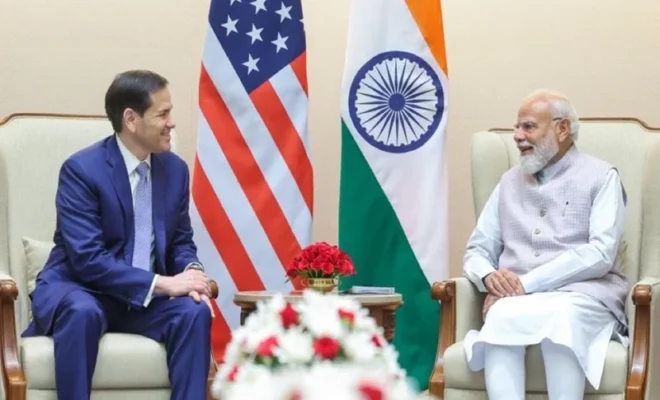
India and the United States have taken their strategic collaboration forward beyond procurement into technology development and manufacturing. Through the iCET (Initiative on Critical and Emerging Technology), both nations are partnering in several areas that include jet engine technologies, semiconductor chips, artificial intelligence, quantum technology, space technology, and defence innovation.
The goal is not just to procure advanced military technologies, but to develop technologies, enhance supply chains, and build up manufacturing capabilities in India. Even though the original iCET initiative has been replaced by the larger TRUST initiative, a lot of the defence and technology collaborations that were launched through the iCET initiative still remain the basis for cooperation.
What Is iCET?
The Initiative for Critical and Emerging Technology (iCET) was established in 2023 through the efforts of India and the United States to improve the collaboration in strategic areas of technology that could affect future economic development and security.
In contrast to conventional defence arrangements that concentrate mainly on weapon systems, iCET was developed to encourage collaboration in such new areas as artificial intelligence, semiconductors, quantum computing, telecommunications, biotech, defence technology, and space technology.
Why Joint Manufacturing Is a Major Shift
India had been importing a sizable portion of its high-tech defence hardware for several decades. However, the new approach that is now adopted through iCET is geared towards creating joint production of such technologies rather than just buying them.
Such an approach facilitates both the objectives of “Make in India” and defense indigenization policy in India, as well as enabling US firms to increase cooperation with Indian manufacturers through technology transfer and joint production.
Jet Engine Technology Is Among the Biggest Projects
One of the major results of India-US defence cooperation is an agreement between GE Aerospace and Hindustan Aeronautics Limited (HAL) for the production of F414 fighter jet engines in India.
This program is likely to improve the aerospace manufacturing capabilities of India and contribute towards future fighter aircraft projects in India. Apart from manufacturing the engines, the aim of this collaboration is to develop expertise in aerospace engineering and defense manufacturing in India.
Defence Semiconductors Are Becoming a New Priority
Another significant area where cooperation is important is related to the manufacture of semiconductors for defense purposes.
There have been initiatives from India and the USA where the two countries plan to cooperate in developing compound semiconductors that find application in defense electronics, high-end communications, radar technology, missiles, drones, and even space-based applications.
Such specialized semiconductors are indispensable for military operations in modern times and find applications in civilian industries like telecommunications, renewable energy, and transportation industries.
AI and Emerging Technologies Will Shape Future Defence
It is anticipated that AI will be an integral part of future warfare, cyber-security, intelligence analysis, and autonomous machines.
Through the iCET program, there have been more partnerships between India and the US in the area of AI development, supercomputing, quantum technology, secure communications, and advanced wireless networks.
The collaboration seeks to foster innovation while ensuring that key technologies are created in secure environments.
Startups and Private Industry Will Play a Bigger Role
One of the characteristics of iCET is its focus on engagement of private industry as well as governments.
For instance, initiatives such as India-U.S. Defense Acceleration Ecosystem (INDUS-X) brings together start-ups, investors, defense firms, research organizations, and government entities to collaborate in creating next generation defense technologies.
Such initiatives foster innovation outside the realm of conventional defense firms and provide small technology firms with opportunities to participate in national security programs.
Why This Partnership Matters Strategically
India-US technology collaboration is not limited to defence manufacturing alone.
For both the nations, robust technology supply chain, secure manufacturing environment, and research collaboration have become crucial due to geopolitical rivalry in the world today.
It will also enable India to achieve its goal of becoming a global manufacturing powerhouse and help diversify technology and defence supply chains internationally.
What It Means for India
In the case of India, the collaboration would help build domestic manufacturing capabilities, generate high-quality jobs, bring in foreign investments, and ensure the availability of new technologies.
Collaborative production would also help India become less dependent on the importation of defence equipment in the long run and increase India’s export capability in advanced defence manufacturing.
The general goal would be to go beyond the assembly of imported systems to design and manufacture new technologies.
What Comes Next?
Even though iCET has now expanded into the more extensive framework of TRUST in 2025, the underlying goals of iCET still remain as enhanced cooperation in defense technology, artificial intelligence infrastructure, semiconductors, quantum computing, biotech, critical minerals, and space technology.
Future collaboration will be geared towards increased cooperation in research and industry partnerships.
Conclusion
The India-US defense collaboration through iCET signifies a move from defense trading to technology collaboration and manufacturing.
Through collaboration in fighter jet engines, semiconductors, AI, quantum technology, and innovations in defense, the two countries intend to enhance their capabilities and develop stronger and technologically superior industrial ecosystems.
Future India-US defense relations are not only about purchasing military hardware; they are about manufacturing and designing.
Keep Reading: Stories That Matter Most to You
1. NATO’s Ankara Summit: Warning Signals India Cannot Afford to Ignore
Explore how the NATO Ankara Summit could reshape India’s strategic and security priorities
2. EPFO VISHWAS 2026 Scheme Explained: One-Time Settlement for Pending PF Dues
Discover who qualifies for the EPFO VISHWAS 2026 Scheme and how pending PF dues can be settle
3. Kashmir Valley Tourism Rebounds: Gulmarg and Pahalgam Witness Record Summer Footfall
Check why Gulmarg and Pahalgam are attracting record numbers of summer visitors this year.
4. Beyond Dharmendra Pradhan’s Resignation: India’s Deeper Youth Unemployment Crisis
Explore the deeper causes behind India’s growing youth unemployment beyond the latest political developments.
5. Income Tax Return (ITR) Filing Deadline 2026: Key Changes in the New Tax Regime You Must Know
Discover the latest ITR filing deadline and important tax regime changes every taxpayer should know.