
Beyond Dharmendra Pradhan’s Resignation: India’s Deeper Youth Unemployment Crisis
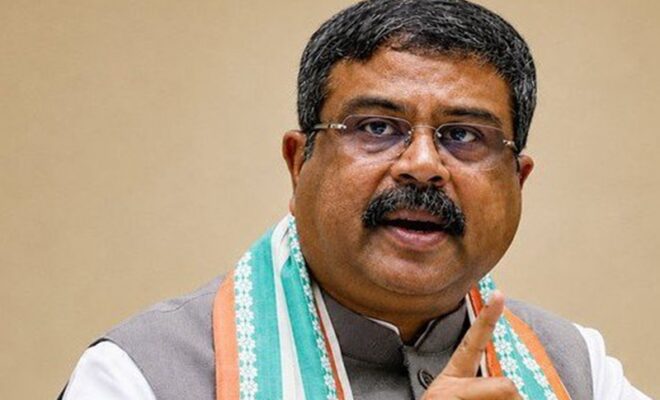
Calls for the resignation of Union Education Minister Dharmendra Pradhan, after the recent controversies around competitive examinations, have pretty much filled every headline for days. Student groups, opposition parties, and civil society organisations have been saying that accountability has to happen, especially given the repeated worries about how exams are managed, paper leaks, and recruitment delays. Sure, political responsibility matters in democratic governance, but turning India’s employment challenge into a resignation storyline for one minister, can also mean we miss the broader crisis that’s happening underneath, quietly but persistently.
The truth is that India’s youth unemployment problem didn’t start with any one government, or even with a single minister. It goes back to deeper, structural weaknesses across education, skill development, labour markets, industrial growth, and recruitment systems that don’t always connect people to jobs in a steady way. Even if political blame is settled, the everyday reality for millions of young Indians doesn’t simply evaporate, because the same uncertainty will keep showing up unless those underlying issues are actually tackled.
So the debate should drift away from individual personalities and lean into the harder question: can India’s economic and educational systems, in practical terms, produce meaningful opportunities at a scale that matches one of the world’s youngest populations?
India’s Demographic Dividend Is Becoming a Demographic Challenge
For years, India’s large pool of young people has been talked about as its strongest economic edge, you know, the big one. With close to two-thirds of the population under age 35, many economists figured India might turn into the world’s growth engine, mainly because the workforce keeps widening.
But a demographic dividend really only counts as an advantage if those young folks land productive, reliable employment.
Every year, millions of graduates come out of schools, colleges, universities and technical institutions, all hoping for steady work. Still, the speed and volume of good-quality jobs have not kept up with this bigger labour force. So more and more educated youth end up unemployed, stuck in jobs that do not use their skills, or pushed into work that has little to do with what they studied.
This widening mismatch is basically flipping the earlier story, turning what once looked like India’s greatest strength into a rather urgent policy problem.
Degrees Are Increasing, Employability Is Not
One of the biggest structural issues lays in this weird disconnect between education and employment, kinda like nobody is talking to nobody.
Over the last two decades, India has expanded access to higher education a lot. Universities, engineering colleges, management institutes, and private educational institutions have popped up rapidly and grown in number. More students than before are earning degrees, which sounds great on paper.
But still, employers keep saying they can’t find enough industry-ready talent.
A lot of graduates do have academic credentials, yet they often don’t have the hands-on, practical problem-solving skills, or the communication abilities, and the digital competencies, plus they may be missing real workplace exposure. So you end up with this uncomfortable paradox where companies have a hard time hiring the right people while millions of graduates can’t land jobs.
And it’s not just “an education” problem. It seems to be more about how weak the coordination is between universities, industries, vocational institutions, and what the labour market actually demands.
Recruitment Delays Have Become a Crisis of Trust
Government jobs still feel like one of the most sought after routes for Indian youth, mainly for job security, social standing and a kind of steady career climb, even if it sounds a bit generic.
But lately, the hiring routine across multiple departments has started dragging on, sometimes in ways that are not exactly easy to predict.
Competitive exams get postponed. Recruitment notifications keep sliding. Court matters can stretch the entire timeline, and in certain cases, allegations about paper leaks, assorted irregularities, or plain administrative lapses end up weakening trust even more among candidates.
For many aspirants, preparation turns into a multi year routine with no real clarity about when the exam will happen , or when appointments will come through.
And the mental strain from repeated delays is not something that should be dismissed. Young candidates spend years studying, spend money and time, plus emotional effort, all for examinations that keep getting pushed. When the recruitment system doesn’t work efficiently, that disappointment does not just stay limited to one single test, it can spill over and become a wider problem an institutional crisis of confidence, basically.
Private Sector Growth Has Not Fully Absorbed the Workforce
Even if public sector recruitment gets all the headlines, the real long-term answer for youth unemployment can’t rely only on government jobs, not really.
India needs a consistent expansion of high-quality private jobs across manufacturing , technology, healthcare, logistics, renewable energy, tourism, financial services and a handful of newer fields.
Yes, areas like information technology, digital services, and startups have already produced a lot of work opportunities, but a lot of it stays clustered among particular educational groups and mainly in urban neighborhoods, so it’s not evenly spread.
Many graduates coming from smaller cities or rural areas keep finding it difficult to reach the same kind of chances.
Manufacturing, which in places like China, South Korea, and Vietnam has historically created big employment at scale, still hasn’t reached similar levels of labour absorption in India. If industrial expansion doesn’t accelerate, then millions of young workers will keep lining up for a relatively narrow set of stable jobs.
The Skill Gap Continues to Widen
Technological change is reshaping employment, faster than educational systems can really adapt.
Artificial intelligence automation robotics data analytics, cybersecurity renewable energy, and advanced manufacturing are coming in hard to create new kinds of work, while at the same time they reduce demand for some old, more traditional roles.
Unfortunately a lot of educational institutions still teach curricula that feel outdated, and they don’t quite match what the industry is actually asking for.
Students often graduate without much exposure to practical digital tools, learning through projects, internships, or newer emerging technologies.
So you end up with this widening skills gap, which drags down both employability and productivity, over time.
Future employment policies should therefore focus not only on job creation but also on getting young people ready for roles that demand adaptability all the time, and continuous learning.
Mental Health Is Becoming Part of the Employment Conversation
Youth unemployment is often discussed primarily through economic statistics, but its social consequences deserve equal attention.
Extended unemployment affects confidence, family relationships, financial independence, and psychological well-being.
Many young people preparing for competitive examinations spend years postponing careers, marriage, entrepreneurship, or further education while waiting for recruitment opportunities.
Repeated failures, delayed examinations, or uncertain employment prospects can contribute to stress, anxiety, depression, and feelings of hopelessness.
Employment policy should therefore recognise mental health support as an integral component of youth welfare rather than treating unemployment solely as an economic indicator.
Entrepreneurship Alone Cannot Solve the Crisis
Successive governments have, sort of encouraged entrepreneurship via startup incentives, innovation missions, digital platforms and also by making business registration easier.
These efforts have definitely brought about some success stories and helped broaden India’s startup ecosystem, bit by bit.
Still, entrepreneurship can’t really stand in for large-scale employment generation.
Not every graduate has the financial means , the right market reach, the appetite for risk, or the hands on mentorship needed to craft a thriving venture.
So for each startup founder, thousands of others keep looking for dependable work.
That’s why policy debates should be careful to not sell entrepreneurship as the only answer, while at the same time overlooking bigger industrial plans and employment strategies.
The Way Forward Requires Structural Reform
India’s youth employment problem needs reforms all at once, across several different areas, kind of in parallel.
Schools and colleges have to start working more closely with industries so graduates pick up skills that are actually useful in the market. At the same time, vocational education should get more policy focus and a bit more social buy in , because right now it is often seen as secondary. Apprenticeship programmes also ought to scale up quite a lot, to connect what happens in the classroom with real workplace know how.
On the hiring side, recruitment systems need better transparency, quicker processing timelines, stronger technological safeguards, and clearer institutional accountability. This is to help rebuild trust with the public, because confidence is not automatic.
Industrial policy should lean into labour intensive sectors, the ones that can create big volumes of decent jobs , especially in manufacturing and in green technologies.
Regional development counts too. Jobs should not stay trapped in only a few metropolitan hubs. Smaller cities and rural regions need more investment in infrastructure, local industry, and digital connectivity, so local employment ecosystems can actually function.
And lastly, policymakers should judge outcomes with more than just GDP growth. They should also track employment quality, labour force participation, and workforce productivity, even if it feels a little less straightforward.
Stay Updated on Global Developments
Why Must Indians Stay Indoors?
Learn why the MEA advised Indians in Iran to remain indoors.
Why Did India Issue Iran Advisory?
Find out why Indian citizens have been urged to leave Iran immediately.
How Did The Oman Attack Unfold?
Uncover the confirmed details surrounding the Indian sailor’s tragic death.
Is UAE Safety Affected By Tensions?
Check out how regional tensions could impact Indians living in the UAE.
What Happened To Frozen Assets?
Explore the latest updates on the release of frozen Iranian assets.
Conclusion
People are asking for Dharmendra Pradhan to step down because of public frustration tied to exam controversies and a range of administrative failings, or at least that’s what a lot of voices seem to say. Whether this kind of political accountability should actually happen is, in the end, for democratic institutions to weigh and for public discussion to keep running.
But the youth unemployment crisis in India is not really something that can be pinned on one ministry or even one government alone.
India is at a demographic turning point. The young population is still the country’s best chance, yet it only works if education, practical skills, enterprise, and governance move forward together, more or less in the same rhythm.
If India ends up concentrating mainly on political resignations without fixing the deeper employment system, then what we see today will come back again, just with other labels and under different administrations.
The bigger issue isn’t even “can India educate its young” anymore. It’s whether India can build an economy that makes that education land with real value, and not just remain theoretical.