
India-US Critical Minerals Initiative Gains Pace to Build Resilient Global Semiconductor Supply Chains
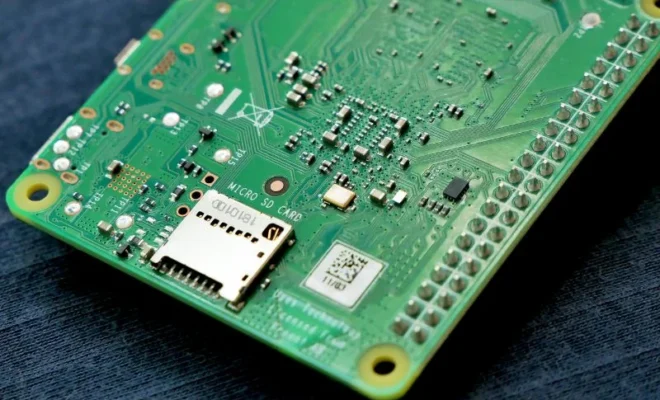
The India-US strategic technology partnership is shifting gears, with critical minerals, semiconductor manufacturing, and technology supply chain resiliency becoming increasingly significant areas of collaboration.
In May 2026, India and the US signed the Strategic Critical Minerals Cooperation Framework, which aims to decrease vulnerabilities arising from concentrated supply sources and increase access to minerals required for advanced manufacturing and emerging technologies.
India’s engagement with the US initiative, Pax Silica, which is geared towards establishing trusted and resilient supply chains in critical minerals, silicon, semiconductors, AI infrastructure, and advanced manufacturing, comes on the back of the above move.
Both developments signify that India and the US will collaborate to ensure resiliency in their supply chains at a time when semiconductors and AI technologies have become strategic to their economies.
Why Critical Minerals Matter for Semiconductors
Although critical minerals are an area of concern in the context of the mining sector, they play a very significant role in the tech industry as well.
The present age semiconductor and advanced manufacturing ecosystem requires various types of minerals, materials, and processing capacities. These requirements are seen in areas such as electronics, batteries, telecommunication, defence, data centres, and many more high technology industries.
This is due to the fact that the production and processing of various critical minerals is confined to a few countries only, which is why risks are posed to supply chain availability owing to any form of geopolitical tension or any change in prices and supply chain disruptions.
The India-US framework thus does not stop at just obtaining raw materials. Instead, the framework is aimed at building a diversified chain of supply including mining, processing, recycling and investing.
India and the US Are Moving Beyond Raw-Material Cooperation
The above-mentioned news is important because the critical minerals are now being increasingly seen in the context of the technology-security nexus between the United States and India.
The two nations had committed themselves to working on trusted and resilient supply chains that would include semiconductor, critical minerals, and advanced materials as part of their technology partnership. The US-India TRUST initiative has extended the existing technology collaboration initiative to incorporate supply chains of critical minerals along with semiconductors, artificial intelligence, quantum technologies, and other areas.
This is because minerals are no longer seen in isolation but as part of the strategy of building the infrastructure for the future generation of technologies.
Pax Silica Connects Minerals With Chips and AI
One of the most notable developments includes India’s involvement in Pax Silica where critical minerals are linked to the semiconductor and AI eco-systems.
This project seeks to protect the greater “silicon stack” that consists of not just critical minerals and energy, but also semiconductor fabrication and manufacturing capabilities as well as the entire AI infrastructure and logistics. India became a part of the coalition in February 2026 at the India AI Impact Summit.
What does it mean? The supply chain for semiconductors cannot be resilient if the materials and infrastructure for producing these components are still vulnerable to disruptions.
Involvement in Pax Silica means that India wants to have more control over this whole value chain of technologies rather than concentrating only on chip assembly or fabrication.
India Semiconductor Mission 2.0 Adds Another Layer
India is also developing semiconductor manufacturing capacities by means of ISM 2.0, launched in the Union Budget 2026-27.
ISM 2.0 targets the development of semiconductor manufacturing equipment and materials in India, increasing domestic chip-designing capabilities and bolstering the supply chain of semiconductors in the domestic as well as international markets. For this purpose, the government has sanctioned an amount of ₹1,000 crore in ISM 2.0 for the fiscal year 2026-27.
In light of all of the above, the critical minerals alliance becomes especially significant.
Developing semiconductor manufacturing capacity entails more than manufacturing plants alone; it also entails access to materials, equipment, technologies, talent, finance, and infrastructure.
This is why India’s strategy is gradually moving towards a full-chain approach.
What the Partnership Could Mean for India
In regard to India, increased collaboration with the US may be an advantage in decreasing reliance on consolidated foreign supply chains while allowing India to process such minerals domestically.
The Indian government believes that involvement in Pax Silica is in line with their goals of forming diversified supply chains, enhancing domestic manufacturing and technology, and making India a part of global high technology value chains.
Such a relationship might provide opportunities for Indian firms that are involved in mineral processing, recycling, semiconductor materials, advanced manufacturing, and technology.
Why Recycling Is Becoming Part of the Strategy
Critical mineral procurement doesn’t always mean that all efforts will be focused on mining.
Recycling and recovery are growingly gaining importance in the supply chain strategy, since they provide additional source of materials as well as decrease dependency on several mining sources.
Recycling of materials is explicitly mentioned as part of cooperation between India and the USA regarding critical minerals. Technologies used for recovery of critical minerals from industrial sources were already mentioned in bilateral agreements.
This may later result in possibilities related to e-waste and other secondary sources.
The Private Sector Will Be Critical
Government agreements can establish frameworks, but actual supply-chain resilience will ultimately depend on companies investing in mines, processing facilities, recycling technologies, semiconductor plants and advanced manufacturing.
That is why the next stage of India-US cooperation is increasingly focused on turning strategic agreements into commercially viable projects.
A current US-India Science and Technology Forum programme, for example, is supporting joint Indian and US initiatives focused specifically on critical minerals and supply-chain resilience, with an emphasis on technologies that can move toward commercialization.
This suggests that the relationship is moving beyond diplomatic declarations toward research, investment and industrial collaboration.
A Wider Shift in Global Semiconductor Strategy
The India-US initiative is indicative of a far greater change taking place globally.
The semiconductor business now forms the foundation for artificial intelligence, telecommunications, automobiles, defense, consumer electronics, and data networks. As a result, governments now see their chip supply chains as strategic resources instead of regular business links.
Pax Silica and other such initiatives are aimed at minimizing vulnerabilities and developing reliable manufacturing networks in several countries.
India stands to benefit from its involvement because it can establish itself in this newly emerging network while global businesses seek diversified manufacturing systems.
What Happens Next?
The real test will be implementation.
The India-US critical minerals framework provides a basis for cooperation across mining, processing, recycling and financing, but the long-term impact will depend on how quickly projects are developed and whether they can become commercially competitive.
India will also need to expand domestic processing capabilities, develop specialised talent and infrastructure, attract private investment and connect mineral development with its growing semiconductor ambitions.
If these pieces come together, the partnership could help India move from being primarily a consumer of advanced technologies toward becoming a more important participant in their global supply chains.
Conclusion
The India-US collaboration on critical minerals is now increasingly shaping up as one of the critical building blocks in the bilateral technology partnership.
From what was started out as collaboration in the domain of critical minerals, things are now moving towards semiconductors, artificial intelligence and advanced manufacturing.
For India, the challenge goes beyond securing access to critical minerals. It involves increasing domestic value addition, and positioning itself as an increasingly relevant node within diversified global technology supply chains.
For the US, increased collaboration with India provides it with yet another option for mitigating the risks associated with concentrated global supply chains.
The takeaway is clear: the battle for supremacy in semiconductors does not begin when the chip is made but starts with securing access to the minerals, materials and technologies required for making it.
The India-US collaboration on critical minerals may turn out to be one of the key components in a more diversified global semiconductor industry chain.
Keep Reading: Stories That Matter Most to You
1. NATO’s Ankara Summit: Warning Signals India Cannot Afford to Ignore
Explore how the NATO Ankara Summit could reshape India’s strategic and security priorities
2. EPFO VISHWAS 2026 Scheme Explained: One-Time Settlement for Pending PF Dues
Discover who qualifies for the EPFO VISHWAS 2026 Scheme and how pending PF dues can be settle
3. Kashmir Valley Tourism Rebounds: Gulmarg and Pahalgam Witness Record Summer Footfall
Check why Gulmarg and Pahalgam are attracting record numbers of summer visitors this year.
4. Beyond Dharmendra Pradhan’s Resignation: India’s Deeper Youth Unemployment Crisis
Explore the deeper causes behind India’s growing youth unemployment beyond the latest political developments.
5. Income Tax Return (ITR) Filing Deadline 2026: Key Changes in the New Tax Regime You Must Know
Discover the latest ITR filing deadline and important tax regime changes every taxpayer should know.