
Global Food Crisis Warning: Jaishankar Flags Grain, Fertiliser and Supply Chain Risks
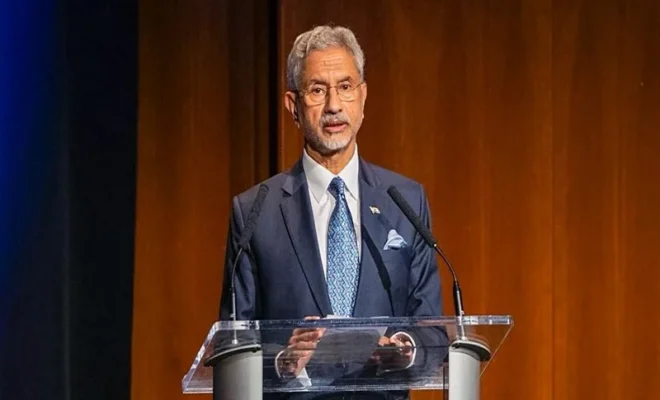
The latest global food crisis alarm is raised by India’s External Affairs Minister S. Jaishankar, who warned that the world could see a serious food crisis in the months ahead as a result of the combination of factors such as disruption in grains supply, shortage of fertilizers, energy-related issues, and geopolitical challenges. He was addressing an event hosted by Asia Society in New York City.
His warnings have been made against the backdrop of ongoing conflicts in Ukraine and the Iran Gulf regions, which are causing serious disruptions in global supply lines and energy sector. The minister has identified the issue of food, fuel, fertilizer, and finance as a wider “4F” challenge that can no longer be considered in isolation from each other.
Why Jaishankar Is Warning About a Food Crisis
It is not just about the production of food. It is about the ability to produce, transport, and deliver food at reasonable costs in case multiple segments of the international supply chain experience problems.
Jaishankar highlighted the disruptions in major grain exporters and warned that these exporters may find themselves struggling to ship the products due to the issues in the Black Sea region, which still plays an important role in the international grain market, and continued disruptions will cause pressure on importers.
Meanwhile, there is the issue of fertilizer shortages, which create another problem because fertilizers are necessary for agriculture. In case of a lack or high prices on fertilizers, cultivation becomes more expensive.
Grain Shipments Are Becoming a Major Concern
Availability of grain is one of the first threats to be mentioned in the new alert.
Russian Federation and Ukraine traditionally were big producers of wheat and other agricultural goods which could be supplied to global market. Ongoing war influenced not only logistics, but also port infrastructure and exports in general. There are indications that Black Sea region faces problems with exporting grains because of attacks and other difficulties in exporting.
If the country is very dependent on import of such products like wheat, maize and other grains, there is a chance that imports may become more expensive and difficult for this country.
Impact of the problem will not be necessarily limited to countries participating in the ongoing war. Global commodity markets are connected, therefore the reduction in supplies from the exporting region will affect others.
Fertiliser Shortages Could Create a Second Shock
Food security requires more than just the current supply of grain in storage facilities. The farmers also require fertilizer, fuel, seeds, and an effective transportation system in order to grow their future crops.
Jaishankar identified the issue of a lack of fertilizers as one of the problems facing the world.
This is important due to the fact that the production of fertilizers is strongly tied up with the availability of energy resources and trade. The production of natural gas and other forms of energy is required in the production of some forms of fertilizer. The process can also be hampered by geopolitical problems.
Therefore, the shortage of fertilizers may lead to a future problem with food supply, even when there is enough grain in stores.
How Energy Prices Can Affect Food Prices
The markets for food and energy are highly interconnected.
The farm equipment needs fuel, the production of fertilizers needs energy, food processing needs electricity, and transportation needs fuel. In case the energy markets get destabilized, the extra cost incurred may ripple down through the agricultural supply chain.
The warning from Jaishankar thus links the food crisis to the wider issue of the energy crisis. The disruption caused by Gulf shipping and energy supplies could impact far more than the prices of oil if it disrupts the transport of fertilizers and other inputs to agriculture.
This is the reason that the current situation is called a supply chain problem and not just a food shortage.
The El Niño Factor Adds Another Risk
Geopolitical disruptions are not the only worry.
Jaishankar also raised the prospect of a robust or “super El Niño” putting extra strain on food supplies in the world. El Niño can affect weather patterns and temperature conditions around various areas of the world, which could impact agricultural yields in a particular area or crop.
This means there is another source of uncertainty, since agriculture faces problems with its supply chain.
In instances where there are both geopolitical and extreme weather risks, it could be harder for countries and importers to mitigate shortfalls from other sources.
Why Developing Countries Face Greater Pressure
The ramifications could be especially damaging for developing countries.
Those with limited resources may find it difficult to cope with the shock of increased costs of food, fuel, and fertilizer. Increased import costs may affect the currency, national budget, and household consumption at the same time.
The cumulative effect of all these was making things difficult for economies of the developing world, according to Jaishankar.
A rise in the price of basic food commodities could have a big impact on poorer families since a higher portion of their income goes towards such necessities.
What This Could Mean for Food Prices
It must be remembered that a food crisis around the world does not automatically translate into all countries running out of food.
The primary risk here would be from volatile pricing and unequal availability of the resource.
While countries that produce food at home or have sufficient reserves and multiple importing sources may be better equipped to deal with such events, those countries that depend on importing would be exposed to the risk of all suppliers not being available.
Recent reports have also indicated an increase in wheat prices and worries about Black Sea shipments.
Why Supply Chain Diversification Matters
The most recent cautioning statement also drives home another one that Jaishankar has been emphasizing: nations should try and avoid overdependence on just one supplier or pathway.
Having more suppliers, creating strategic reserves, building up local production capabilities, and creating alternative pathways can help make food systems more resilient.
It doesn’t get rid of global vulnerabilities, but it can mitigate the risks of one supplier or pathway failing.
India, for instance, continues to emphasize domestic food production and agriculture resilience. As per reports released today, India plans to produce 374 million tonnes of foodgrains by 2026-27.
What Happens Next
The coming months would hinge on a number of factors, including the length and severity of the ongoing wars, the restoration of disrupted trade routes, the supply of fertilisers, prices of energy and world climatic conditions.
In case the export of grains continues to be affected while fertiliser supplies remain limited and bad weather hits harvests, more pressure could be placed on food supplies.
Nonetheless, how serious the global food crisis would be, is not clear at the moment. The remarks by Jaishankar should be seen as a cautionary note rather than an announcement of the impending food shortage in the world.
Conclusion
Jaishankar’s latest warning about the looming global food crisis shows just how connected the modern food system has become. The connection between grain exports, fertiliser production, energy, shipping lines and climatic factors means that any trouble in one part of the system will quickly create trouble for other parts.
What matters right now is not just whether there is enough food in the world. It is whether countries will have access to affordable and reliable sources of food in times of both geopolitical and climatic uncertainties for agriculture and trade.
In particular, for developing nations, the coming months will put their food, energy and supply chain systems to the test.
There are wider implications of this warning than grain shortages. Now, food, fertiliser, fuel and finance are all connected risks, and problems with all four will make the global food system vulnerable.
Global Affairs, Energy & India’s Challenges
What Is Driving Global Economic Churn?
Check out Jaishankar’s BRICS remarks on economic resilience and global changes.
Can Global Finance Boost Drought Resilience?
Find out why India seeks predictable funding for land restoration.
What Is India’s New UNGA Alliance?
Uncover Jaishankar’s new multilateral partnership alongside global leaders.
How Could Hormuz Disrupt India’s Oil?
Browse how the Gulf standoff could affect crude imports and costs.
Why Are Coimbatore Hotels Cutting Services?
See how the LPG crisis is affecting hotel timings and menus.