
Nationwide Analogue Paneer Ban: FSSAI Steps Up Enforcement Action Across States
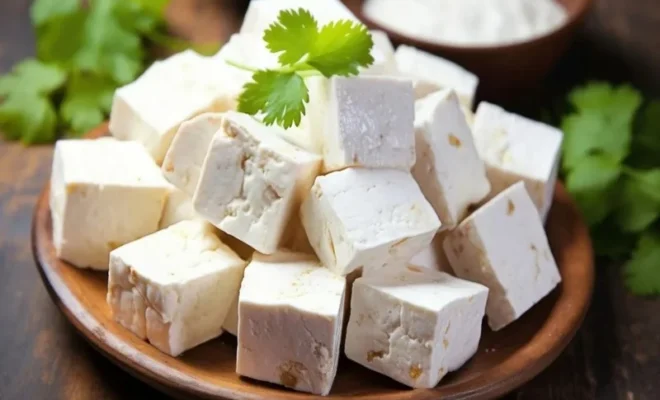
The authorities in India responsible for regulating food safety are taking steps against analogue paneer, with various states having already introduced regulations and FSSAI studying the issue to see whether analogue paneer should be banned in India. This comes in light of the growing concern regarding the manufacturing, labeling, marketing and serving of non-dairy substitutes.
This concern goes beyond the issue of isolated inspections. Maharashtra, Gujarat, Chhattisgarh and Madhya Pradesh have already introduced prohibitions on the product, while other states have also started taking action. CEO of FSSAI, Rajit Punhani, has stated that a ban could be issued nationwide on analogue paneer as more states take action against it. August 28
What Is Analogue Paneer?
Analogue paneer is a non-dairy product which mimics traditional paneer made from milk. Instead of being made using only milk solids and milk fat, the products can use other non-dairy components in the products, including vegetable oils or fats.
The main concern is not the product per se being a substitute for the traditional product, but whether the consumers are made aware of that and whether the products sold or served as paneer meet food safety standards.
FSSAI has stated that cheese analogues cannot simply be sold using the term “paneer”, and has ordered food enterprises to label the products appropriately.
Why Are States Cracking Down?
The latest crackdown was precipitated when the food-safety agencies started carrying out inspections on analogue dairy products and taking legal measures against businesses dealing with such goods.
The State of Chhattisgarh banned analogue paneer, cream and butter on August 1st. The state of Maharashtra banned all non-dairy paneer within a period of one year from the date of notification. This ban includes manufacture, processing, storage, transportation, distribution and sale of such products. The state of Gujarat has banned non-dairy paneer, cheese and butter. Finally, Madhya Pradesh is the fourth state that banned manufacturing, sale and use of analogue paneer.
During an enforcement drive, FSSAI has also been able to make seizures. In Gujarat, the food safety agencies inspected hundreds of firms and seized more than 1,700 kg of analogue paneer and cheese products within two days.
Why FSSAI is Considering a Nationwide Ban
The prospect of a national ban is a major step up because FSSAI is responsible for setting food-safety standards nationally but states do most of the inspection and enforcement work.
FSSAI CEO Rajit Punhani has signaled that FSSAI is considering a nationwide ban as state-level action widens. This has come on the heels of growing concern about the composition, labeling and use of analogue paneer throughout various parts of the country.
It is also worth noting that considering a nationwide ban is not the same thing as imposing a nationwide ban. As of August 28, 2026, the nationwide ban has not yet been finalized.
What Is the NHRC Doing?
In addition, the issue has been taken up by the National Human Rights Commission (NHRC) demanding clarifications from FSSAI and state governments.
NHRC has demanded information regarding the regulation status of the analogue paneer, its composition, nutritive value, standards, testing procedures and health risks associated with it. It has further asked authorities for clarifications as to how paneer made from milk can be scientifically distinguished from those having vegetable oils, fat and any other components other than milk.
In addition, NHRC has asked states and union territories for details of inspections, samples, violations and punitive action undertaken against the analogue paneer. In this context, the issue is not only about the use of a cheaper substitute in place of paneer in restaurants.
Why Labeling Has Become Such an Important Problem
Consumer awareness is an important factor for the concerned.
When a consumer orders any dish prepared using paneer at a restaurant, he/she can justifiably expect that paneer will be conventional paneer. Since the product being used is different from the traditional paneer, labeling becomes a crucial issue, since consumers make purchase decisions based on certain expectations about the product ingredients and nutritive value.
NHRC has specifically raised the issue of whether the consumers are provided sufficient information about the nature, composition and nutritive characteristics of such products.
This is why the present effort at enforcement of regulations has come to be viewed as an effort at food safety and consumer information simultaneously.
In Which States Has This Problem Erupted?
Initially the prohibitive efforts were undertaken by the state governments in Chhattisgarh, Maharashtra, Gujarat and Madhya Pradesh. Recently it was reported that Uttar Pradesh has also taken action against the analogues of dairy products including paneer, ghee and khoya.
This means that the list of such states is expanding and consumers should know that there is a difference between total prohibition, restriction on some specific products and enforcement of regulations on mislabeling and adulteration.
What Does This Mean for Restaurants and Food Businesses?
Restaurants, caterers, manufacturers and food retailers are likely to face greater scrutiny as enforcement expands.
Businesses that use dairy substitutes must ensure that their products are correctly identified and comply with applicable food-safety requirements. In states where specific prohibitions are already in force, businesses can face seizure of products and other enforcement consequences for violations.
For example, Maharashtra’s ban provides for strict action against businesses found violating the prohibition, with reported penalties including imprisonment and fines under the Businesses that use dairy .
This could also force restaurants to reassess procurement practices, particularly where low-cost paneer substitutes have been used to control food costs.
What Should Consumers Do?
Consumers do not necessarily need to panic about every paneer product they purchase. The central issue is transparency, compliance and sourcing.
Packaged products should be checked for their ingredient declaration and product name rather than relying only on appearance or price. At restaurants and catering establishments, consumers can ask whether the paneer being served is conventional dairy paneer or an alternative product.
This becomes particularly relevant when a paneer dish appears unusually inexpensive compared with the prevailing cost of dairy products.
However, appearance, texture or price alone cannot reliably establish whether a product is genuine dairy paneer. Laboratory testing and proper regulatory inspection remain more dependable methods.
Why This Could Become a Nationwide Food-Safety Issue
The analogue paneer issue is an example of a more general problem that India’s food system faces – the increasing use of inexpensive substitutes that can imitate known foods.
This problem becomes even more critical in cases where consumers are not aware of using a substitute or a certain product is being marketed ambiguously and leads to a consumer misconception about it.
With several states acting already and NHRC demanding responses from FSSAI and state governments, the problem is becoming more general – should the products, which differ considerably from traditional paneer, be allowed to enter into circulation bearing similar consumer identity?
This question might decide whether India will move from the patchwork approach at the state level to a consistent national approach.
What Will Be Next?
Now, FSSAI needs to make its next move. A nationwide ban is a big step in regulation; however, this agency has not made any official announcement about this ban yet.
At the same time, state food safety departments are expected to continue inspections and sampling of the product.
NHRC information gathering process might lead to demands for stricter national standards concerning composition, analysis, and labeling.
Conclusion
The analogue paneer ban discussion has quickly escalated from few cases of food safety regulations at a state level to an entire national regulation issue.
States such as Maharashtra, Gujarat, Chhattisgarh, and Madhya Pradesh have banned or restricted its consumption, and more states are planning to do the same. It is being considered whether there should be a nation-wide ban on it by FSSAI.
The main lesson for the consumers is very simple – paneer that resembles traditional paneer does not necessarily have the same composition.
Although there is no official nationwide ban yet, one thing is clear – FSSAI and state food safety authorities will continue to investigate and scrutinize analogue paneer and regulators will determine whether it should be banned in India.
Explore More Stories Making Headlines Today
What Really Happened in Jharkhand?
Check out key street food safety tips and the facts behind the golgappa incident.
How Did Udaan Yatri Cafe Expand?
Uncover how Raghav Chadha’s airport food initiative grew across India.
Can Chickpeas Really Grow on Moon Dirt?
Dive into the fascinating experiment testing food cultivation in lunar soil.
What Does “Humanity First” Really Mean?
Find out how India’s BRICS Chairship responds to a sanctions-hit global landscape.
Can Villages Become Poverty-Free Soon?
Explore Mission Samriddh Gaon and Shivraj Singh Chouhan’s rural development plan.