
US-India Energy Security Talks: Key Technology Exemptions Under Critical & Emerging Technologies Pact Explained
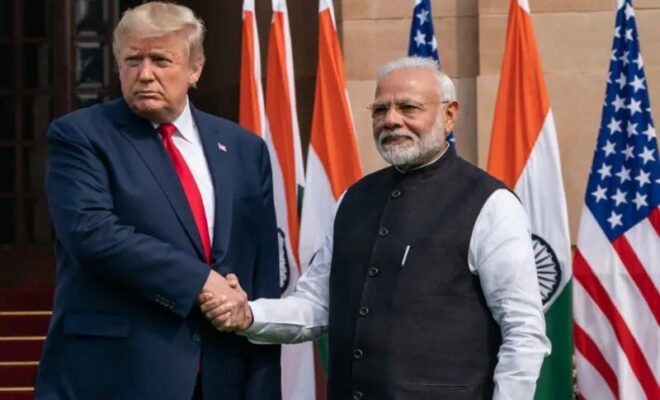
The relationship between the US and India is growing stronger with discussions on energy security and technology, and there is new emphasis on technology-sharing within the scope of the US-India Critical & Emerging Technologies initiative.
It is a part of a larger strategy for increased cooperation in critical sectors that will be crucial for the economies’ growth, security, and supply chain resilience. In addition to energy security, there are plans to facilitate access to certain advanced technologies through special exemptions.
This will be beneficial for India as far as it might promote manufacturing, deployment of renewable sources of energy, development of semiconductor industry, artificial intelligence studies, and defense innovations.
What Is the US-India Critical & Emerging Technologies Initiative?
The US-India Critical & Emerging Technologies initiative, or iCET (Initiative on Critical and Emerging Technology) was launched in order to enhance cooperation in advanced technologies.
Unlike trade agreements, this initiative sets a framework for cooperation in the field of semiconductors, artificial intelligence, quantum computing, telecoms, biotech, advanced materials, defense innovations, and renewable energy sector.
Why Energy Security Has Become Central to the Talks
Energy security has become one of the key pillars of the India-US partnership.
While India continues to be one of the fastest-growing consumers of energy in the world, the US maintains its strong position in the global energy markets and energy technologies.
The current talks are focused on boosting cooperation in fields like clean energy, grid resilience, critical minerals, battery storage, hydrogen technology, nuclear cooperation, and cutting-edge energy infrastructure.
India and the US see the secure and diverse energy supply chains as ever more relevant in times of growing global geopolitical uncertainties and shifting energy market realities.
What Are the Technology Exemptions in Discussion?
Undoubtedly, one of the major outcomes of the ongoing talks is the move to simplify India’s access to advanced technologies which have been under strict export controls so far.
Such technology exemptions are expected to facilitate cooperation in strategic industries while ensuring proper safeguards for the sake of national security.
In particular, the discussions are said to concentrate on better access to advanced semiconductor manufacturing equipment, artificial intelligence, high-performance computing technologies, innovations related to defence and other critical research partnerships.
Why These Exemptions Matter for India
Access to technology has emerged as one of the topmost problems for nations aspiring to develop advanced manufacturing facilities.
India has grand aspirations of becoming a leading country for semiconductor manufacturing, electronics manufacture, clean energy technology production, and defense technology.
Access to the latest technology would be helpful for the Indian companies to cooperate more efficiently with foreign companies, reduce reliance on foreign supplies and improve the innovative capacities of the Indian industry.
These exemptions would also aid India’s longer-term plans to emerge as a trusted manufacturing and technological partner for the global value chain.
The Significance of Semiconductors and Artificial Intelligence
Semiconductor continues to be one of the most strategically vital sectors in the field of US-India Critical & Emerging Technologies partnership.
In the modern economy, semiconductor chips are needed for smartphones, electric cars, defense equipment, medical equipment, telecommunication infrastructure, and artificial intelligence systems.
The partnership aims to promote investments, cooperation and manufacturing capabilities in order to avoid any vulnerabilities revealed during recent global chip shortages.
The sector of artificial intelligence is also one of the key sectors of cooperation between the two nations.
How the Partnership Supports Clean Energy
The talks have also expanded beyond digital technologies into the area of energy transition.
The collaboration between India and the United States is being carried out in clean hydrogen, renewables integration, battery storage, smart grids, and advanced nuclear technologies.
This is intended to enhance energy security, help address climate challenges, and decrease reliance on fossil fuel energy sources.
Technological exchanges through the initiative will aid the rapid adoption of cleaner energy systems in India.
Why It Is a Strategic Move
US-India Critical & Emerging Technologies initiative goes far beyond technology.
It is a reflection of the rising convergence of interests between the two democracies on a range of issues that includes supply chain resiliency, economic security, defense, and technological leadership, among others.
As geopolitical rivalry shifts towards technological prowess, the importance of trusted partnerships becomes greater than ever.
Both countries stand to gain from closer collaboration in terms of innovation ecosystems and opportunities for investments and jobs.
What It Means for Businesses and Consumers
Even though the discussions are happening at the government level, the effects will be felt even by the business sector and consumers eventually.
The increase in access to technology may lead to more investment in the manufacturing of semiconductors, electronic products, renewable energy projects, telecommunication networks, and research facilities in India.
In the long run, this can help create better manufacturing capacity, job opportunities, more technology access, and innovations in several sectors.
Conclusion
The latest discussions between the US and India regarding Critical & Emerging Technologies show how technology and energy security are increasingly linked to each other.
Through looking at targeted technology exemptions and collaboration in advanced technologies, both nations are trying to strengthen their strategic relations that will support innovation and economic growth.
It may be the case in the future that the relationship between India and the US will be formed by collaboration rather than trade agreements.
Top Stories You Can’t Afford to Miss Today
When Will Tata Curvv EV Launch?
Explore the confirmed launch date, expected price, battery options, driving range, and upgraded features of the Tata Curvv EV.
Why Is Income Tax Portal Slow?
Check how to clear your browser cache, verify your e-filing status, and avoid penalties under Section 234F before the deadline.
How Are India-Japan Supply Chains Evolving?
Discover how India and Japan are strengthening Indo-Pacific supply chains through new bio-gas and semiconductor partnerships.
How Can Patients Book Instantly?
Explore how AIIMS Delhi’s new WhatsApp and ABHA Health ID system makes OPD appointment booking faster and easier.
Why Did Washington Change Strategy?
Discover why the latest U.S. terror designation targets financial networks and what it could mean for future counterterrorism efforts.