
UPSC 2026 Rejections: How AI Flagged and Blocked 569 Candidates From the Prelims Exam
Last updated on July 10th, 2026 at 11:35 am
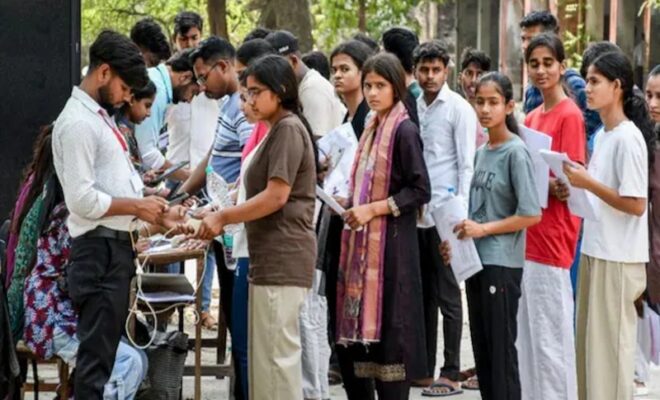
One of the most significant technology-based actions taken by the Union Public Service Commission (UPSC) to ensure the integrity of the most challenging exam of India has been made. During the Civil Services (Preliminary) Examination 2026, an AI-based face authentication system was used by UPSC for verifying the candidates’ identities at the entrance of examination centers.
It is stated that around 569 candidates have been barred from appearing for the test due to failing to get authenticated through the verification process. This step has led to much debate among candidates on the use of AI to counter impersonation and cheating in examinations.
Why Did UPSC Introduce AI-Based Face Authentication?
UPSC has always used admit card, photograph, identification proof, and manual verification for the purpose of identifying the candidates.
But with instances of impersonation and malpractices emerging from time to time, there was a need for UPSC to strengthen their technological defenses.
With the use of the new UPSC artificial intelligence (AI) face authentication system, the live photo of the candidate is compared with the photo that had been uploaded while filling out the application form.
How Does the AI Verification System Work?
The face authentication system was designed by UPSC, and the technology was provided by the National e-Governance Division (NeGD).
As an alternative to setting up costly biometric systems in all centers, UPSC created a mobile application. An Android phone was used by invigilators to take a live photo of each candidate.
The application compared the photo taken by the invigilator with the one attached by the candidate in the online form filling process. The authentication process reportedly took merely six to eight seconds for each candidate.
Why Were 569 Candidates Blocked?
Based on the reports, it was seen that a total of 569 candidates failed in being authenticated and were thus not allowed to take up the exam. It may have been because of facial mismatch, bad photographs, identity issues, or lack of proper authentication, which is normally required according to the normal procedure followed by UPSC.
UPSC has clearly stated that the aim behind the use of this particular technology is not to create any problem for candidates but to curb impersonation in the examination process. In case of failure in identity authentication, further steps of verification were possible in some cases.
How Large Was the AI Exercise?
The Civil Services (Preliminary) Examination 2026 was among the biggest usage of AI technology for identity verification during any public examination in India.
According to UPSC, the AI system was deployed in a total of 2,072 examination centers across India. Over 7,000 invigilators were using the mobile application at the same time, and around 5.5 lakh candidates went through the AI-based face verification process. During peak entry times, the system was capable of handling almost 12,000 authentications per minute.
This is how AI technology has been integrated into government examinations.
Why This Matters for Future UPSC Aspirants
With the success of AI verification, it is probable that face authentication will become a common element in UPSC examinations to come.
Prospective examinees may have to make sure that the photograph submitted at the time of registration resembles them in present times. Dissimilarities created by poor image quality, wearing of face coverings, or any change in appearance would make face verification difficult.
In addition to this, UPSC has suggested candidates follow all the guidelines regarding photograph and identity documents.
Can AI Make Competitive Exams More Secure?
It is estimated that AI technology can greatly reduce the cases of impersonation, falsified identities, and examination malpractices.
Facial recognition is not just another measure of security; it gives another digital level of security without making the process of verification lengthy, thus ensuring speedy entry into the examination centers.
Nonetheless, there is acknowledgment from the authorities that AI technology should be accurate and transparent and should have the manual verification process wherever necessary.
What Should Candidates Keep in Mind?
With increased emphasis on technology as an important component of competitive examinations, aspirants must be extra careful about registration aspects.
Registering a good quality photograph recently clicked, having valid photo ID, reaching the venue of registration in advance and co-operating in face recognition will ensure avoiding any unnecessary trouble on the examination day.
The new registration aspect also serves to demonstrate that the security of examinations has now gone far beyond admission cards and ID card verification.
More Entertainment Picks Await!
What’s Streaming Across South India?
Browse the latest OTT releases arriving this week in multiple languages.
Could This Romance Win Hearts?
Discover a touching love story worth adding to your Netflix watchlist.
Looking For Dubbed South Hits?
Check out must-watch South Indian blockbusters available in Hindi.
Ready For A Horror Marathon?
Experience chilling South Indian horror movies streaming on OTT platforms.
Which Bollywood Films Are Coming?
Find upcoming Bollywood releases that deserve a spot on your watchlist.
Conclusion
The advent of UPSC AI face authentication is a major turning point in the conduct of India’s premier civil service examination.
With the application of AI-based face authentication in thousands of centers, UPSC strives to eliminate impersonations and increase trust in the examination process. However, the blocking of 569 candidates by the technology has sparked off discussions, but the Commission sees this technology as a critical move to ensure transparency in the competitive exam.
UPSC’s AI-based face authentication is a new era where technology will play an integral part in maintaining the integrity of India’s most prestigious competitive exam.
FAQs
Why did UPSC bring in AI face authentication?
As a measure to curb impersonation and ensure the authenticity of the Civil Services Examination.
How many candidates failed due to identity authentication in UPSC Prelims 2026?
It has been claimed that as many as 569 candidates were barred from appearing in the examination because of identity authentication problems.
How does the system work?
It makes comparison between the image obtained through facial recognition at the examination venue and the picture submitted while applying for the exam.
Did the system operate in India throughout?
Yes. The examination authority deployed it in 2,072 examination centers for more than 5.5 lakh aspirants.
Is there going to be face authentication in UPSC exams ahead?
Yes, given the success of the system in the recent exam and statements made by UPSC.