
CISF Facial Recognition at Airports Explained: What Changes for Passengers?
Last updated on July 10th, 2026 at 11:33 am
India’s air travel industry is getting more digitized, with facial recognition systems taking a central place in that process.
As the number of DigiYatra-enabled airports rises and there is an increasing use of biometric authentication methods, there will be a reduction in manual document verification and a speedier process at the airport checkpoints. The facial recognition systems have been introduced amid the security procedures carried out by the Central Industrial Security Force, which protects most Indian airports.
The key question for air travelers is easy to formulate: What does facial recognition bring to air travel?
What Is the Facial Recognition System Being Used?
The facial recognition system that most travelers come across forms part of the DigiYatra program.
The use of facial biometrics in the DigiYatra program serves as an identity token. After registration, the face of the traveler will be authenticated against their travel credentials, enabling them to pass through designated airports without producing their documents.
The goal here is to decrease waiting time for travelers and enable smooth movement through different parts of the airport.
What Role Does CISF Play?
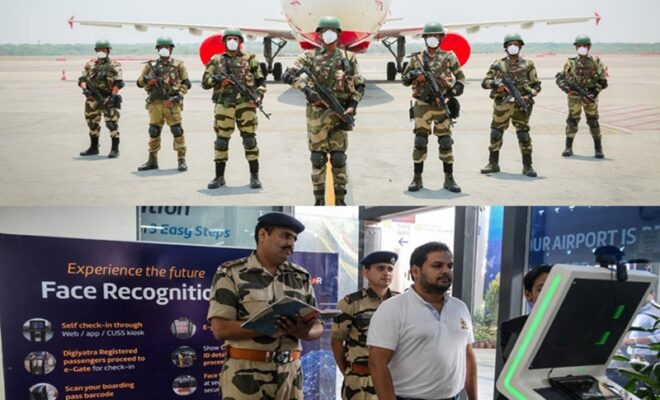
The CISF continues to be responsible for the security of flights and the verification of passengers at many Indian airports. The CISF ensures the security of many airports in India and has been incorporating technology into its security system.
Using DigiYatra-enabled lanes means that some aspects of the process of identity verification, which used to be done manually using documentation, can now be automated using facial recognition technology.
Security check is not bypassed; rather, the method of verifying the identity of the passenger is changed.
What Changes for Passengers?
One obvious difference is that of speed. Where passengers had to produce their IDs and boarding passes to several check points, registered travelers now have the ability to go through e-gates using facial recognition technology. The system verifies facial data against flight data and unlocks the gate upon successful verification.
This makes for much fewer manual verifications, shorter lines, and smoother traveling process.
According to industry sources, the biometric verification process has considerably shortened average time required to enter airports compared to traditional verification processes.
Do Passengers Have to Use Facial Recognition?
For now, DigiYatra is still voluntary for most passengers. If there are some passengers who do not want to undergo facial recognition procedures, they can still opt for the traditional way of verification which involves boarding passes and ID cards. Several airports have kept manual lanes along with biometric lanes.
How Does Registration Work?
In order to use DigiYatra, passengers usually have to go through a one-time registration procedure.
For this procedure, verification and linking of travel credentials using the DigiYatra platform is needed. Further authentication happens through facial recognition biometrics.
After that, the passengers will be able to use the e-gates at compatible airports for domestic flights.
What About Privacy Concerns?
The use of facial recognition technology has been accompanied by concerns regarding privacy and the protection of biometric information.
Government and DigYatra authorities have assured that the technology has privacy features as well as decentralized identity management. They claim that passengers provide their travel credentials and biometric information on their own will.
On the other hand, privacy activists have raised their concerns, and even parliamentarians have talked about the need for appropriate protective measures.
For many travelers, the controversy is probably going to persist.
Could Facial Recognition Replace Boarding Passes Entirely?
Vision seems to be having a paperless airport travel experience in the future. Passengers can already see how they are traveling across different stages like entering the airport, checking their identities at the security and boarding gates without carrying any form of documentation.
There are no boarding passes and IDs everywhere, but there is an emerging trend of facial recognition technology.
Why Is India Expanding These Systems?
The Indian aviation industry is rapidly expanding and airports are witnessing an increase in passenger numbers each year.
A technological solution such as biometrics is being advocated as a way of alleviating congestion, improving efficiency, and facilitating quicker airport processing, all while maintaining security. Biometrics are seen as a vital tool for the future management of airports by the officials.
With increasing numbers of airports joining the network, biometric travel will become commonplace.
Stay Ahead With The Latest Power Updates!
Want Free Solar Power Benefits?
Check out the simple steps to apply for government-backed subsidies.
Why Is Chennai Still Dark?
Find the latest updates on power disruptions after the cyclone.
Can India And UAE Connect Grids?
Explore the renewable energy partnership shaping future electricity.
What Is BHEL Planning Abroad?
Uncover why the company is expanding into Mauritius’ power sector.
How Will Power Supply Improve?
Get to know the new measures boosting electricity production nationwide.
Conclusion
Facial recognition-based systems at India’s airports are no major modification to security needs, but they are definitely modifications to the passenger’s experience within the airports.
For those passengers opting in for this, there will be more automated identity authentication, which would make things easier and quicker without constant checking of documents. Simultaneously, issues related to privacy, consent, and safety of biometric information will always form part of the discourse.
Passengers will soon find themselves identifying themselves with their faces rather than boarding passes. The combination of CISF-approved security systems and DigiYatra program will make biometric travel a norm in Indian aviation.