Reining in Algorithmic Hype: Why the Supreme Court’s Push Against Unethical Medical Ads Matters
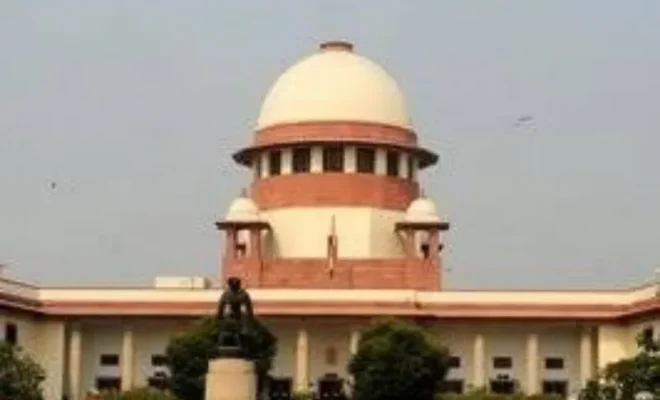
Healthcare marketing is entering a whole new world of complexity. Whereas previously, an erroneous medical assertion found its way into a newspaper or commercial advertisement and stayed there, today it could be spread via social networks, search engines, influencer and recommendation engines within a matter of minutes. The end result is an environment where exposure can become more important than evidence.
This makes the efforts of the Supreme Court to combat unethical healthcare marketing all the more important. It is no longer just a question of misleading the public with advertisements; the problem also revolves around the potential for digital technology to repeatedly expose patients to convincing medical assertions.
When Algorithms Amplify Medical Claims
Health information through digital advertising has transformed the way consumers come across health information. Consumer search history, engagement, and recommendations can influence the content shown to the user.
When an individual searches for methods to lose weight, the individual might eventually see advertisements for weight-loss medications, supplements, clinics, and other procedures. Such a commercial message can become all the more convincing when there are testimonials, before and after pictures, or even promises of quick fixes.
The risks should be evident by now – health care choices cannot be equated with regular consumer choices.
India has already tightened regulations in a number of ways. The Uniform Code for Pharmaceutical Marketing Practices (UCPMP) 2024 provides guidelines for responsible marketing of pharmaceutical products, and also bans pharmaceutical companies from giving gifts, financial favors, and hospitality to health care practitioners. The code was updated in 2025.
Why Medical Advertising Needs a Higher Standard
Advertisements may be effective in affecting consumer decisions, even though technically there is no implied promise of the advertisement.
Claims about guaranteed results, miracle cures, or effortless therapy can generate expectations that cannot be supported by scientific medicine. India’s advertising regulation already bans claims of any products that are said to have miraculous or supernatural qualities which are hard to prove.
This issue takes on a particular significance in the case of online advertising, where the algorithm might amplify the use of such claims.
There is an added gravity to the matter in the case of medications that need professional control. In March 2026, India’s drug regulatory authority stepped up surveillance of the GLP-1 weight loss drug supply chain and ordered manufacturers to cease misleading advertisements and indirect promotion, which would encourage the use of such drugs without proper medical supervision.
Influencers Have Changed the Advertising Equation
The dividing line between health care advice, personal experiences, and advertisements has been equally indistinct.
A social media influencer with a large number of followers may create an ad for their health product that will be read by a wider audience than an ordinary ad campaign. In light of this, the authorities have formulated new rules obliging all certified medical doctors and health care workers to disclose their credentials while offering their opinion regarding any health matter.
It is here that regulation lags behind technology.
An advertisement cannot be deemed credible simply because some algorithm picked out a target audience.
The Supreme Court’s Larger Message
The greater importance of judicial intervention lies in the fact that there has to be an ongoing priority of patient welfare in healthcare marketing.
Doctors and healthcare organizations hold a position of respect. Patients turn to them when they are vulnerable and in need of solutions. This means that any exaggeration is a matter quite different from normal business practices.
The purpose of such policies must not be the prevention of any communication. Healthcare facilities, doctors, pharmaceutical organizations, and health technology firms have to communicate information to people. The aim is to make sure this information is precise and evidence-based.
Regulation Must Follow the Algorithm
The next challenge, of course, will be enforcement.
The traditional rules for advertising have been formulated based on recognizable ads, publishers, and broadcasters. In digital spaces, there is targeted advertising, influencer marketing, automated recommendations, and changing content.
It means that regulators must know more about targeting and amplification of health advertisements rather than about the initial message of the ad.
For technology companies, healthcare advertisers, and medical professionals, this approach must become their main rule of thumb: engagement is not proof, virality is not credibility, and the possibility of algorithm to identify vulnerable consumers can never become a way to sell them healthcare solutions.
India’s regulation regime is already moving toward greater responsibility in pharmaceutical advertising and endorsements related to health. The next move is making sure that these principles still work in the world of algorithmically-driven advertising.
In the healthcare sector, the first metric should never be the number of clicks. It should be the effectiveness of providing patients with information that will help them make a better medical decision.
Stories That Could Spark Your Curiosity
How Did Singh End Up Back India?
Uncover the developments behind India securing his deportation from Türkiye.
What Happened After Türkiye’s Devastating Quake?
Check out how India responded with relief material for Türkiye and Syria.
Why Does International Cat Day Matter?
Explore the origins, significance and activities that make this day special for cat lovers.
What Sparked DuckDuckGo’s Microsoft Tracker Move?
Find out why DuckDuckGo decided to block Microsoft trackers amid growing criticism.
What Can You Do During Police Stops?
See the important rights and practical steps to follow when stopped by police or traffic officials in India.