India-France Defence Partnership Explained: How Co-Development Is Shaping Future Military Technology
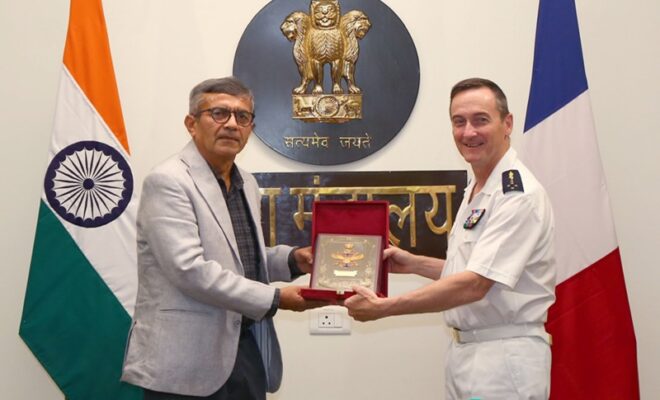
India-France defence cooperation has become one of the most significant strategic alliances for India, shifting from conventional defence sales to collaborative research and co-developing modern military assets.
France has become one of India’s most reliable defence partners over the last two decades, providing fighter planes, submarines, helicopters, radars, and other defence electronics equipment, while supporting India’s ambitions to develop an indigenous capability to build defence systems.
At present, the defence alliance is not only about buyer-seller relations but rather about mutual efforts to design and manufacture new-generation military assets.
Why India and France Are Strengthening Defence Cooperation
India faces a complicated security situation due to emerging regional challenges in the Indo-Pacific, border security challenges, maritime security competition, and the fast-evolving nature of warfare technology.
There are several shared strategic interests between France and India; however, one is very important for India and is related to the free, open, and secure Indo-Pacific region.
While the transactional approach of many countries in their defence cooperation with India is evident, France has proven itself ready for engagement in the development of long-term industrial and technological cooperation, as well as defence manufacturing in India.
From Defence Purchases to Defence Co-Development
The greatest change in the India-France collaboration in the defence sector lies in the transition from mere procurement of military equipment to joint development of defence technology in the future.
Former collaborations involved India procuring modern platforms in the military, which included the Rafale aircraft and Scorpene class submarines.
Modern collaborations have seen talks involving co-development, joint production, innovation in the defence sector, engine technology, artificial intelligence, cyber defence, and combat systems.
This will help India develop its domestic defence manufacturing base over time.
Key Defence Projects Between India and France
There have been a number of flagship projects which have become a hallmark of increasing collaboration.
The introduction of Rafale fighter planes has improved the capabilities of the Indian Air Force through its advanced electronic and weaponry systems and multi-role combat performance.
The Scorpene class submarines project has been built in India through technology transfer agreements and helped improve India’s submarine warfare capabilities along with enhancing indigenous shipbuilding capabilities.
Collaboration between the two nations has also increased in helicopters, missiles, space security, maritime surveillance and naval exercises.
In each of these subsequent projects, technology transfer and industrial collaboration have gained more importance than mere procurement.
Why Technology Transfer Matters
Technology transfer has become one of the key features of current defence alliances.
Rather than depend solely on importing final products, nations now prefer to obtain technologies, expertise in production, maintenance services, and research work.
Technology transfer benefits India by providing jobs, building up its indigenous defence industry, and cutting down on its dependence on foreign vendors for maintenance services in the future.
France is perceived as one of those nations that has always shown willingness to pursue industrial collaboration over other traditional defence exporting countries.
The Indo-Pacific Is Driving Strategic Cooperation
India-France strategic collaboration is one of the major factors for this growing cooperation.
Both countries have considerable maritime interests in the Indian Ocean.
France has overseas territories and naval presence in this region, whereas India is responsible for securing maritime security, open trade routes, and regional stability.
Naval drills, intelligence sharing, maritime domain awareness, and anti-piracy missions have taken an increasing importance in defense collaboration between the two countries.
Growing geopolitical competition is making both countries more interested in synchronizing their strategic policies.
How Co-Development Supports India’s Defence Goals
Not only the modernization of the army but also establishing itself as a large-scale centre for defence manufacturing is the goal of India in the long term.
Co-development allows Indian industry to be involved in development and manufacturing of advanced military equipment.
This would help in developing the technical expertise of India in aerospace engineering, shipbuilding, electronic warfare, propulsion system design, and defence software.
This will also improve the capabilities of India to sell its defence equipment to allied nations in the coming years.
India does not want to depend on imports but wants to become an exporter of advanced defence technology in the future.
Emerging Areas of Collaboration
The next step for the India-France defence cooperation is expected to involve cutting-edge technologies.
These include artificial intelligence, autonomous weapon systems, cybersecurity, quantum technologies, space defense, radar technologies, undersea warfare, as well as advanced combat aircrafts, among others.
India and France have also started looking at cooperation in defense startups and innovation ecosystems which may help build military capacities in the decades ahead.
It is a clear indication of the fact that future warfare will not only depend on conventional weaponry but also on technology and information dominance.
Challenges Ahead
As the partnership is becoming deeper and more profound, there still exist some obstacles.
Advanced defence equipment implies issues with intellectual property, export control, high costs of production and long period of research and development.
Moreover, co-development programs require not only a certain political will but also considerable investment of money.
The combination of strategic autonomy and international partnerships will be one of the important goals for India in the future.
Why the Partnership Matters Beyond Defence
The connection between India and France goes far beyond their cooperation in the military domain.
The two nations cooperate in space explorations, civilian nuclear power generation, combating climate change, fighting terrorism, education, artificial intelligence, and maritime safety.
This means that the deepening relationship in defense between the two nations serves to bolster an already existing strategic partnership based on democratic principles, trust, and mutual interests.
The importance of such partnership will likely grow as global power equations shift.
Stay Updated on Global Developments
Why Did India Issue Iran Advisory?
Find out why Indian citizens have been urged to leave Iran immediately.
Why Must Indians Stay Indoors?
Learn why the MEA advised Indians in Iran to remain indoors.
Is UAE Safety Affected By Tensions?
Check out how regional tensions could impact Indians living in the UAE.
How Did The Oman Attack Unfold?
Uncover the confirmed details surrounding the Indian sailor’s tragic death.
What Happened To Frozen Assets?
Explore the latest updates on the release of frozen Iranian assets.
Conclusion
The Indian-French defence cooperation is now moving into a whole new era of co-development and innovation as opposed to conventional arms deals.
By integrating India’s manufacturing vision with the high-level defence knowledge that France possesses, the two countries are creating a solid base of enhanced military power and strategic autonomy.
It seems like the future of India’s military development might not only be about purchasing high-end weaponry but also manufacturing it jointly with its strategic partners like France.