India Secures Deportation of Narco-Trafficking Kingpin Navpreet Singh From Türkiye: What We Know
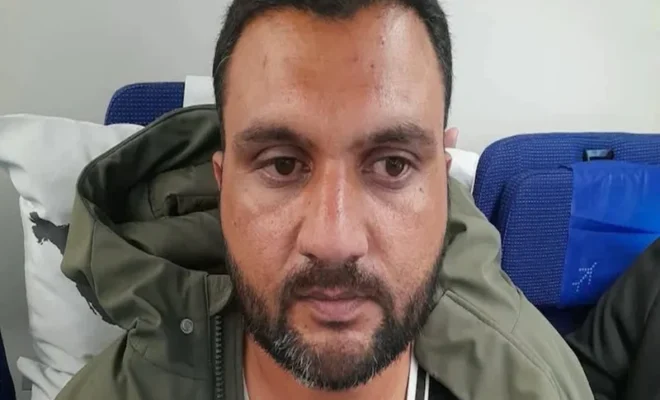
The Indian authorities have managed to deport Navpreet Singh, who is considered the kingpin behind international narco trafficking cases, from Turkey. The development was declared by the Union Home Minister, Amit Shah, on October 3, 2026, wherein it was confirmed that Navpreet Singh has been deported to India for his criminal activities related to drug trafficking and others.
As stated by the Home Ministry of India, Navpreet Singh had acquired Turkish citizenship with the name of Navab Virk and had been trafficking heroin and methamphetamine from Afghanistan to India.
Who Is Navpreet Singh?
Navpreet Singh is the suspected drug trafficking offender sought by Indian authorities in connection with several drug trafficking cases. Prior to the current report, Navpreet Singh, who is from Punjab, was reported as a fugitive wanted for several offenses and whose extradition was being worked out between Indian and Turkish authorities.
According to Indian authorities, Navpreet Singh carried out his operation from outside India but maintained his contacts within the network of drug traffickers operating in India. The most recent reports associate Navpreet Singh with the trafficking of heroin and methamphetamine from Afghanistan to India.
The Fake Identity of Navab Virk
One of the major aspects in the case pertains to Singh’s purported use of another identity while residing in Türkiye.
As per the statement of the Ministry of Home Affairs, Singh acquired Turkish citizenship under the identity of Navab Virk. As per the government, this particular identity assisted him in remaining out of the reach of Indian investigators while he continued his drug trafficking operation.
Indian authorities then tried to ascertain his true identity. Amit Shah stated that they “tracked him down” and revealed the identity being used by Singh before deporting him to India.
What Was Singh Allegedly Trafficking?
Heroin and methamphetamine have been explicitly mentioned in the explanation provided by the government.
As per the Ministry of Home Affairs, Singh allegedly kept on smuggling heroin and methamphetamine from Afghanistan into India even after relocating to Türkiye. According to other reports quoted by officials, he was allegedly engaged in cross-border trafficking operations.
The alleged trafficking route from Afghanistan to India is noteworthy due to the reason that the international drug mafia could function in multiple countries, thus requiring coordination between different police forces.
How Was He Brought Back to India?
Unlike any other previous statements, the most recent statement issued by the government characterizes the process as one of deportation from Türkiye, as opposed to an account of a traditional extradition process.
India and Türkiye have an extradition treaty that governs relations in regards to such procedures. This agreement was signed in the year 2001 and went into effect in June 2002.
This year alone, Indian officials had already started collaborating with their counterparts in Türkiye in relation to the extradition of Singh.
What Happened After He Reached India?
Singh was arrested after his return to India in relation to the cases related to alleged drug trafficking, among others.
He was reported to have been imprisoned after his extradition from Turkey.
The judicial process will now see to it that the allegations leveled against him would be determined under the Indian criminal justice system. It is only at this point that the allegations of his involvement in drug networks be considered allegations of the investigating agencies.
Why the Deportation Matters
This example shows the growing international nature of India’s struggle against narcotics smuggling. It is because often such networks work across international borders using other countries and various identities to avoid detection by law enforcers.
Furthermore, the Singh case happened after the other suspected drug traffickers were extradited from other countries to India. Some news sources have mentioned the recent cooperation with Türkiye, the UAE, and Malaysia in different extradition cases.
The Indian government calls such cooperation an essential aspect of fighting transnational drug rings.
India’s Wider Crackdown on Fugitive Criminals
The Ministry of Home Affairs claims that there have been increased attempts by the Indian agencies to recover the fugitives from outside India.
As per the PIB, the government stated that 288 fugitives from 36 countries were returned to India between 2019 and August 2026. The government further added that red corner notices had been issued against hundreds of fugitives during the last three years.
There have also been instances where the government mentioned the information sharing systems between central and state authorities. As per the Ministry of Home Affairs, more than 1,400 units have been linked with each other using the information sharing platform.
What the Navpreet Singh Case Shows
This case highlights the ways in which drug activities may spread even outside the jurisdiction of India. According to the Indian officials, Singh continued his activity from Türkiye under a different name and was connected to an international supply chain of drugs.
The deportation of Singh will enable the Indian investigative agency to conduct their investigations and deal with the cases lodged against him. It is clear from the case that it is important for Indian investigative agencies to cooperate with foreign authorities when fugitives are found abroad.
What Happens Next?
Navpreet Singh has proceedings going against him in India in relation to the cases in which he is a wanted person. It is expected that the investigation into the suspected trafficking network, the flow of drugs, financial connections, associates and the identity and documentation used when he was outside India will take place.
The success of the proceedings depends on the evidence produced in court.
So far, the only known development is that Navpreet Singh has been extradited from Turkey to India through the joint effort of Indian and Turkish authorities.
Conclusion
The extradition of Navpreet Singh from Turkey is a very important step in the probe that India has started against the suspected international drug ring. It has been stated that Navpreet Singh was holding Turkish citizenship in the guise of Navab Virk, and he was involved in the smuggling of heroin and methamphetamine from Afghanistan into India.
Now, with Navpreet Singh in India, further proceedings can be taken in this case in the Indian legal system.
India’s Diplomacy, Defence & Global Partnerships
Could New Alliances Reshape Regional Security?
Check out how the Pakistan-Saudi-Türkiye defence pact could affect the region.
How Did India Respond To Earthquakes?
Find out how India sent relief materials to Türkiye and Syria.
Why Did Turkey Thank India?
Uncover the story behind Operation Dost and India’s earthquake relief efforts.
How Did India Free Captive Soldiers?
Explore India’s efforts to secure the release of soldiers from Russia.
What Made India’s G20 Win Significant?
Reveal how India secured a diplomatic achievement at the G20 digital economy meet.