
Custodial Deaths and Police Accountability: Supreme Court Sets a New Benchmark for CBI Inquiries
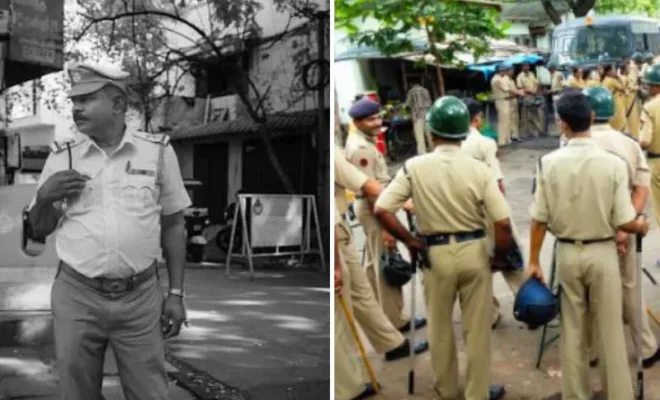
The issue of custodial deaths remains one of the worst cases of governmental accountability. In case when a citizen dies under custody of law enforcement officers, the government needs to find out the truth behind the death and punish the guilty party for the crime. However, the process of bringing justice proves to be particularly complicated if the very same institution supposed to investigate a crime turns out to be suspicious.
The intervention of the Supreme Court into the case of custodial death of Shravan Suryavanshi from Chhattisgarh is an example of how hard it can be to achieve institutional accountability. The Court demanded to conduct an investigation by the Central Bureau of Investigation after the death because the government refused to conduct the necessary procedures after the judicial investigation. Moreover, the state has been obliged to pay the family of the victim ₹25 lakh of compensation, depending on the results of the procedure of establishing the sum.
When Institutional Inaction Becomes a Justice Failure
The Chhattisgarh case, however, brings up issues that go beyond the situation surrounding the death of one particular individual. From the proceedings, it is reported that there was a judicial inquiry that had established that Shravan Suryavanshi had died from injuries he had sustained in custody. But, the concerned authorities had not done enough to ensure that a criminal case was filed and an investigation carried out into the cause of the death.
It is reported that the senior officials of the state had said that the concerned police authorities had not received the report of the judicial inquiry in any formal manner. But, the Supreme Court did not accept this explanation and ordered the CBI to file a criminal case and carry out investigations under a senior official. It also ordered an examination of the conduct of the officials who failed to act on the report.
The importance of this intervention is that while there is need for procedural delays, this should not be used as an excuse for lack of action especially in cases where there has been death and investigation is required.
Why Independent Investigations Matter
The role of police officer is no less than a challenging public duty. Yet, in cases involving the charge of custodial violence there is always an intrinsic conflict because of the fact that in such cases it is the very local police force that has to conduct the investigation on its own colleagues.
It would not be possible even to conduct the investigation fairly in such cases as even an honest investigation will be hard to build trust due to the fact that the institution under which such an investigation is being carried out itself might be accused.
The participation of the CBI in the Chhattisgarh case comes as a result of the opinion of the Supreme Court that an independent investigation was needed to continue the case.
It does not follow that each case involving custodial death will require the investigation to be transferred to the CBI. These are extraordinary steps to take, justified by the specific situation of a certain case.
Article 21 and the State’s Responsibility
The Article 21 ensures rights to the right to life and liberty of an individual without any kind of arrest or detention. Individuals who have been taken into custody have the right to dignified treatment and safety from violence.
It therefore becomes mandatory for there to be accountability on all sides. Firstly, it becomes essential that the reasons behind the death are examined. Next is whether there was anything that was done illegally. The involvement of those who were responsible for the safety of the individual needs to be looked at.
It is mandatory for prosecution if there is any illegal activity in a case. Individuals who have hampered the process of investigation due to their failure need to be penalized.
It is extremely essential for this investigation to respect the rights of due process. Proper investigation needs to be carried out based on evidence. It needs to be seen if the individuals are actually guilty of the accusations put against them.
Compensation Cannot Replace Criminal Accountability
This order from the Supreme Court in regards to ₹25 lakh in compensation raises another vital aspect of justice. If there is any custodial violence leading to death, the impact will not be only on the person but on the family that may lose their main source of income due to financial constraints and legal problems.
Compensation would be a way out to give some immediate relief and would show the accountability of the state in case of violation of fundamental rights. But it cannot be a substitute for finding out the culprits or enforcing the law.
What is needed is a package consisting of compensation, an unbiased inquiry, protection for the witnesses if required and criminal or departmental action. There is no need to go to courts again and again just to ask for what is already a statutory obligation on the authorities.
From Judicial Intervention to Systemic Reform
Court-ordered inquiries have the potential to address the deficiencies within the particular case but more robust measures are required throughout the criminal justice process.
There should be functional CCTV at the custodial centers, detention logs, prompt medical tests, and procedures for the notification of the arrest of family members. The evidence needs to be collected immediately and reports of deaths in custody reported to independent bodies in a timely manner.
The state governments should also have measures in place for ensuring that the results of judicial and magisterial inquiries are properly considered. The delays should be noted down, the culpability determined, and the situation independently assessed.
Equally crucial is the protection of witnesses and family members that try to question the official version of events. In the absence of proper safeguards, there would be attempts to intimidate or pay off those who seek justice.
Accountability Must Become the Rule, Not the Exception
In this case, the involvement of the Supreme Court in the Shravan Suryavanshi case makes it abundantly clear that custodial deaths can no longer be met with bureaucratic indifference.
The more fundamental task before us is that of ensuring that it should not become necessary for the judiciary to intervene in an extraordinary manner in each such case. The institutions of the police must have the capacity to conduct investigations impartially, while there must also be independent investigation whenever there are institutional conflicts.
What really determines the quality of a democratic system of justice is not its capacity to defend its institutions against criticism, but its capacity to investigate its institutions in the event of any credible allegation being made.
Breaking Updates: Weather Alerts, Government Jobs & National Security
How Serious Is the Cyclone Threat Along Odisha’s Coast?
Discover the IMD’s rainfall forecast, areas under high alert, and essential precautions residents should follow as severe weather approaches.
How Can You Apply for OSSSC’s 7,268 Uniformed Posts?
Check out the recruitment notification, eligibility requirements, important application details, and steps to apply for the OSSSC 2026 vacancies.
What Is ISRO’s NVS-03 Satellite Mission About?
Explore the planned October 30 launch aboard GSLV Mk II and learn how the navigation satellite could strengthen India’s positioning capabilities.
Why Has the RBI Opened a New Cybersecurity Institute?
Find out how the ₹169-crore institute aims to strengthen cybersecurity and why PM Modi has highlighted the threat of economic cyberattacks.
What Should Indians Know About France’s Travel Advisory?
Learn why the Indian Embassy issued an advisory amid local demonstrations and discover the precautions Indian citizens should consider while travelling in France.