
PM Modi Orders Multi-Ministerial Mechanism to Protect Indian Trade Amid West Asia Crisis
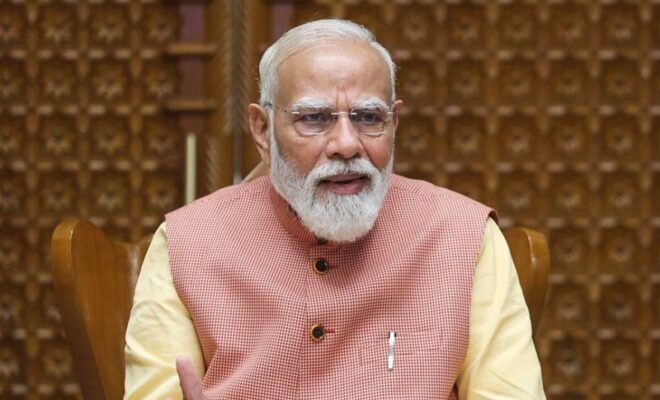
Amid growing tensions in West Asia, Prime Minister Narendra Modi has ordered a multi-ministerial setup for ensuring the protection of India’s trade, logistics, energy security, and vital imports. The development comes as the government takes measures to minimize the effect of the regional instability on the economy of India and keep the vital supplies of goods unhampered.
The combined effort will involve various ministries and departments in order to keep an eye on the developments and help exporters, importers, and consumers affected due to the crisis.
Why Has the Government Created This Mechanism?
West Asia is one of the most crucial regions for India in terms of importing energy and trading globally. A substantial amount of India’s crude oil, LPG, fertilizers, and marine cargo transit via routes linked with the Gulf region.
In light of the rising geopolitical uncertainties related to shipping, freight rates, insurance, and logistics, it is important for the government to take a collective approach. Thus, on the orders of the Prime Minister, ministries need to coordinate in order to address the problems promptly.
Which Ministries Will Be Involved?
This process adheres to the “whole-of-government” principle wherein vital departments involved in commerce, petroleum, shipping, finance, foreign affairs, railways, consumer affairs, agriculture, and other key fields are considered.
Government officers will constantly assess any developments impacting imports, exports, logistics, fuels, fertilizers, customs, and shipping operations. The purpose is to make sure that economic activities in India are not affected by external uncertainties.
How Will It Protect Indian Trade?
The process is likely to center around maintaining supply chain continuity, finding alternate shipping routes if necessary, tracking freight and insurance costs, clearing customs, and helping exporters manage logistics difficulties.
Moreover, the government has made it clear that efforts are being made to find new markets for exports and alternate sources of imports to avoid dependency on any one particular route that could be disrupted due to the conflict.
What Does It Mean for Businesses and Exporters?
The fear that troubles many of the exporters during geopolitically unstable times is that of increasing cost of logistics and delivery delays.
The government has already initiated a plan to help exporters faced with problems due to the disruption of West Asian logistics, involving institutional monitoring and interventions. The proposed multi-ministerial panel will function along with these plans.
Will Consumers Be Affected?
There has been an assertion by the government that there is nothing to cause panic buying at this stage. There has been constant vigilance maintained in relation to the stocks of fuels, fertilizers, food and other essentials.
There have also been discussions regarding energy stocks and ensuring constant availability of electricity, petroleum and other essentials in case this crisis continues.
Energy Security: Priority Aside from Trade
While trade is a major priority of the government at this time, energy security is another equally important priority.
The Prime Minister of the country has asked the respective ministries to intensify work on renewable energy while at the same time ensuring constant supply of conventional energy sources amidst this crisis.
Why This Matters for India
India is among the world’s fastest-growing major economies and depends heavily on uninterrupted global trade for energy, manufacturing, and exports.
Any prolonged disruption in West Asia can affect shipping schedules, import costs, commodity prices, and business confidence. By creating a coordinated multi-ministerial response mechanism, the government aims to minimize these risks and protect economic stability.
Top Stories You Can’t Afford to Miss Today
When Will Tata Curvv EV Launch?
Explore the confirmed launch date, expected price, battery options, driving range, and upgraded features of the Tata Curvv EV.
Why Is Income Tax Portal Slow?
Check how to clear your browser cache, verify your e-filing status, and avoid penalties under Section 234F before the deadline.
How Are India-Japan Supply Chains Evolving?
Discover how India and Japan are strengthening Indo-Pacific supply chains through new bio-gas and semiconductor partnerships.
How Can Patients Book Instantly?
Explore how AIIMS Delhi’s new WhatsApp and ABHA Health ID system makes OPD appointment booking faster and easier.
Why Did Washington Change Strategy?
Discover why the latest U.S. terror designation targets financial networks and what it could mean for future counterterrorism efforts.
Conclusion
The formation of a multi-ministerial mechanism is indicative of the government’s attempt to proactively address the changing West Asia crisis. India will attempt to safeguard its trade flows, secure its supplies and build economic resilience in the face of any shocks through the use of multiple ministries working together through a coordinated approach.
This multi-ministerial mechanism seeks to ensure that while there are continued geopolitical tensions abroad, trade flows, energy supplies and essential commodities of India remain as stable as possible.