Why Spain’s North African Enclave Is Facing a Fresh Border Crisis: 49,000 Migrants Enter Ceuta in Just 24 Hours:
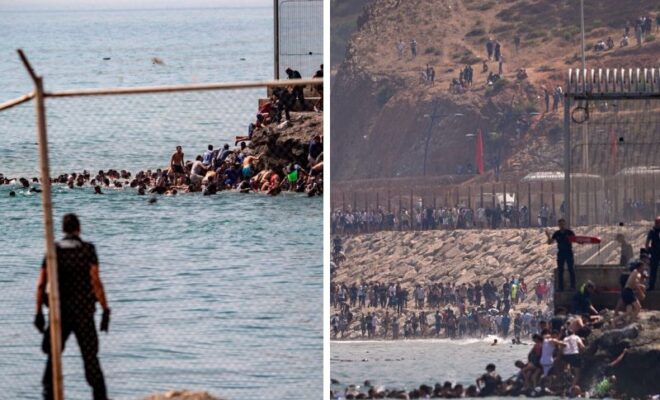
Once again, Spain’s North African enclave of Ceuta is at the forefront of an international migration crisis following reports that more than 49,000 people had crossed into the area from Morocco within 24 hours.
This massive migration has left local authorities scrambling, attracted a huge security operation, and raised questions over how to manage migration, secure borders, and Spain’s relations with Morocco.
What is Ceuta, and Why Does it Matter?
Ceuta is a small autonomous city of Spain located on the northern coast of Africa. Even though Ceuta geographically falls under Morocco’s jurisdiction, it is actually a part of Spain and the European Union.
Due to its geographical situation, Ceuta has always been one of the primary entry points for migrants looking to enter Europe. The area has been protected with heavily secured border fences; however, migrants have repeatedly tried to make their way through the city using various methods such as climbing over fences or swimming around security checkpoints.
It is due to its geographical situation that Ceuta is considered one of the most sensitive external borders of Europe.
Why Did So Many Migrants Enter in One Day?
According to the Spanish authorities, there were thousands of people who crossed the border from Morocco into Ceuta in just a short time span.
An investigation is underway to establish the reasons for the large migration flow, whether it was because of the weakening of the borders or because the migration was pre-planned by certain organizations.
Large migration flows usually occur due to a mixture of conflicts, economic difficulties, unemployment, and the desire to get into Europe.
Why This Is Becoming a Major Challenge for Spain
The arrival of so many people within such a short period of time puts a strain on the resources of the location.
These resources include reception centers, healthcare facilities, police force, and humanitarian organizations to help the migrants with whatever they need.
The Role of Morocco
Migration cooperation between Spain and Morocco has always been an essential component of border management.
The two states have consistently coordinated their actions on the reduction of illegal immigration, the fight against human trafficking, and improving border surveillance systems.
In case of large-scale migration processes, the diplomatic relations between Madrid and Rabat usually become subjects to analysis with the expectation that cooperation is needed to handle the process.
Why Ceuta has Faced the Same Crisis in the Past
Ceuta has already faced the crisis of such scale before. There were instances in the past when thousands of people tried to cross the border within a very short period of time.
All those events shed light on such global problems as migration policies, international cooperation, border control, and responsibilities of European countries in relation to humanitarian issues.
Humanitarian Concerns
In addition to the political considerations, humanitarian organizations are worried about the well-being of migrants.
Many migrants trying to enter Ceuta risk their lives while traveling through water or harsh conditions and facing threats of drowning, dehydration, physical injuries, and abuse from smugglers.
Humanitarian organizations still highlight the need for urgent medical help, shelter, and protection for vulnerable groups, especially for children.
What Happens Next?
Spanish government is predicted to continue processing migrants and tightening its borders together with Moroccan authorities.
The coming days will include talks on migration policies, humanitarian support, asylum procedures, and potential repatriations according to the previous agreements.
The event is also closely monitored by the European Union as changes in Ceuta can affect European migration policies.
Top Stories You Can’t Afford to Miss Today
When Will Tata Curvv EV Launch?
Explore the confirmed launch date, expected price, battery options, driving range, and upgraded features of the Tata Curvv EV.
Why Is Income Tax Portal Slow?
Check how to clear your browser cache, verify your e-filing status, and avoid penalties under Section 234F before the deadline.
How Are India-Japan Supply Chains Evolving?
Discover how India and Japan are strengthening Indo-Pacific supply chains through new bio-gas and semiconductor partnerships.
How Can Patients Book Instantly?
Explore how AIIMS Delhi’s new WhatsApp and ABHA Health ID system makes OPD appointment booking faster and easier.
Why Did Washington Change Strategy?
Discover why the latest U.S. terror designation targets financial networks and what it could mean for future counterterrorism efforts.
Conclusion
The most recent Ceuta migration crisis is proof that managing one of the busiest migration routes into Europe still remains problematic.
In addition to the problems with controlling the borders and the provision of humanitarian aid, the incident also points out to the general problem of migration, regional cooperation and international responsibility in the Mediterranean.
Ceuta may not be a big city, but the events that take place there usually have implications much further than that.